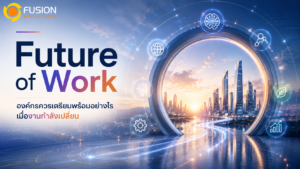
อนาคตของการทำงานไม่ได้เกิดขึ้นในวันใดวันหนึ่ง แต่งานกำลังเปลี่ยนอยู่แล้วจาก AI, Automation, Digital Platforms, Demographic Change และความคาดหวังของพนักงาน
บาง Task ถูกทำให้เป็นอัตโนมัติ บาง Role ต้องใช้ Skills ใหม่ และหลายงานต้องผสาน Technology กับ Human Judgment, Creativity และ Collaboration
คำถามจึงไม่ใช่ว่าอนาคตจะมาถึงเมื่อไร แต่คือองค์กรกำลังออกแบบงาน Skills ระบบ และประสบการณ์ให้พร้อมหรือยัง
Business Change ↓ Work Redesign ↓ Human + Technology ↓ New Skills ↓ Workforce Experience ↓ Continuous Adaptation
เมื่ออนาคตของงานเกิดขึ้นในปัจจุบัน
Technology, Green Transition, Economic และ Demographic Shifts กำลังปรับตลาดแรงงาน AI เปลี่ยน Task ในงานความรู้ Automation เปลี่ยน Workflow และ Skills เปลี่ยนเร็วกว่า Job Description
- Hybrid และ Distributed Work เปลี่ยน Collaboration
- พนักงานคาดหวัง Growth, Flexibility และ Meaningful Work
- องค์กรต้องวางแผนภายใต้ความไม่แน่นอน
Future of Work คืออะไร?
Future of Work คือการเปลี่ยนแปลงของงาน บทบาท Skills, Technology, Workplace, Workforce Model และความสัมพันธ์ระหว่างองค์กรกับพนักงาน
แนวคิดนี้ไม่ใช่เพียงว่า Office จะหายไปหรือ AI จะแทนคน แต่คือการแบ่งงานระหว่างคนกับ Technology อย่างเหมาะสม
แรงขับเคลื่อนสำคัญ
AI and Automation
เปลี่ยน Task, Workflow, Decision Support และ Productivity
Skills Change
ทำให้ Learning และ Reskilling ต้องต่อเนื่อง
Demographic Change
เพิ่มความสำคัญของ Multigenerational Workforce
Employee Expectations
เพิ่มความต้องการ Flexibility, Growth และ Transparency
New Workforce Models
เชื่อม Employee, Contractor, Partner, Project และ AI
Business Volatility
ทำให้ Scenario Planning และ Agility สำคัญขึ้น
Future of Work ไม่ได้มีแค่ Remote Work
มุมมองที่แคบ | มุมมองที่ครบกว่า |
พนักงานทำงานที่ไหน | งานถูกออกแบบอย่างไร |
Office หรือ Remote | คนและ Technology แบ่งงานกันอย่างไร |
เวลาและ Attendance | Outcome, Quality และ Value |
มี Flexible Policy | Trust, Clarity, Inclusion และ Support |
งานและบทบาทจะเปลี่ยนอย่างไร?
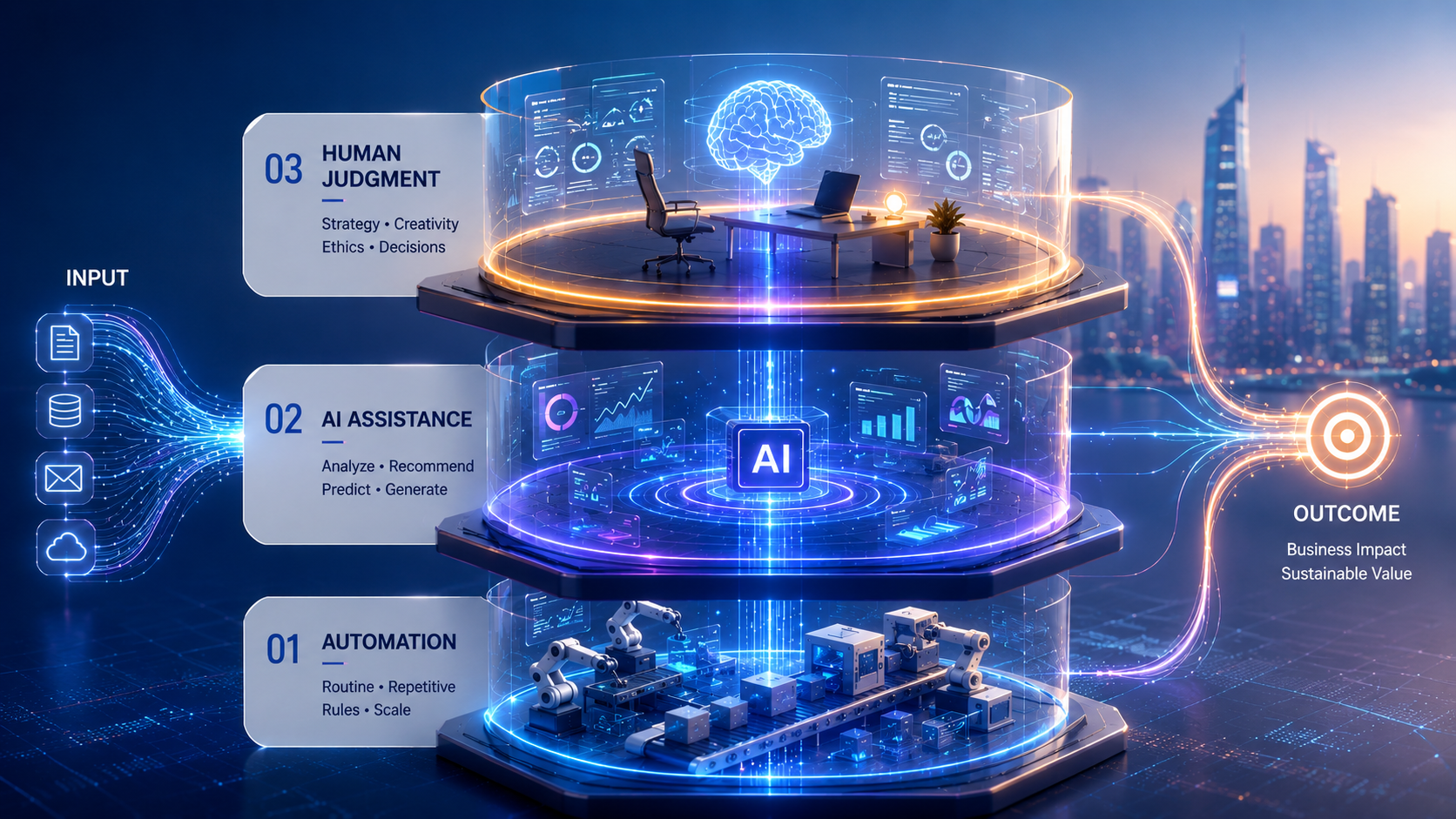
หลาย Role อาจไม่หายไป แต่ Task ภายในจะถูกแบ่งใหม่ระหว่าง Automation, Augmentation และ Human Ownership
Technology ช่วยได้ | มนุษย์ยังต้องรับผิดชอบ |
ค้นหา สรุป และจัดข้อมูล | กำหนดเป้าหมายและตีความบริบท |
ทำงานซ้ำตาม Rule | ตัดสินใจกรณีซับซ้อน |
สร้าง Draft และ Recommendation | ตรวจ Accuracy, Fairness และ Impact |
ระบุ Pattern เบื้องต้น | สร้าง Trust และ Accountability |
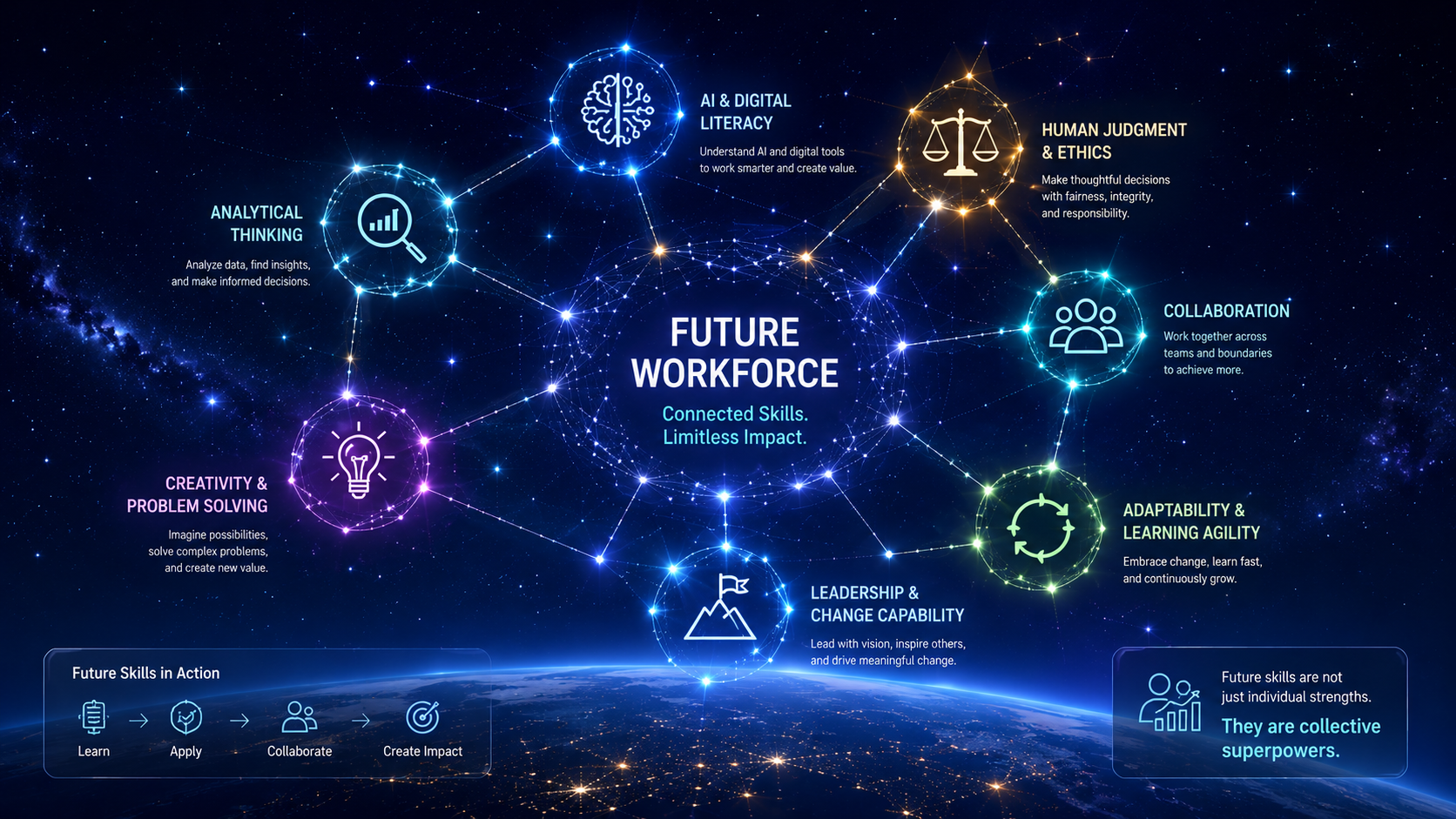
Skills ใดสำคัญต่ออนาคต?
- AI and Digital Literacy
- Analytical Thinking
- Creativity and Problem Solving
- Human Judgment and Ethics
- Collaboration and Communication
- Adaptability and Learning Agility
- Leadership and Change Capability
องค์กรควรเตรียมอะไรบ้าง?
- Business and Workforce Scenarios
ประเมิน Technology, Market, Skills และ Demand หลาย Scenario
- Work and Job Redesign
แยก Task ที่ควร Automate, Augment หรือคง Human Ownership
- Skills Visibility
ทำให้ Critical Skills, Gaps และ Transferable Skills มองเห็นได้
- Continuous Learning
เชื่อม Learning กับ Work และ Role Transition
- Human + AI Operating Model
กำหนด Decision Rights, Review และ Governance
- Workforce Agility
ขยับ Talent, Reskill และปรับ Workforce Mix
- Employee Experience and Trust
สื่อสารผลกระทบและสนับสนุน Transition
- Leadership Readiness
ทำให้ Manager พร้อมกับ Work Model ใหม่
บทบาทของ HR ใน Future of Work
HR ควรมีส่วนร่วมตั้งแต่ Work Design, Workforce Impact และ Transition Planning ไม่ใช่รับ Requirement หลังธุรกิจตัดสินใจใช้ Technology
- Connect business and workforce strategy
- Assess AI and automation impact on work
- Update job architecture and skills frameworks
- Design reskilling and internal mobility
- Strengthen manager capability
- Support experience, trust, and change
- Establish responsible AI and data governance
- Measure workforce outcomes
Technology ช่วยองค์กรเตรียมพร้อมอย่างไร?
Technology เป็น Infrastructure ของการเปลี่ยนแปลง แต่ไม่ทดแทน Strategy, Leadership, Job Design, Change Management และ Human Judgment
- Core HCM and trusted data
- Skills Intelligence and profiles
- People Analytics and dashboards
- Strategic Workforce Planning
- Learning and reskilling platforms
- Talent Marketplace and mobility
- Employee self-service
- AI assistants and governance
ความเสี่ยงที่ไม่ควรมองข้าม
- Work Intensification
- Unequal Access
- Skills Polarization
- Trust and Transparency
- Manager Readiness
- Over-Automation
วิธีเริ่มต้นเตรียมองค์กร
- กำหนด Business Change ที่สำคัญ
- วิเคราะห์ Task, Role และ Workforce Impact
- ระบุ Critical Skills และ Gap
- ออกแบบ Target Work and Workforce Model
- เลือก AI และ Automation Use Case
- เตรียม Reskilling, Mobility และ Manager Support
- สื่อสารและให้พนักงานมีส่วนร่วม
- ทดลองใน Scope ที่ชัดเจน
- วัด Productivity, Experience, Skills และ Trust
- ปรับ Scenario ต่อเนื่อง
ควรวัดผลอย่างไร?
มิติ | ตัวอย่าง Metric |
Work | Cycle Time, Quality, Automation and Augmentation |
Skills | Critical Skills Coverage, Reskilling Progress |
Talent | Internal Mobility, Opportunity Access, Retention |
Experience | Employee Effort, Trust, Well-Being, Manager Support |
Adoption | Responsible AI Usage, Active Users, Human Review |
Business Value | Productivity, Innovation, Cost, Customer Outcome |
Future of Work ที่ดีต้องเป็น Human-Centered
องค์กรไม่ควรผลักภาระการปรับตัวให้พนักงานฝ่ายเดียว แต่ต้องออกแบบงาน จัดเวลา Learning เปิด Opportunity และสนับสนุน Transition
สรุป
Future of Work คือการเปลี่ยนแปลงของงาน Skills, Technology, Workplace และ Workforce Model การเตรียมพร้อมต้องเชื่อม Work Redesign, Skills Visibility, Human-AI Collaboration, Reskilling, Mobility, Leadership และ Trust