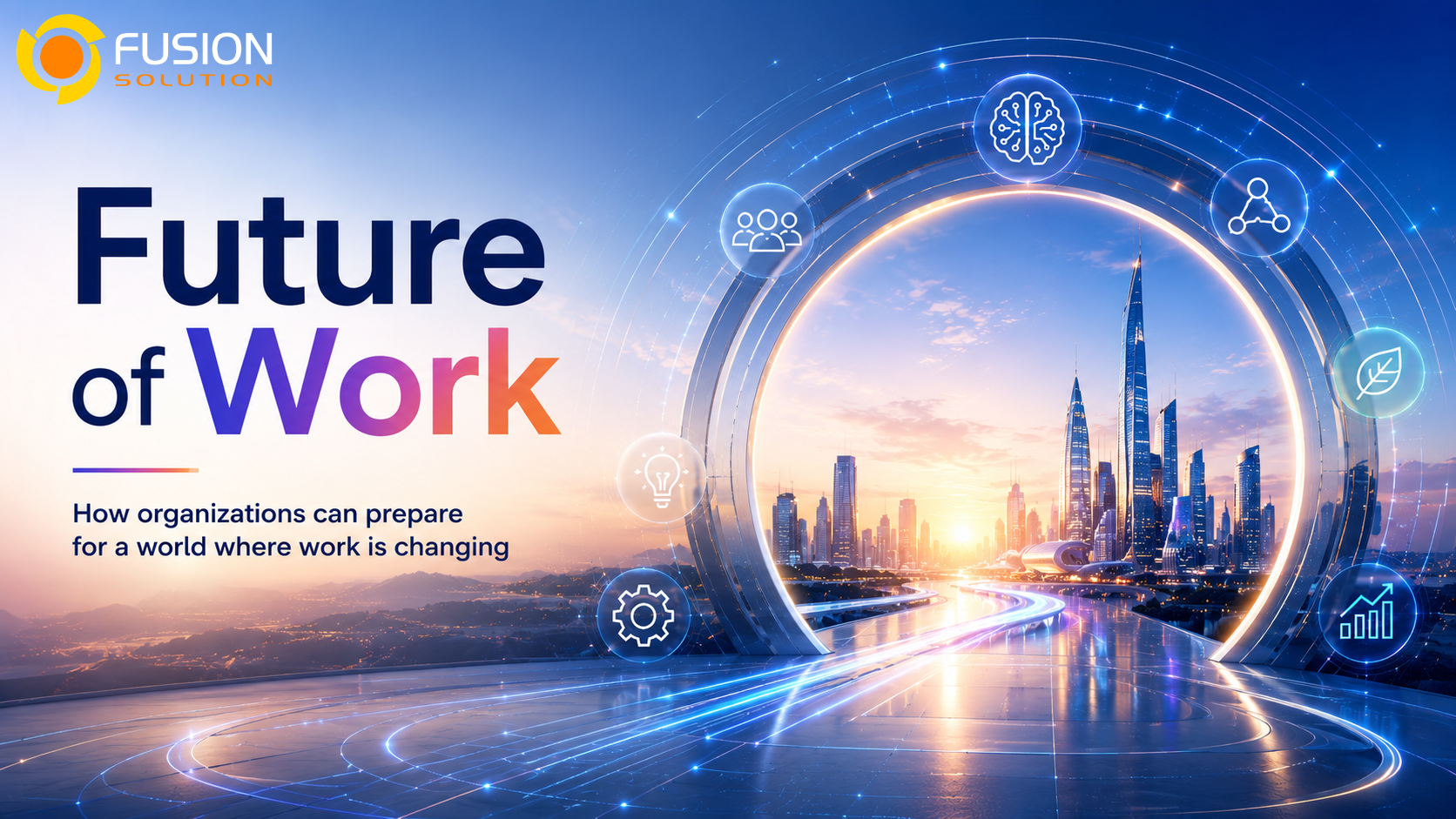
The future of work will not simply arrive overnight; work is already being transformed by AI, automation, digital platforms, demographic shifts, and evolving employee expectations.
Some tasks have been automated, certain roles require new skills, and many jobs necessitate integrating technology with human judgment, creativity, and collaboration.
The question, therefore, is not when the future will arrive, but rather whether the organization is ready—having designed the work, skills, systems, and experiences accordingly.
Business Change ↓ Work Redesign ↓ Human + Technology ↓ New Skills ↓ Workforce Experience ↓ Continuous Adaptation
When the future of work arrives in the present?
Technology, the green transition, and economic and demographic shifts are reshaping the labor market. AI is transforming tasks within knowledge work, automation is altering workflows, and skill requirements are evolving faster than job descriptions.
- Hybrid and Distributed Work Transform Collaboration
- Employees expect growth, flexibility, and meaningful work.
- Organizations must plan amidst uncertainty.
What is the Future of Work?
The "Future of Work" refers to the transformation of work itself—encompassing roles, skills, technology, the workplace, workforce models, and the relationship between organizations and employees.
The concept is not simply that offices will disappear or AI will replace humans, but rather about appropriately dividing tasks between people and technology.
Key driving force
AI and Automation
Transform tasks, workflows, decision support, and productivity.
Skills Change
This makes continuous learning and reskilling essential.
Demographic Change
Increasing the Importance of a Multigenerational Workforce
Employee Expectations
Increasing demand for flexibility, growth, and transparency.
New Workforce Models
Connect Employees, Contractors, Partners, Projects, and AI.
Business Volatility
This makes scenario planning and agility increasingly important.
The future of work is about more than just remote work
Narrow perspective | A more comprehensive perspective |
Where do the employees work? | How is the work designed? |
Office or remote? | How do humans and technology divide tasks? |
Time and Attendance | Outcome, Quality, and Value |
Flexible policy available | Trust, Clarity, Inclusion, and Support |
How will jobs and roles change?
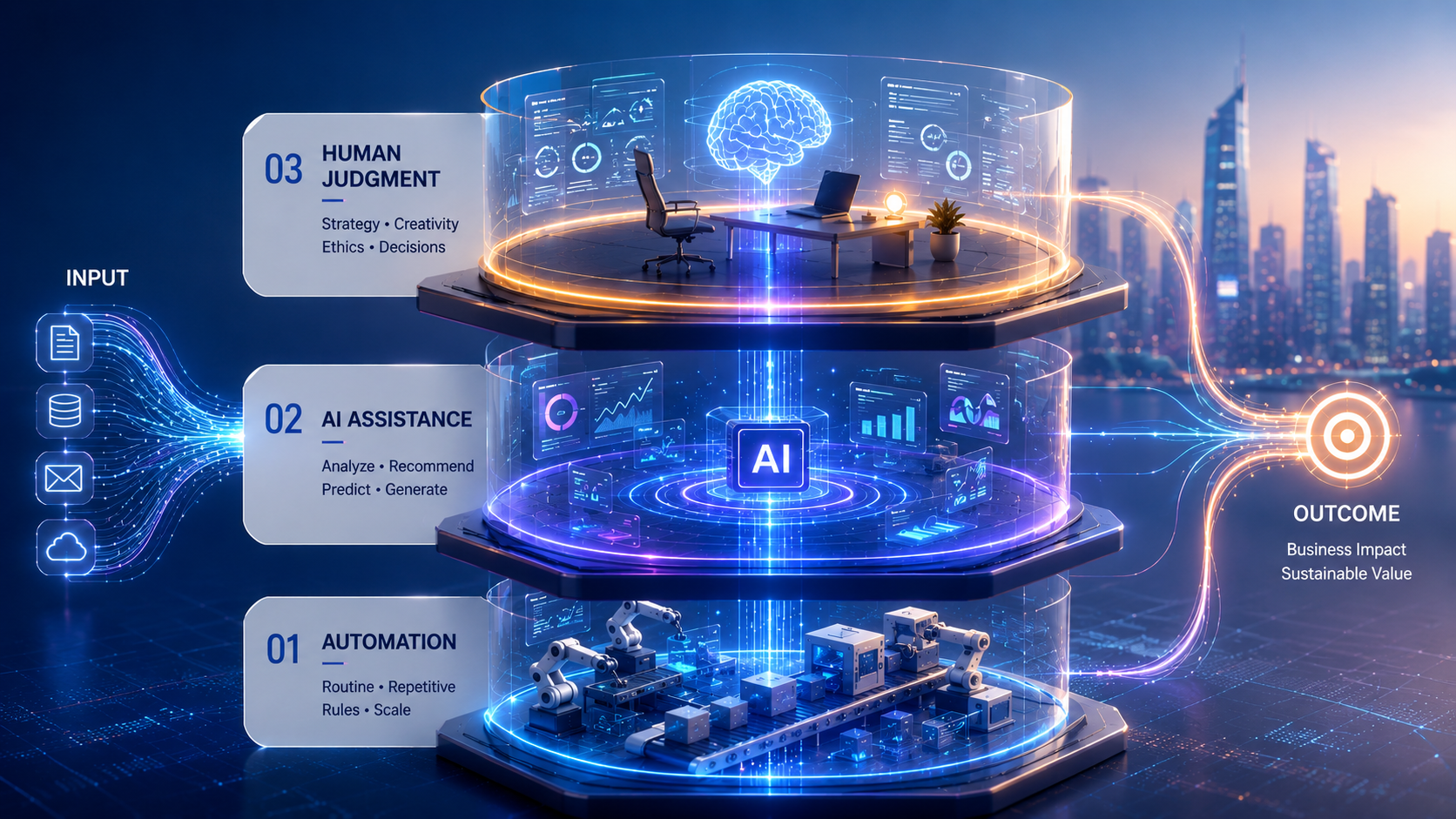
Many roles may not disappear, but the tasks within them will be redistributed among automation, augmentation, and human ownership.
Technology can help | Humans still bear responsibility |
Search for, summarize, and organize information | Define goals and interpret the context |
Perform repetitive tasks according to the rule | Making decisions in complex situations |
Create Draft and Recommendations | Assess accuracy, fairness, and impact |
Identify the initial pattern | Build trust and Accountability |
Which skills are important for the future?
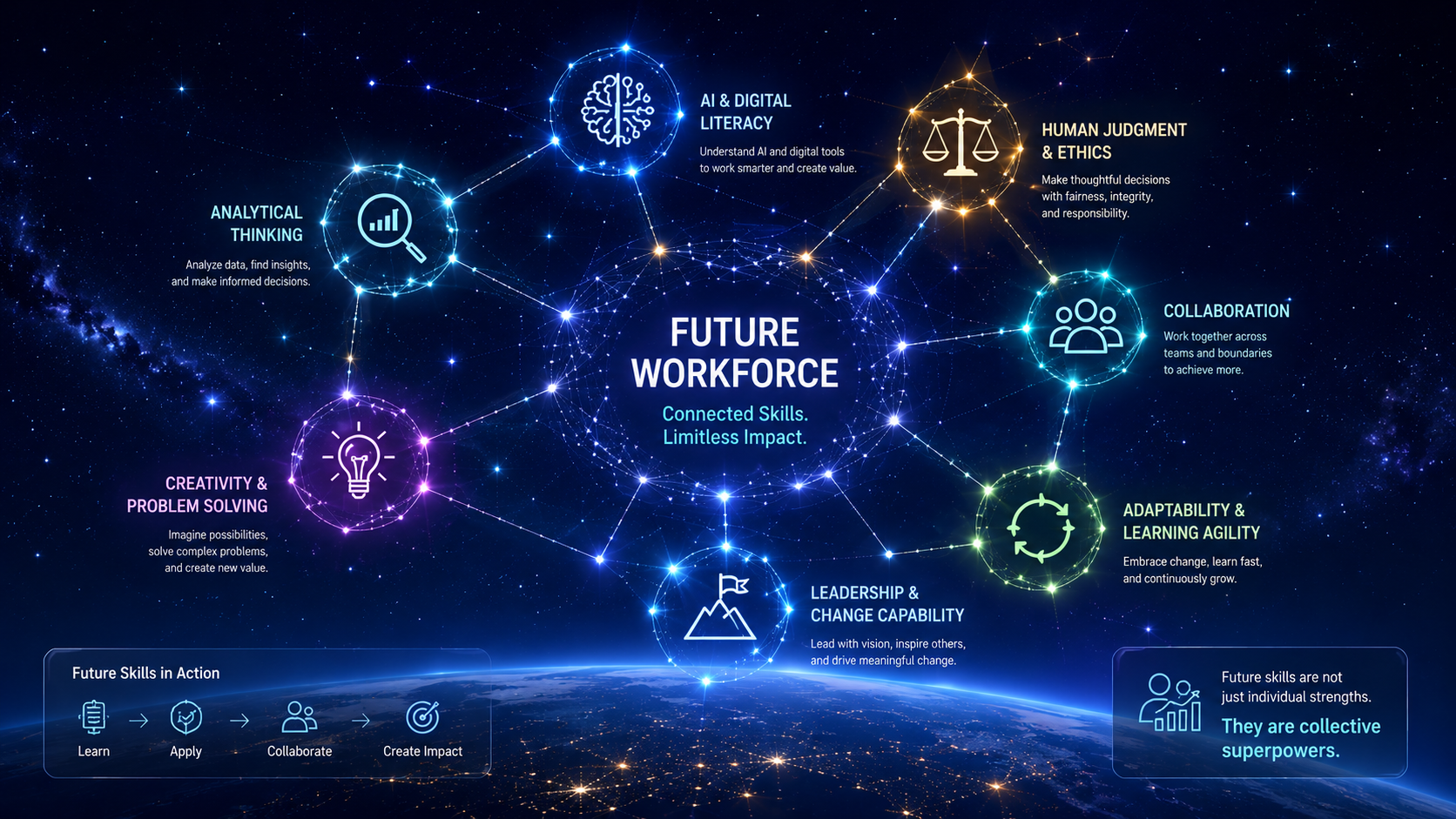
- AI and Digital Literacy
- Analytical Thinking
- Creativity and Problem Solving
- Human Judgment and Ethics
- Collaboration and Communication
- Adaptability and Learning Agility
- Leadership and Change Capability
What should organizations prepare?
- Business and Workforce Scenarios
Evaluate technology, market, skills, and demand across multiple scenarios.
- Work and Job Redesign
Categorize tasks into those that should be automated, augmented, or remain under human ownership.
- Skills Visibility
Make critical skills, gaps, and transferable skills visible.
- Continuous Learning
Connecting learning with work and role transitions.
- Human + AI Operating Model
Define decision rights, review processes, and governance.
- Workforce Agility
Mobilize talent, reskill, and adjust the workforce mix.
- Employee Experience and Trust
Communicate impacts and support the transition.
- Leadership Readiness
Prepare managers for the new work model.
The Role of HR in the Future of Work
HR should be involved from the stages of work design, workforce impact assessment, and transition planning, rather than simply receiving requirements after the business has already decided to implement technology.
- Connect business and workforce strategy
- Assess AI and automation impact on work
- Update job architecture and skills frameworks
- Design reskilling and internal mobility
- Strengthen manager capability
- Support experience, trust, and change
- Establish responsible AI and data governance
- Measure workforce outcomes
How does technology help organizations prepare?
Technology serves as the infrastructure for change, but it does not replace strategy, leadership, job design, change management, or human judgment.
- Core HCM and trusted data
- Skills Intelligence and profiles
- People Analytics and dashboards
- Strategic Workforce Planning
- Learning and reskilling platforms
- Talent Marketplace and mobility
- Employee self-service
- AI assistants and governance
Risks that should not be overlooked
- Work Intensification
- Unequal Access
- Skills Polarization
- Trust and Transparency
- Manager Readiness
- Over-Automation
How to Start Preparing the Organization?
- Define key Business Changes
- Analysis of Tasks, Roles, and Workforce Impact
- Identify critical skills and gaps.
- Design the Target Work and Workforce Model
- Select AI and Automation Use Cases
- Prepare for reskilling, mobility, and manager support.
- Communicate and engage employees.
- Conduct experiments within a clearly defined scope.
- Measure productivity, experience, skills, and trust.
- Continuously adjust the Scenario
How should results be measured?
Dimension | Metric Examples |
Work | Cycle Time, Quality, Automation and Augmentation |
Skills | Critical Skills Coverage, Reskilling Progress |
Talent | Internal Mobility, Opportunity Access, Retention |
Experience | Employee Effort, Trust, Well-Being, Manager Support |
Adoption | Responsible AI Usage, Active Users, Human Review |
Business Value | Productivity, Innovation, Cost, Customer Outcome |
A good Future of Work must be Human-Centered.
Organizations should not place the entire burden of adaptation on employees; instead, they must design work, allocate time for learning, create opportunities, and support the transition.
Summary
The "Future of Work" entails transformations across jobs, skills, technology, the workplace, and workforce models. Preparation requires integrating work redesign, skills visibility, human-AI collaboration, reskilling, mobility, leadership, and trust.