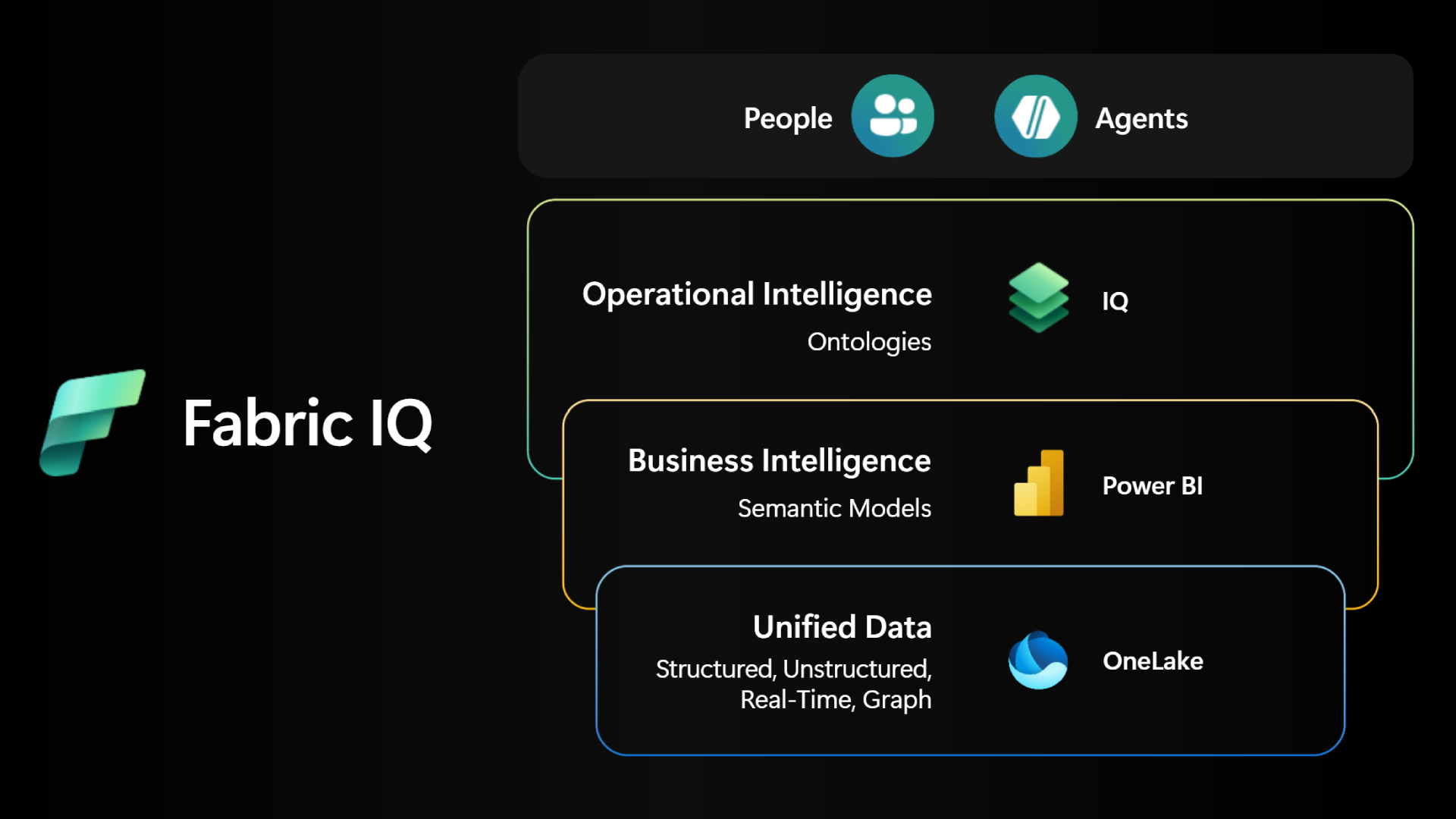
Data is one of the most valuable assets an organization has in the digital age, but many businesses struggle to transform massive amounts of data into actionable insights. This is because data is often scattered across multiple systems, and many users lack the technical skills to write queries or create reports manually.
Fabric IQ This refers to the AI capabilities within Microsoft Fabric, designed to make working with data easier and more natural. By combining the power of Genetic AI with enterprise data, it allows users to ask questions in natural language, find relevant information, and gain insights without needing advanced technical knowledge.
Instead of replacing data analysts, Fabric IQ bridges the gap between business users and complex data environments, making it easier for everyone in the organization to access data and leverage analytics.
What is Fabric IQ?
Fabric IQ is an intelligent AI experience within Microsoft Fabric that enables users to understand, explore, and interact with organizational data through natural language.
Instead of having to write SQL queries or search through multiple datasets, users simply type their questions in everyday language. The AI will interpret the request, understand the available data, and display relevant answers or insights from the organization's data.
Because it operates within the Microsoft Fabric ecosystem, it can effectively leverage enterprise data context while maintaining compliance with data security and governance policies.
Why is AI transforming business data analytics?
Today, organizations generate vast amounts of data, including sales data, customer contact information, operational data, and financial reports.
Even with vast amounts of data, many employees still rely on data analysts to answer basic business questions because they lack the expertise to directly search for that information.
AI is changing this trend by giving users the opportunity to interact directly with data.
Instead of waiting for the data team to create a report, users can ask questions immediately, such as:
- What was the best-selling product this month?
- Why did revenue decline last quarter?
- Which region is growing the fastest?
- What trends should businesses focus on?
This natural language-based information retrieval helps overcome limitations in accessing information and enables organizations to make faster decisions.
The core capabilities of Fabric IQ.
Explore information using natural language.
One of its most remarkable abilities is interacting with information using everyday language.
Users don't need to memorize SQL syntax or understand complex database structures; they simply describe what they need to know, and the AI will interpret it and find the appropriate answer.
Provide an answer that understands the organizational context.
Fabric IQ doesn't generate generic answers, but rather understands the context of internal organizational data.
By leveraging metadata, business data, and governed data sources, AI can provide more relevant and meaningful answers to users.
Understanding this context helps improve the quality and accuracy of the insights gained.
Gain deeper insights faster.
Searching for information from multiple reports or dashboards can take a long time.
Fabric IQ accelerates this process by quickly finding relevant information and reducing the time spent answering business questions.
Employees can therefore spend less time searching for information and more time using that information to make decisions.
Promote collaboration
When business users have access to insightful information themselves, collaboration between technical and business teams becomes more efficient.
The data team can focus on strategic analysis, while ordinary users can answer everyday questions on their own.
This helps create a data-driven culture within the organization.
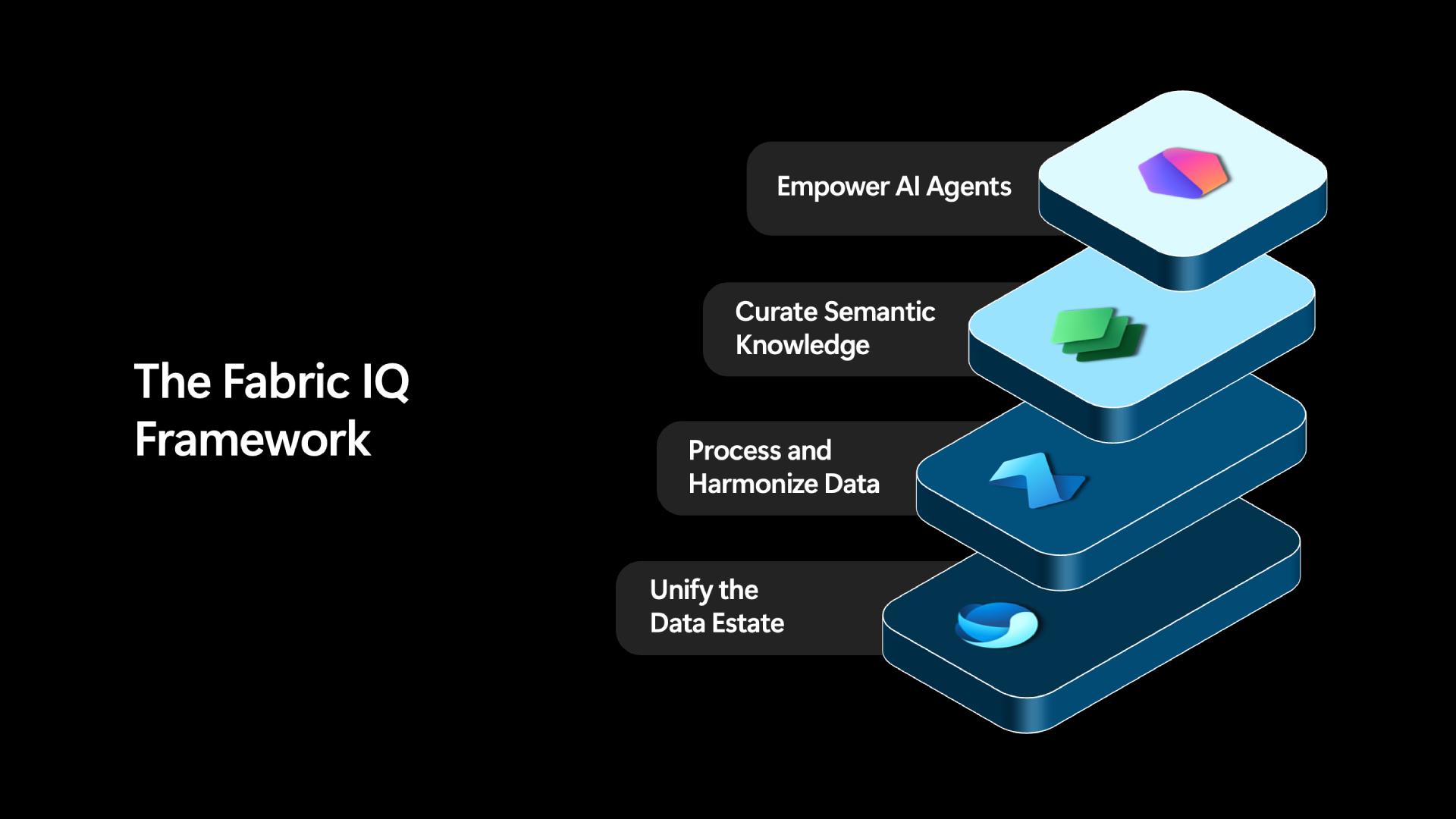
Benefits for Businesses
- Empowering every employee.
Employees who are not in the IT or Data Analytics team can access the data with confidence, reducing their reliance on specialized experts. - Faster decision-making
Instant access to information allows managers and supervisors to make decisions without having to wait for manually prepared reports. - Increase work efficiency
Natural language search helps reduce the time spent searching for information, allowing employees to focus on more value-creating tasks. - Promoting a culture of data usage.
With easier access to information for everyone, organizations can push for data-driven decision-making at every level. - Add value to existing data.
Many organizations invest heavily in data storage, and Fabric IQ helps to use that data to create more value by making it easier to find and understand.
Data security and governance remain paramount.
While AI makes accessing data easier, data security and governance remain crucial.
Microsoft Fabric continues to utilize the data access permissions and data governance policies defined by your organization, so users can only access authorized data.
This approach enables organizations to leverage AI for data analysis while maintaining security, compliance, and efficient data management.
Examples of business applications.
Fabric IQ can benefit organizations in a wide range of industries, such as:
Reports for executives
Executives can request key KPI information immediately without having to ask the team to prepare new reports.
Analyze sales results
Sales managers can analyze revenue trends, customer performance, and regional performance by asking questions using natural language.
Analyze financial data
The finance team can more quickly review spending patterns, budget effectiveness, and financial trends.
Follow up on operations
The operations team can identify bottlenecks, track metrics, and analyze workflows through conversations with AI.
Analyze customer service data.
The Customer Service team can more easily analyze customer trends, identify common problems, and evaluate service effectiveness.
Best practices for using Fabric IQ.
To get the most out of AI in data analysis, organizations should...
- Maintain data quality and ensure appropriate data governance.
- Clearly define business terminology and metadata.
- Define appropriate data access permissions.
- Encourage employees to ask questions related to the business.
- Use AI-powered insights in conjunction with expert analysis before making important decisions.
AI performs best when combined with good data governance and human decision-making.
Summary
Organizations today possess vast amounts of data, but transforming that data into actionable insights remains a challenge for many users.
Fabric IQ solves this problem by enabling users to interact with organizational data within Microsoft Fabric through natural language. By combining AI capabilities with reliable organizational data, it makes information more accessible to employees, enables faster decision-making, and fosters data-driven collaboration.
As AI becomes an increasingly integral part of Business Intelligence, Fabric IQ demonstrates how Microsoft Fabric is making data analysis simpler, smarter, and more accessible to everyone in the organization.