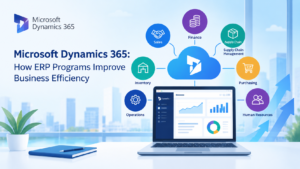
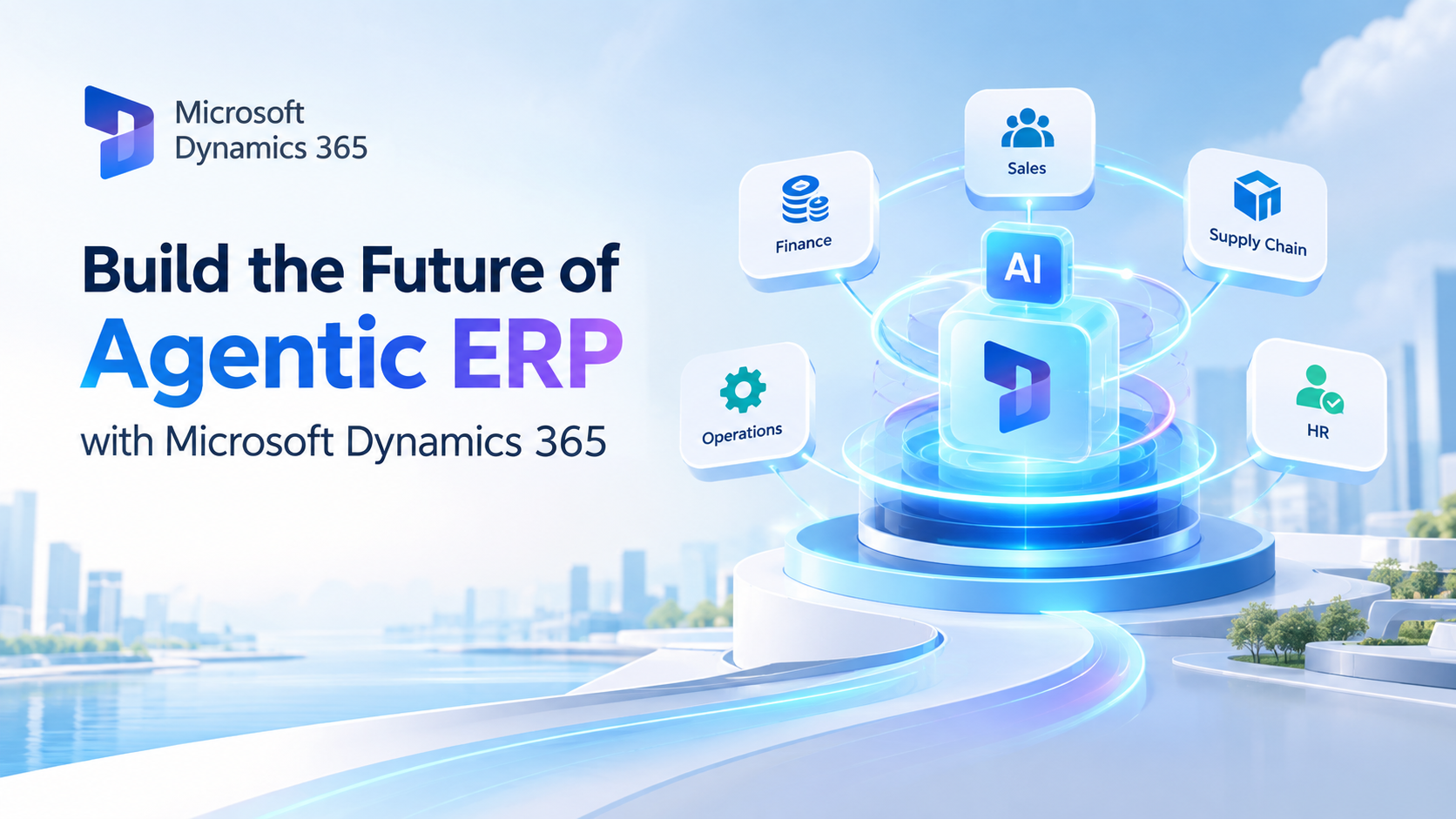
Enterprise Resource Planning (ERP) has traditionally been used to manage core business processes such as finance, procurement, supply chain, human resources, and operations. But as artificial intelligence becomes part of everyday business, ERP is beginning to evolve beyond traditional software.
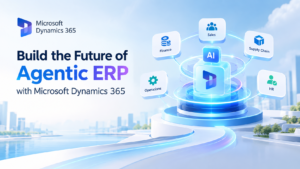
Microsoft is developing Agentic ERP with Microsoft Dynamics 365, bringing AI agents into business processes so people and AI can work together to make decisions, coordinate activities, and complete tasks.
According to Microsoft's latest Dynamics 365 roadmap, the goal is not simply to add AI features to ERP. It is to create a more connected environment where AI can work across applications, business data, and workflows.
What Is Agentic ERP?
Agentic ERP is an approach to ERP where AI agents can do more than provide information.
Traditional ERP software generally requires employees to open an application, find the right screen, enter information, and complete each step of a process.
With an agentic approach, users can interact with AI using natural language. AI agents can understand business context, work with ERP data, suggest actions, and in appropriate situations help execute parts of a business process.
For example, instead of manually investigating an accounting exception, a finance employee could ask an AI agent to identify the issue, review related transactions, and suggest how to resolve it.
The human still remains responsible for important decisions, while AI can take care of more of the supporting work.
How Microsoft Dynamics 365 Is Building Agentic ERP
Microsoft's approach connects AI agents with the existing business foundation of Dynamics 365.
This includes business data, business rules, security controls, workflows, and processes across Dynamics 365 applications.
Microsoft describes this as moving beyond the boundaries between individual applications. Copilot, Copilot Cowork, and agents can work across Dynamics 365, email, documents, and collaboration tools while using business context from the ERP environment.
This is important because real business processes rarely stay inside one application.
A procurement process, for example, can involve suppliers, purchase orders, inventory, approvals, finance, and email. An agentic ERP environment aims to connect these steps instead of treating them as isolated activities.
AI in Dynamics 365 Finance
Finance is one of the areas where Microsoft is introducing more AI-supported capabilities.
Dynamics 365 Finance is adding improvements for financial journals, account reconciliation, accounts payable, planning, and compliance.
The Account Reconciliation Agent is being enhanced to help resolve exceptions in bulk, while AI-supported invoice recognition and suggestions can help automate parts of accounts payable processing.
Microsoft is also introducing Finance Agent skills for activities such as reconciliation, data preparation, variance analysis, collections, and business intelligence. These capabilities can work across Microsoft 365 applications such as Copilot, Excel, Outlook, and Teams while maintaining connections to Dynamics 365 Finance.
The broader idea is to bring financial intelligence into the tools employees already use.
AI-Powered Supply Chain Management
Supply chain operations are another major area for Agentic ERP.
Supply chains involve constant changes in suppliers, demand, inventory, purchasing, transportation, and warehouse operations. Employees often need to understand how one change could affect several other parts of the business.
Microsoft is introducing capabilities designed to help teams analyze these relationships.
For example, the Procurement Agent impact analysis can trace supplier-proposed purchase order changes to affected sales orders, production orders, transfer orders, and projected inventory.
Demand planning capabilities can also provide insights into seasonality, trends, and external signals such as inflation, pricing, and weather.
This can help supply chain teams move from simply reacting to changes toward understanding their potential impact earlier.
Agentic ERP for Project Operations
Project-based organizations also face complex processes.
Changes in project scope can affect contracts, billing, staffing, resources, and financial performance.
Dynamics 365 Project Operations is adding capabilities for change order management, subscription billing, project revenue recognition, and time-phased staffing.
These improvements are designed to keep project financials, billing, and resources more closely connected as projects change.
With AI agents becoming part of the broader Dynamics 365 environment, these connected processes can provide a stronger foundation for more automated project management.
Bringing AI Into Human Resources
Agentic capabilities are also being introduced into Dynamics 365 Human Resources.
Microsoft is expanding HR capabilities across areas such as recruitment, onboarding, learning, succession, performance, benefits, leave, time entry, and reporting.
At the same time, Microsoft is introducing agentic experiences for activities such as candidate assessment and onboarding.
One example described by Microsoft is the ability for an HR professional to initiate a workforce process directly from Copilot Cowork using natural language, with business skills carrying out the underlying actions in Dynamics 365 Human Resources.
This could make HR processes easier to access without requiring employees to navigate through multiple application screens.
Connecting ERP With Copilot and Agents
One of the key elements of Microsoft's strategy is connecting Dynamics 365 to the broader Microsoft ecosystem.
The Dynamics 365 ERP plugin for Copilot Cowork and the Dynamics 365 ERP MCP server are designed to allow agents to work with ERP data, actions, and attachments.
Microsoft says these capabilities are generally available and can connect users from Copilot responses back to the underlying ERP records through citations and deep links.
In practical terms, this means an employee could interact with AI in a familiar work environment while still working with information from the organization's ERP system.
Business Skills Give Agents More Context
An AI agent is only useful when it understands how an organization actually works.
Microsoft is therefore introducing business skills that can provide reusable instructions, processes, and procedures for ERP agents.
Organizations can define how specific processes should be performed and control access using Dynamics 365 security roles.
Microsoft also plans business skills for processes such as procure-to-pay, allowing organizations to build agent-driven workflows using reusable business context and actions.
This moves ERP automation beyond simple commands. Agents can potentially follow the organization's established ways of working.

Security and Human Control
More autonomous AI also means stronger security and governance become essential.
ERP systems contain sensitive financial, operational, employee, and supplier information. An AI agent should not automatically have unlimited access to this information or the ability to perform every action.
Microsoft is introducing role-based controls that can apply additional restrictions when users work through Copilot Cowork or agents.
This approach allows organizations to define what agents are allowed to do while maintaining the security model of Dynamics 365.
Human oversight remains important, especially for decisions involving financial commitments, sensitive employee information, or other high-impact business activities.
What Agentic ERP Means for Businesses
The move toward Agentic ERP could change the role of ERP systems within organizations.
Instead of being primarily a place where employees enter and retrieve information, ERP can become a foundation where people and AI collaborate around business processes.
The potential benefits include:
- Less repetitive administrative work
- Faster access to business information
- Better coordination between departments
- More connected business processes
- Faster identification of problems and exceptions
- AI-assisted decision-making
- More natural interaction with ERP systems
However, organizations will need to introduce these capabilities carefully. AI performance, security, governance, data quality, and human oversight will all affect the success of an agentic ERP strategy.
The Future of Agentic ERP
Microsoft's latest Dynamics 365 updates show that ERP is moving toward a more AI-driven operating model.
The focus is not simply on adding a chatbot to an existing ERP system. Instead, Microsoft is connecting Copilot and AI agents with business data, processes, security, and applications across Dynamics 365.
This creates the foundation for ERP systems where AI can help coordinate work across finance, supply chain, projects, commerce, human resources, and other business functions.
For organizations, the transition will likely be gradual. Businesses can adopt new AI capabilities based on their priorities and existing processes rather than changing everything at once.
Ultimately, Agentic ERP represents a shift from ERP software that employees operate step by step toward business systems where people and intelligent agents can work together to move processes forward.
Microsoft's ongoing Dynamics 365 roadmap suggests that this transition is already underway, with new AI and agent capabilities continuing to expand across the ERP portfolio.