
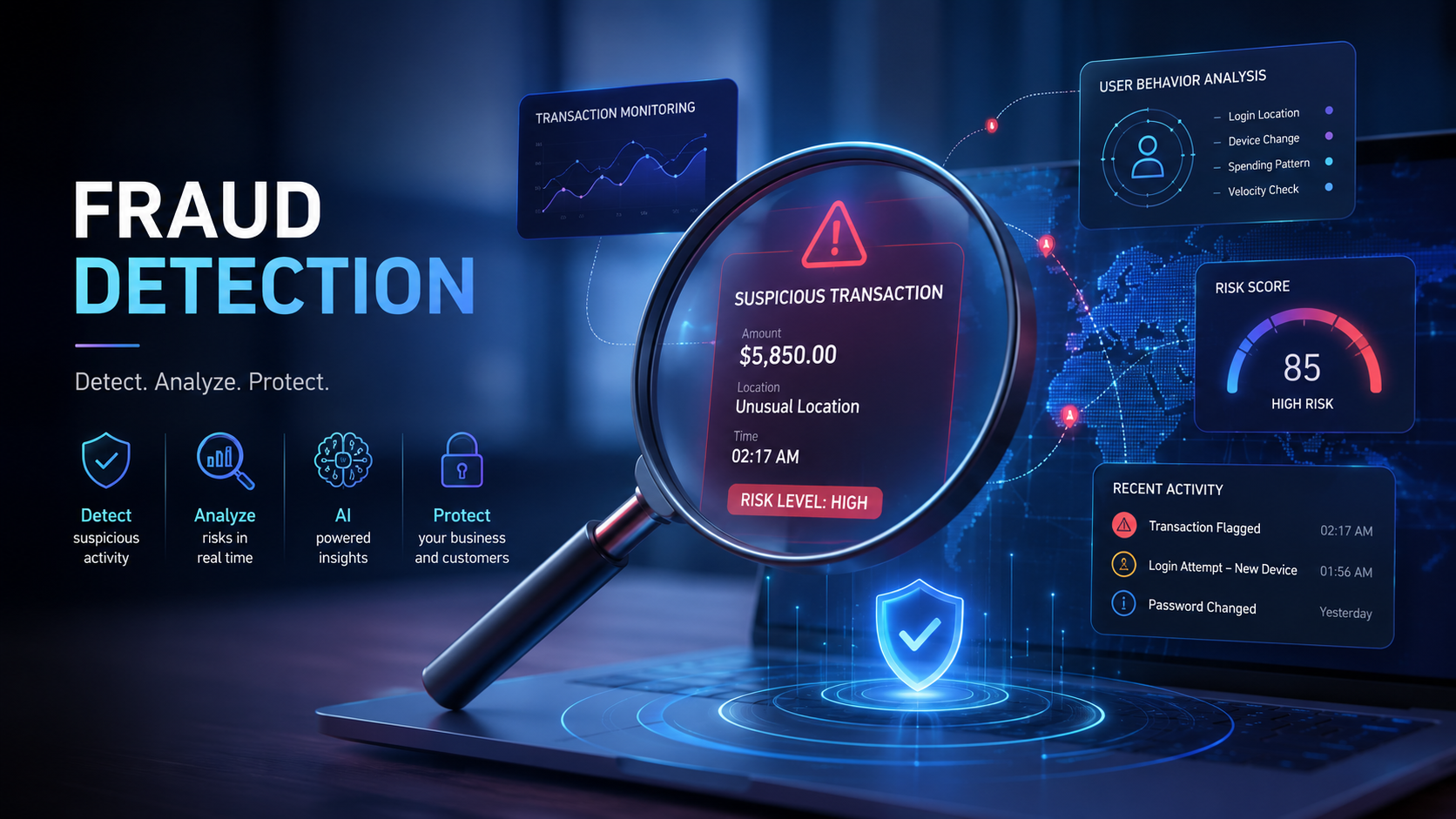
What is Fraud Detection?
As businesses continue their digital transformation, the volume of online transactions, customer contact, and digital data is increasing dramatically. While this creates new opportunities for growth and efficiency, it also opens the door to more sophisticated fraud. From unauthorized transactions and account hijacking to identity theft and fake insurance claims, fraud has become a significant challenge for organizations across various industries.
Therefore, Fraud Detection has become a critical business capability. By leveraging advanced technologies such as Artificial Intelligence (AI), Machine Learning (ML), and real-time data analytics, organizations can detect suspicious activity, prevent financial damage, and maintain customer trust before any harm occurs.
Why is fraud detection important for businesses in the digital age?
The digital transformation has made transactions faster and more convenient, but it has also created new avenues for fraudsters to exploit system vulnerabilities. Traditional manual verification processes are often unable to keep up with the speed of modern fraud and the ever-increasing volume of business data. Fraud detection systems help organizations proactively detect threats and respond to incidents in real time.
The benefits of using Fraud Detection include:
- Reduce financial losses resulting from fraudulent activities.
- Protect customer data and critical business information.
- Increase customer confidence and strengthen brand reputation.
- Supporting regulatory compliance and risk management.
- Improve operational efficiency with automation.
For organizations operating in highly regulated industries such as banks, insurance companies, and government agencies, fraud prevention is no longer optional, but a necessity for doing business.
Principles of Fraud Detection and How it Works
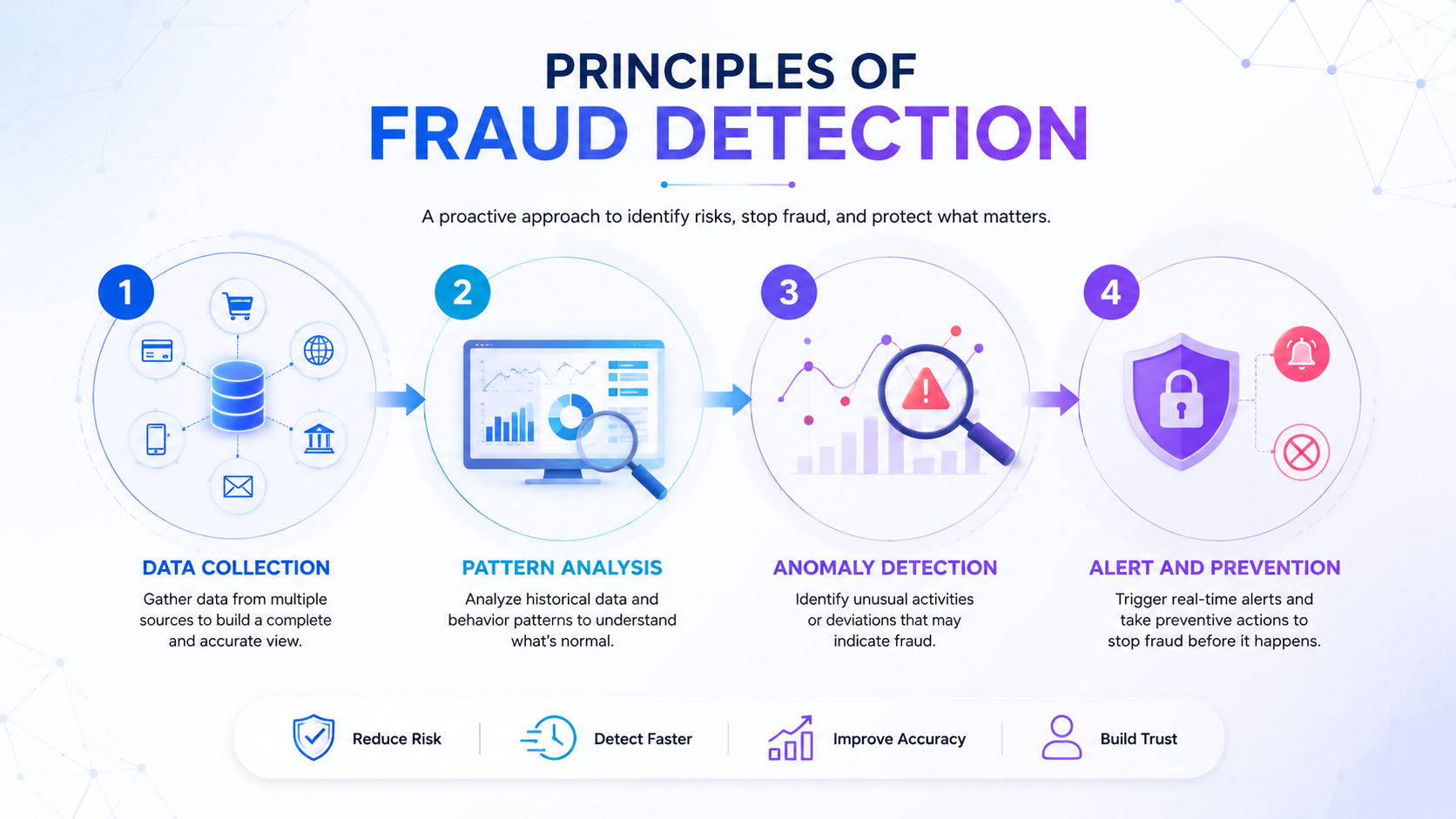
Fraud detection is the process of continuously collecting, analyzing, and evaluating data to identify patterns or unusual behavior that may indicate fraudulent activity. Modern systems use AI and data analytics to process vast amounts of data in real time.
Generally, the work process consists of the following key steps:
- Data collection
Data is collected from multiple sources, such as transaction history, customer accounts, login history, device information, and user behavior, to create a comprehensive dataset for analysis.
- Pattern analysis
The system learns the typical user behavior and transaction patterns, then compares new activity to these established patterns to identify suspicious anomalies.
- Anomaly detection
Advanced algorithms can detect unusual activity, such as high-value transactions from unfamiliar locations, multiple login attempts, or spending patterns that deviate from normal behavior.
- Alerts and prevention
When suspicious activity is detected, the system will automatically generate an alert. Depending on the risk level, the system may temporarily suspend transactions, request further identity verification from the user, or forward the incident to authorities for investigation.
Major challenges that businesses face
Even with continuous technological advancements, detecting fraud remains a challenge because scammers constantly adapt their methods.
Common challenges include:
- Fraudulent schemes are constantly evolving
Criminals are constantly developing new methods to bypass security systems. - Identity Theft and account seizure
Stolen credentials and fake identities make user verification more difficult. - Complex Data Environment
Businesses that collect and manage data from multiple systems make it more difficult to monitor and track activity. - Safety and User Experience
Overly stringent security systems can create difficulties for users, while systems with low levels of protection may increase security risks.
Technology used in Fraud Detection
Modern fraud detection solutions rely on the collaboration of multiple technologies to accurately and quickly detect threats.
- Artificial Intelligence (AI)
Analyze large amounts of data and identify suspicious patterns. - Machine Learning (ML)
Learn from historical and new data to help detect emerging fraud patterns. - Deep Learning
Discover complex and hidden fraud patterns within large datasets. - Anomaly Detection
Detect unusual activity, such as unexpected purchases or logins from unusual locations. - Natural Language Processing (NLP)
It helps detect signs of fraud in emails, messages, and various forms of communication. - Real-Time Monitoring
Verify transactions immediately to help stop fraud before any damage occurs.
Common Types of Fraud
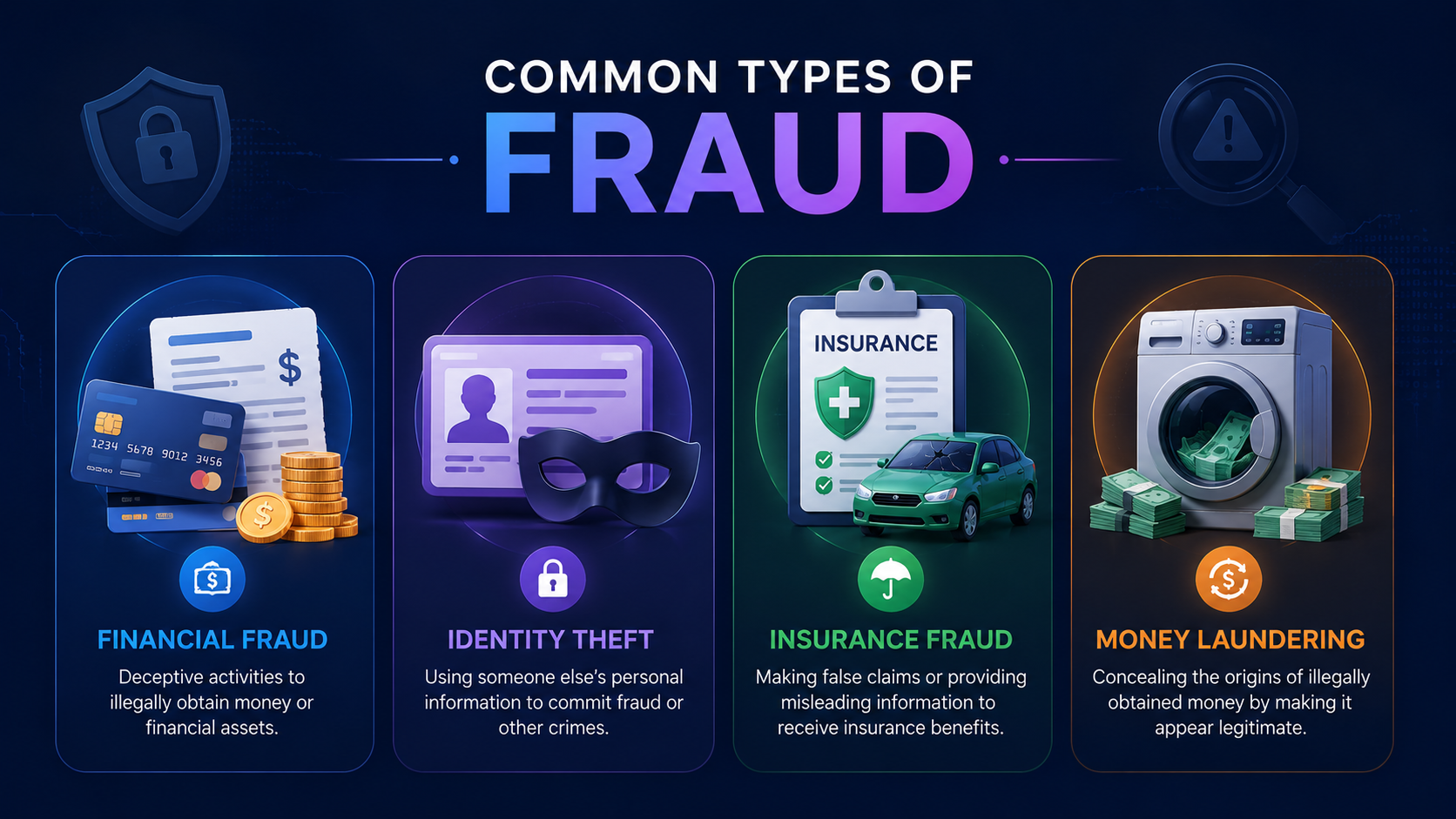
Fraud detection systems can help detect and prevent various forms of fraud, including:
- Financial Fraud – Unauthorized payments, credit card misuse, and fraudulent loan applications.
- Identity Theft – Using stolen personal information for fraudulent purposes.
- Transaction Fraud – Suspicious money transfers or unusual purchases.
- Account Takeover – Fraudsters gain access to legitimate user accounts.
- Insurance Fraud – Filing false claims and creating forged documents.
- Money Laundering – Hiding or concealing the source of illegal funds through sophisticated transactions.
Businesses that should use Fraud Detection
Financial institutions and banks
Banks process millions of transactions every day, making them prime targets for cybercriminals. Fraud detection systems help detect unauthorized transactions, suspicious account activity, and identity fraud in real time.
Insurance Company
Insurance companies can use Fraud Detection to verify claims, detect forged documents, identify duplicate claims, and reduce financial losses resulting from fraudulent activity.
Government agencies
Government agencies manage citizen data, public funds, and large-scale procurement processes. Fraud detection helps increase transparency, reduce the risk of corruption, and prevent the misuse of public resources.
Real-world examples in Thailand
SCB: AI-powered detection to enhance security in online banking
Siam Commercial Bank (SCB) is using AI and Machine Learning technology to detect suspicious transactions through mobile banking and payment channels. The system analyzes customer behavior, transaction history, and location patterns to automatically detect unusual activity.
For example, if a customer suddenly makes a transaction from a country or device they've never used before, the system can detect such activity and alert the customer immediately. As reported, AI-powered verification helps reduce credit card fraud incidents and enhances overall customer security.
Krungsri: Real-time monitoring to prevent credit card fraud
Krungsri Credit Card utilizes an AI-powered anomaly detection system to track cardholder behavior and identify suspicious transactions in real-time. The system assesses transaction patterns, spending habits, and risk factors to determine whether an activity is legitimate.
When unusual transactions are detected, the system can automatically suspend potentially fraudulent activity before financial damage occurs. This proactive approach helps protect customers and reduce fraud-related losses.
Summary
As digital transactions continue to grow, fraud prevention has become one of the most important priorities for modern organizations. Fraud Detection integrates AI, Machine Learning, Data Analytics, and real-time monitoring to detect suspicious activity before it escalates into damaging events.
Whether it's financial institutions, insurance companies, or government agencies, implementing an effective fraud detection strategy can help reduce financial losses, protect customer trust, and strengthen businesses. In an era of evolving cyber threats, organizations that invest in intelligent fraud prevention technology will be better prepared to operate securely and compete effectively in the digital economy.
Fusion Solution collaborates with world-class fraud detection solution providers to deliver reliable fraud prevention solutions and expert consulting services. Whether you need to strengthen security, reduce risk, or upgrade your fraud detection capabilities, our team is ready to help. Contact us today to learn more.