Voice communication is becoming one of the most natural ways to interact with artificial intelligence (AI). Instead of typing commands or waiting for a response, users today expect conversations with AI to be fluid and natural, as if they were talking to a real human.
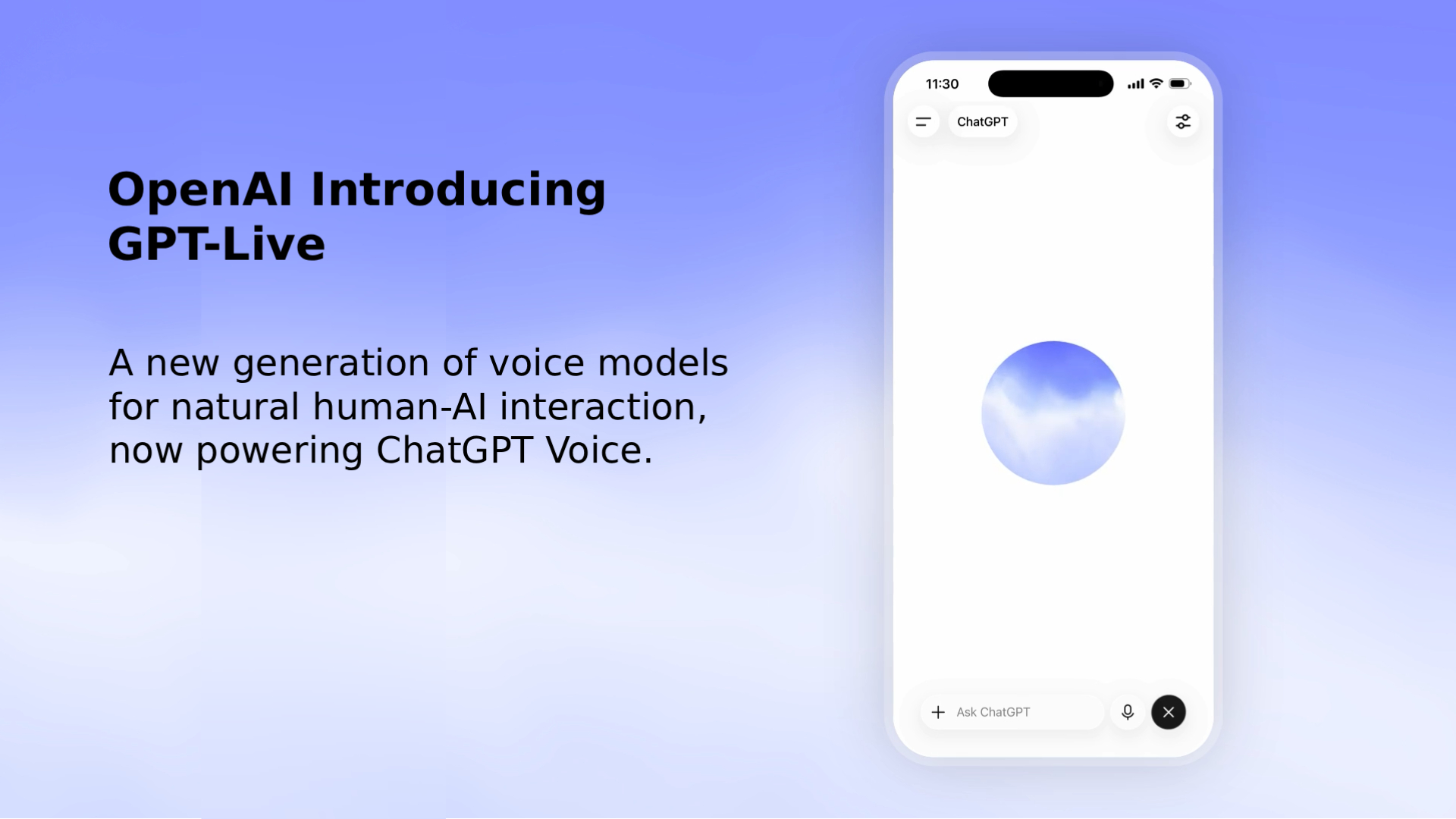
To enhance this experience, OpenAI has launched GPT-Live a new AI voice model designed to deliver more natural, intelligent, and responsive conversations in real time.
Unlike traditional voice systems that operate on a turn-by-turn conversation basis, GPT-Live can listen and respond simultaneously, resulting in more continuous and natural conversations. This represents another significant step that brings AI assistants closer to the role of a helper or colleague than simply being chatbots.
What is GPT-Live?
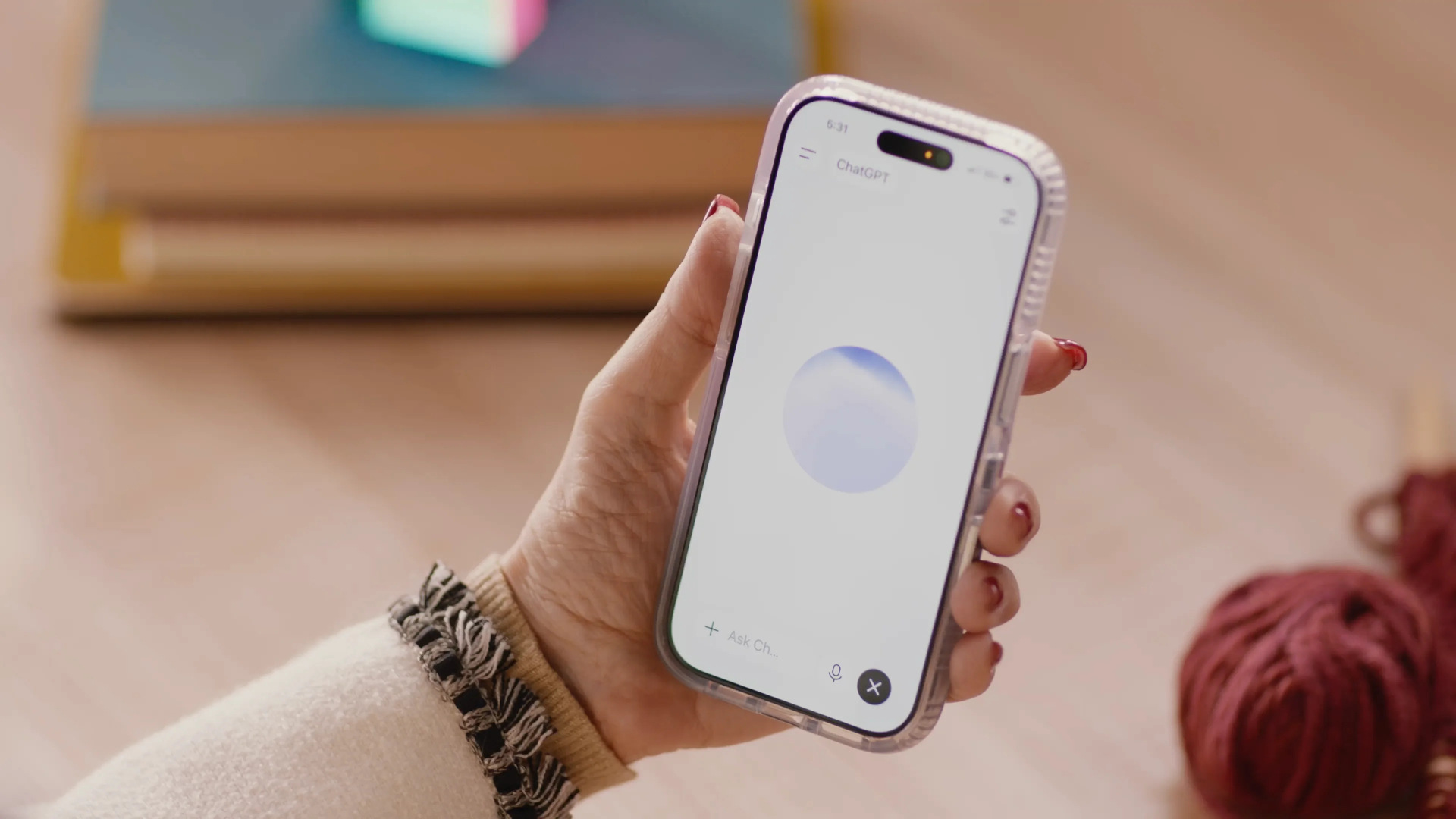
GPT-Live is OpenAI's latest voice model that powers a new kind of ChatGPT Voice experience.
This model is built on a Full-Duplex architecture, which can process the user's speech while simultaneously generating a response. This results in smooth conversation without awkward silences or unnatural lags.
At launch, OpenAI offered two versions:
- GPT-Live-1 – The primary model for users of the Go, Plus, and Pro packages.
- GPT-Live-1 mini – A small, default model for free users.
This launch allows millions of ChatGPT users on Web, iOS, and Android to access the next generation of Voice AI simultaneously.
Why does GPT-Live feel more like talking to a human?
Traditional voice assistants typically work in the following sequence:
- The user finished speaking.
- Voice-to-text conversion system
- AI processes the answer.
- Text-to-speech conversion system
Although this method works well, it often causes delays during conversations and doesn't support natural interruptions.
GPT-Live completely changes this interaction method.
Instead of waiting for the user to finish speaking, the AI continuously listens, understands the context of the conversation, and decides whether to respond immediately or simply acknowledge it with short audio responses such as "Hmm" or "Yes." It can also choose to remain silent at appropriate moments, making the conversation more natural and closer to human-like interaction.
Key features of GPT-Live
- Full-Duplex Conversation
The most significant innovation of GPT-Live is its full-duplex architecture.
This capability allows AI to...
- Listen while I'm responding.
- Supports natural-sounding interruptions.
- Respond during pauses in speech.
- Maintain continuity in the conversation.
- Supports fast-paced interactive conversation.
Instead of treating every sentence as a separate question, GPT-Live can engage in conversation similar to that of a human interlocutor.
- Smarter Voice Intelligence
Voice conversations don't always consist solely of simple questions.
When users ask something that requires:
- Web search
- Advanced reasoning
- Complex analysis
- Multi-step problem solving
GPT-Live will pass these tasks on to OpenAI's latest Frontier Reasoning Model, GPT-5.5 at launch, which will automatically perform these tasks in the background while the voice conversation continues naturally.
Once processing is complete, the AI will respond continuously without interrupting the conversation.
This architecture combines real-time conversational capabilities with the analytical power of OpenAI's most powerful AI models.
- More Natural Conversation Flow
One of the most noticeable improvements is how conversations feel.
GPT-Live can:
- Understand pauses
- Detect when users are still thinking
- Avoid interrupting unnecessarily
- Resume conversations smoothly
- Maintain context over longer discussions
These subtle conversational behaviors create an experience that feels far closer to talking with another person than using a traditional voice assistant.
- Live Translation Capabilities
OpenAI also demonstrated GPT-Live performing real-time language translation during voice conversations.
Instead of waiting for complete sentences before translating, GPT-Live can support more fluid multilingual interactions, making communication across languages faster and more natural.
This capability has significant potential for:
- International business meetings
- Travel assistance
- Customer support
- Language learning
- Global collaboration
GPT-Live vs Previous ChatGPT Voice
Feature | Previous Voice Mode | GPT-Live |
Conversation Style | Turn-based | Simultaneous listening and speaking |
Interruptions | Limit | Natural interruption handling |
Response Flow | Pause before replying | Continuous conversation |
Context Awareness | good | Improved long-form context |
Response Flow | Limit | Uses frontier reasoning models behind the scenes |
Reasoning Integration | basic | Enhanced real-time translation |
The result is a voice experience that feels faster, smoother, and more engaging for everyday conversations.
Availability
OpenAI is rolling out GPT-Live globally across ChatGPT.
Current availability includes:
- ChatGPT บน Web
- iOS
- Android
The default voice model depends on the subscription plan:
- Free users: GPT-Live-1 mini
- Go, Plus, and Pro users: GPT-Live-1
OpenAI has also announced plans to bring GPT-Live to the API, allowing developers and enterprises to integrate these voice capabilities into their own applications in the future.
Current limitations
Although GPT-Live introduces major improvements, there are still some limitations at launch.
- No support for voice conversations with video
- No screen sharing during GPT-Live sessions
- Language fluency may vary across less commonly supported languages
OpenAI has stated that these capabilities are already under development and are expected to arrive in future updates.
What GPT-Live Means for the Future of AI
GPT-Live is more than a new voice model—it represents a shift toward conversational AI that feels increasingly natural and capable.
By combining real-time voice processing, advanced reasoning capabilities, and seamless interaction, OpenAI is transcending the limitations of traditional chatbots.
Users will be able to interact with the AI in a way that is closer to talking to a colleague, assistant, or mentor than using a typical question-and-answer system.
This evolution also opens up opportunities for AI agents to take on more complex tasks, such as:
- Help manage long-term projects.
- Support the meeting.
- Provides support in multiple languages.
- Works continuously with users throughout the day.
Conclusion
The launch of GPT-Live marks another significant step in the evolution of Conversational AI.
With its full-duplex architecture, combining advanced reasoning capabilities and natural conversational style, GPT-Live elevates the human-AI voice communication experience to a clearer level.
As OpenAI continues to expand the capabilities of GPT-Live, including API enablement, support for more languages, and the future addition of video and screen sharing features, voice interaction is likely to become one of the primary ways people interact with AI.
For organizations, developers, and general users alike, GPT-Live demonstrates that the future of AI isn't just about creating better answers, but about building fluid, intelligent, and natural conversations that feel like communicating with a real human.