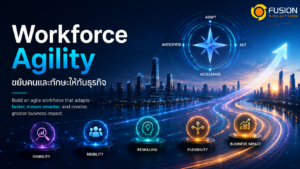
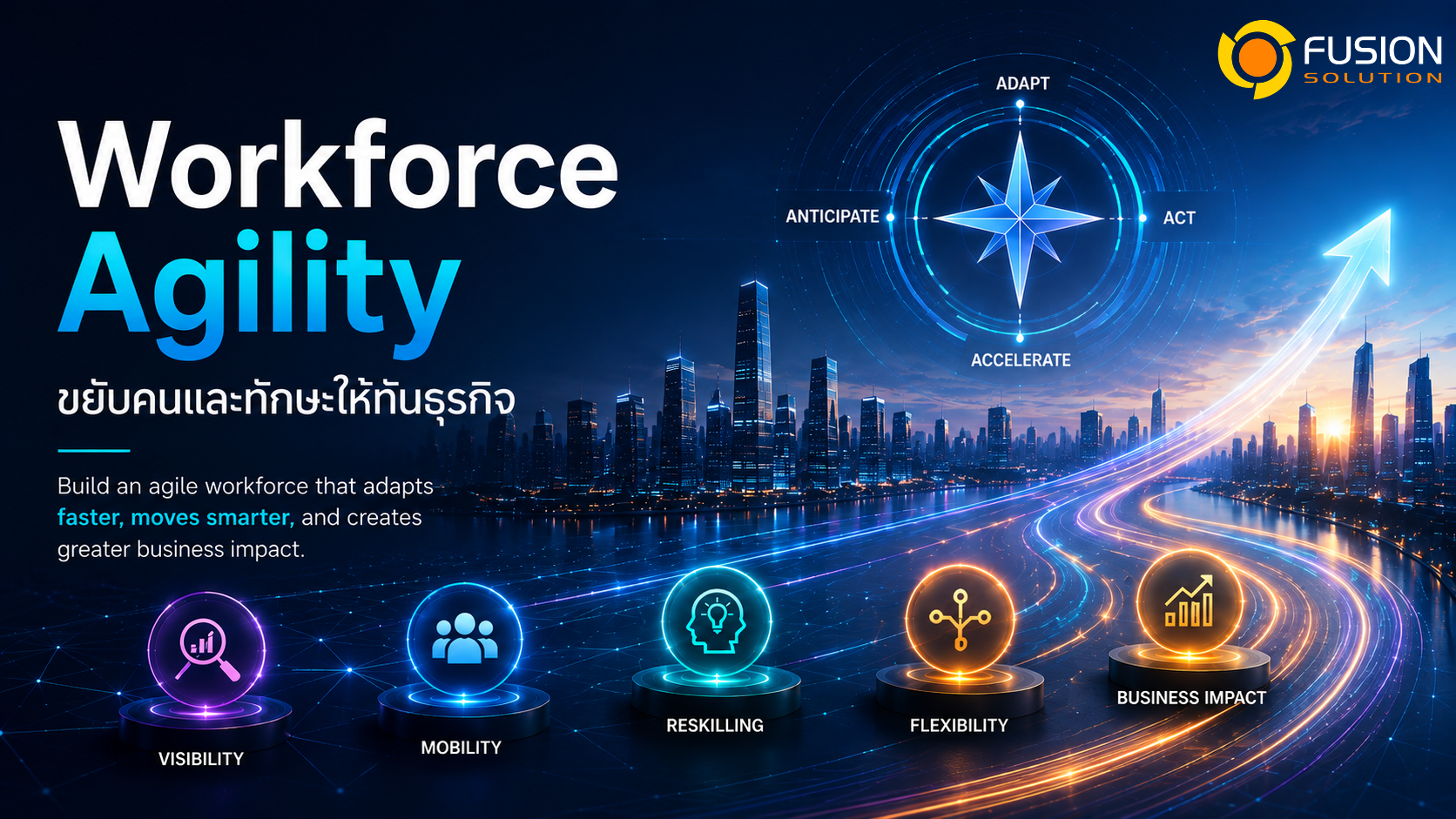
Many organizations are able to plan their workforce in advance, yet when actual business needs shift, they often fail to adjust their workforce as quickly as required.
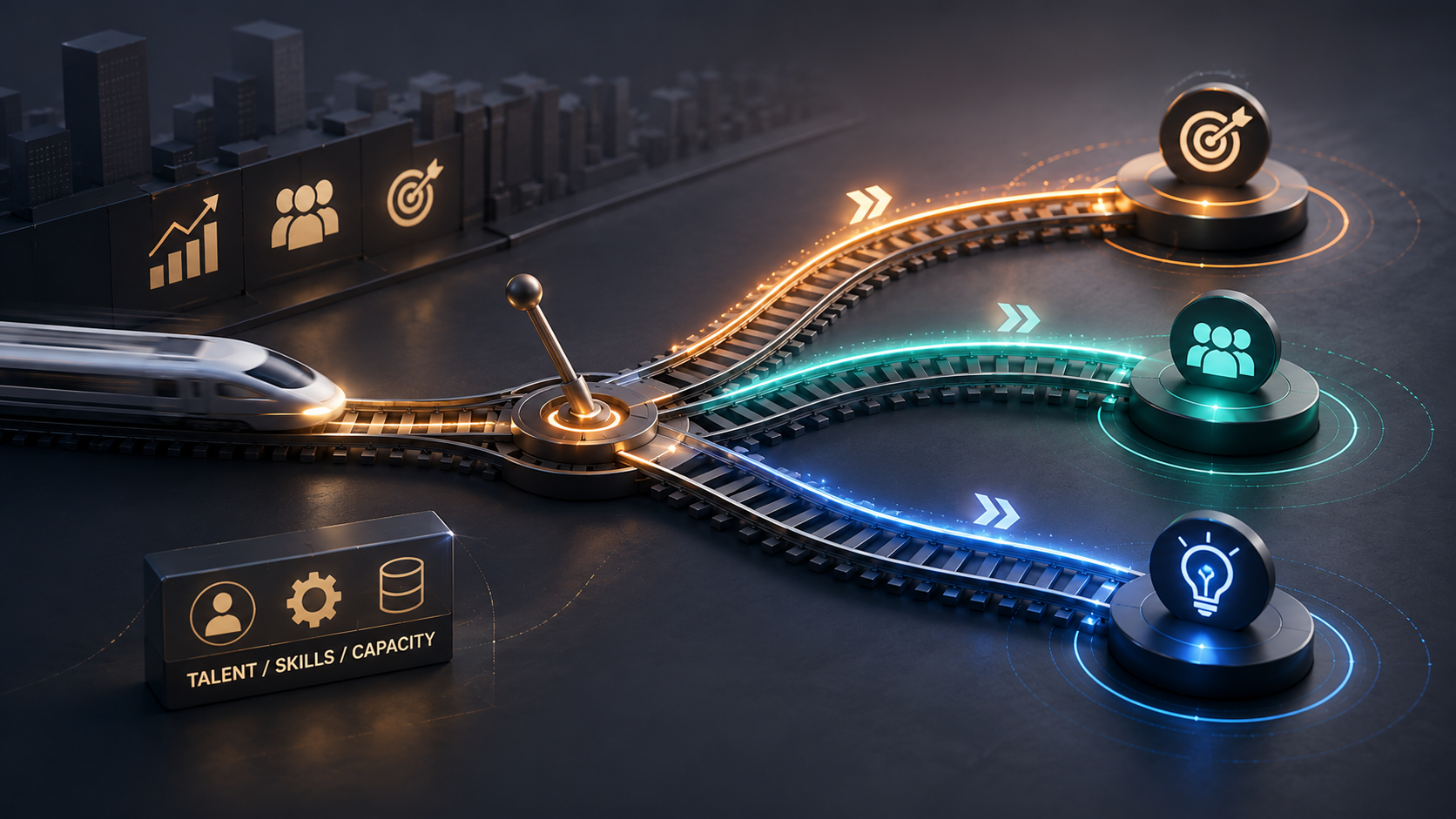
Recognizing change is not enough if an organization cannot mobilize talent, skills, and capacity to where they are needed; when every gap simply translates into a request for new hires, the organization risks overlooking the capabilities it already possesses in-house.
Business Change ↓ Workforce Visibility ↓ Skills and Talent Insight ↓ Mobility and Reskilling ↓ Workforce Agility
When workforce planning fails to keep pace with change
Strategic Workforce Planning helps identify future demand, talent supply, and gaps, whereas workforce agility focuses on translating insights into action when the business requires it.
A gap may arise from a lack of skills, talent being in the wrong department, or capacity that cannot yet be reallocated.
What is workforce agility?
Workforce Agility is the ability to align people—including skills, capacity, work design, and workforce mix—with business changes while maintaining continuity, quality, and the employee experience.
Agility does not mean constantly restructuring; rather, it is about having the data, options, processes, and decision rights that enable a rapid and high-quality response.
How does technology help build workforce agility?
Technology helps connect skill profiles, the talent marketplace, mobility workflows, learning recommendations, workforce analytics, scenario planning, and organizational design, as well as HR and finance data.
Technology enhances visibility and coordination, but insights will not translate into action if policies, budgets, or managerial behaviors continue to impede the flow.
True agility is not about constantly making employees change
If change occurs without clarity, time for adjustment, or support, agility can turn into employee instability.
Organizations should establish visible options, fair matching processes, dedicated learning time, managerial support, transition plans, and feedback channels.
How does it differ from workforce flexibility?
Workforce Flexibility | Workforce Agility |
Adjust the timing, location, or employment format | Adjusting people, skills, capacity, and work design. |
Focus on working conditions | Focus on responding to business change. |
Create work options | Please help reorganize the capabilities. |

Key components
Business Signals
Identifying risks related to demand, cost, technology, and talent.
Workforce Visibility
View capacity, skills, critical roles, availability, and cost.
Skills and Talent Intelligence
Identify who possesses the capabilities and which talent might be suitable for new opportunities.
Internal Mobility
Align talent with roles, projects, and priorities.
Rapid Reskilling
Align learning with the work and timelines required by the business.
Flexible Workforce Models
Select Employee, Contractor, Partner, or Automation.
Decision Governance
Define criteria, owner, access, approval, and fairness.
Through what methods can an organization adjust its workforce?
Guidelines | example |
Build | Upskill or reskill existing employees. |
Buy | Outsource missing capabilities. |
Borrow | Use a contractor, consultant, partner, or managed service. |
Move | Move talent to a new team, role, or project. |
Redesign | Adjust jobs, workflows, or team structures. |
Automate | Use technology or AI to reduce repetitive tasks and increase capacity. |
Obstacles Preventing Organizations from Being Agile
- Manager Talent Hoarding
- Too Many Approvals
- Rigid Job Architecture
- Outdated Skills Data
- Learning Disconnected from Work
- Budget Disconnected from Workforce Plans
- Limited Opportunity Visibility
- Rewards Do Not Support Cross-Team Work
How to Start Building Workforce Agility?
- Select key business scenarios.
- Specify the affected workforce segment.
- Make skills and capacity visible.
- Identify Gaps and Workforce Actions
- Reduce policies that hinder mobility.
- Connecting learning to real-world work.
- A pilot project with a clearly defined business unit.
- Measures both speed and quality.
- Continuously adjust the workforce model.
How should results be measured?
Dimension | Example Metrics |
Speed | Time to Deploy, Time to Fill, Time to Productivity |
Skills | Critical Skills Coverage, Reskilling Progress |
Mobility | Internal Fill Rate, Cross-Functional Movement |
Capacity | Workforce Availability, Project Staffing |
Cost | External Hiring Dependency, Contractor Cost |
Experience | Opportunity Participation, Employee Feedback |
Business Outcome | Delivery, Productivity, Service Continuity |
Summary
Workforce Agility integrates business signals, workforce planning, skills and talent insights, mobility, reskilling, and workforce actions. Agile organizations can mix and match strategies—such as build, buy, borrow, move, redesign, and automate—based on the specific context.