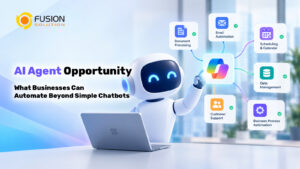
AI Agent Opportunity: What Businesses Can Automate Beyond Simple Chatbots
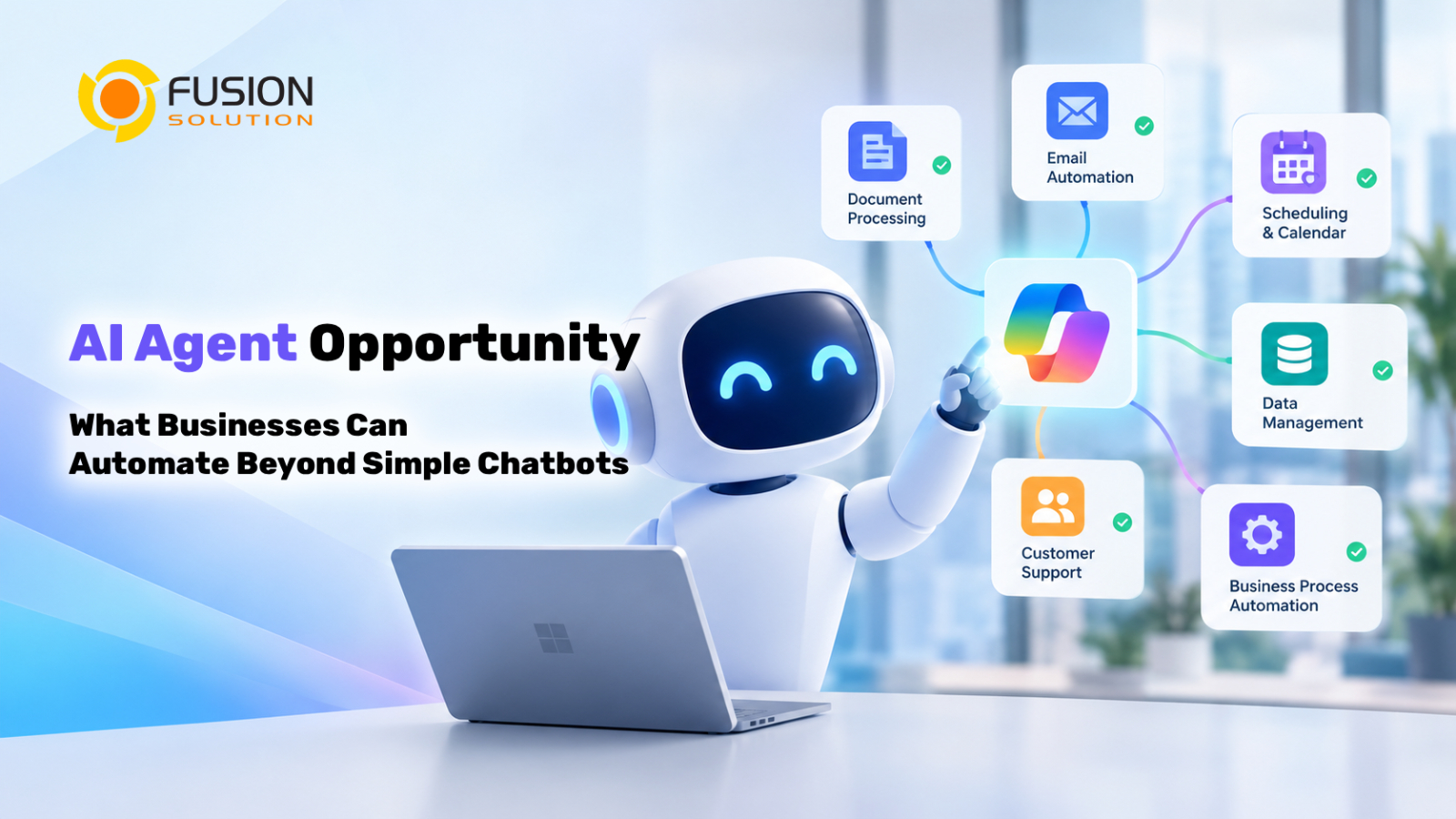
Many businesses use AI to answer questions, summarize documents, and assist employees with everyday tasks. While these applications are useful, they represent only a small part of what AI can accomplish.
The real AI Agent Opportunity lies in moving beyond conversations toward systems that can execute tasks, connect business applications, and coordinate multi-step workflows.
Unlike traditional chatbots, AI agents can be designed to interpret goals, retrieve information, use connected tools, and perform actions within defined permissions. This makes them valuable for organizations looking to reduce manual work, improve productivity, and streamline business operations.
Automating Repetitive Administrative Tasks
Employees spend considerable time handling emails, updating records, preparing reports, and routing requests. These activities often involve repetitive steps that can be partially or fully automated.
AI agents can help classify incoming requests, extract relevant information, create tasks, and route work to the appropriate department.
For example, an agent could review a customer email, identify the request, create a support ticket, and assign it to the relevant team. Employees can then focus on resolving complex issues instead of managing routine administrative steps.
Other opportunities include preparing meeting follow-ups, organizing requests, updating business records, and generating routine reports.
The best starting point is a process that occurs frequently, consumes significant employee time, and has clear rules for determining successful completion.
Improving Document Processing and Data Entry
Document-heavy processes create another significant automation opportunity. Finance, procurement, HR, and operations teams often need to extract information from invoices, forms, contracts, and other business documents.
AI agents can coordinate document-processing workflows by combining OCR, information extraction, validation rules, and integration with business applications.
For example, an invoice-processing workflow could extract invoice details, compare them with a purchase order, identify discrepancies, and route the document for approval.
OCR technology extracts text from documents, while an AI agent can coordinate subsequent actions across systems. Human review remains important when information is unclear or financial decisions require authorization.
By reducing repetitive data entry and manual document handling, businesses can improve processing speed and reduce avoidable errors.
Connecting Business Applications and Workflows
Many organizations use separate systems for CRM, ERP, HR, finance, and project management. Employees often need to switch between applications and transfer information manually.
AI agents can help connect these processes by retrieving information and performing authorized actions across integrated systems.
For example, a sales agent could retrieve customer history from a CRM, gather approved product information, and prepare a proposal for review. An internal operations agent could retrieve company policies, create a service request, and notify the responsible team.
Potential applications include:
- CRM: Prepare customer summaries and support sales follow-ups.
- ERP: Retrieve operational information and coordinate approved workflows.
- HR: Organize onboarding tasks and route employee requests.
- IT support: Classify incidents and retrieve troubleshooting guidance.
Successful integration requires secure access, reliable APIs, and appropriate permission controls. The objective is to reduce unnecessary handoffs and make business processes more efficient, rather than simply connecting more tools.
Going Beyond Chatbots in Customer Service
Traditional chatbots primarily answer questions. However, customers frequently need actions such as checking orders, scheduling appointments, updating account details, or creating service requests.
An AI agent can help manage these tasks by understanding the request, retrieving relevant information, and interacting with connected systems.
For instance, an agent could check an order's status, explain a delivery delay, create a support ticket, and escalate the issue when necessary.
This approach can reduce repetitive work for customer service teams while helping customers receive faster responses.
However, actions involving refunds, account changes, or sensitive customer information should require appropriate identity verification and authorization. Businesses should define which tasks agents can complete independently and which require human approval.
Turning Business Data into Actionable Insights
AI agents can also help organizations move from viewing reports to investigating problems and coordinating follow-up actions.
For example, an operations manager might ask why order-processing times have increased. An agent could retrieve authorized data, compare performance across periods, summarize potential causes, and prepare recommendations for further investigation.
Other opportunities include monitoring operational indicators, identifying overdue tasks, preparing management summaries, and highlighting unusual changes.
AI-generated findings should be validated against reliable data, particularly when they influence financial or operational decisions.
The value lies in helping employees investigate issues more quickly and organize appropriate next steps.
Supporting Internal Knowledge Management
Employees often spend valuable time searching for internal policies, technical documentation, standard operating procedures (SOPs), and project information.
AI agents can retrieve relevant information from approved knowledge sources and help employees complete related tasks.
For example, an employee preparing for a new project could ask an agent to locate the latest procedures, summarize relevant documents, and prepare a checklist.
This can support employee onboarding, internal IT assistance, policy guidance, and knowledge sharing.
To maintain trust, organizations should ensure that agents respect document permissions, reference reliable sources where possible, and use up-to-date information.
How to Identify the Best AI Agent Opportunities?
Not every process needs an AI agent. Some tasks are better handled by traditional automation or predefined workflows.
Businesses should prioritize opportunities based on business impact, task frequency, data availability, integration effort, and the consequences of potential errors.
A practical starting point is a repetitive, relatively low-risk workflow with measurable results. Organizations can establish baseline performance, run a controlled pilot, and compare the outcomes before expanding deployment.
Useful metrics include processing time, error rates, manual intervention, cost per transaction, and employee adoption.
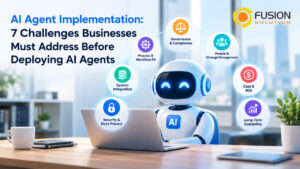
Businesses should also consider security, governance, and long-term maintenance before allowing agents to perform actions in production systems.
Choosing an AI Agent Implementation Partner
Turning automation opportunities into reliable business solutions requires more than AI technology. Organizations need a partner who understands business processes, enterprise integration, security, and deployment requirements.
Fusion Solution helps businesses explore practical AI opportunities and connect AI capabilities with existing business applications and workflows. By focusing on operational challenges, organizations can identify suitable use cases and develop an implementation strategy aligned with their business objectives.
Starting with a clearly defined use case and a controlled proof of concept helps validate feasibility before investing in a wider rollout.
Summary
AI agents create opportunities to automate far more than conversations. From document processing and customer service to business application integration and knowledge management, they can help organizations reduce manual effort and improve operational efficiency.
The key is to identify the right processes, establish appropriate controls, and measure business results.
For companies ready to move beyond simple chatbots, the next step is to examine everyday operations and identify which repetitive, multi-step tasks could be completed more efficiently with AI agents.
Interested in Microsoft products and services? Send us a message here.
Explore our digital tools
If you are interested in implementing a knowledge management system in your organization, contact SeedKM for more information on enterprise knowledge management systems, or explore other products such as Jarviz for online timekeeping, OPTIMISTIC for workforce management. HRM-Payroll, Veracity for digital document signing, and CloudAccount for online accounting.
Read more articles about knowledge management systems and other management tools at Fusionsol Blog, IP Phone Blog, Chat Framework Blog, and OpenAI Blog.
New Gemini Tools For Educators: Empowering Teaching with AI
If you want to stay up-to-date with the latest technology and AI news, check out this website It's updated daily!
Fusionsol Blog in Vietnamese
- What is Microsoft 365?
- What is Copilot?What is Copilot?
- Sell Goods AI
- What is Power BI?
- What is Chatbot?
- What is cloud storage?