
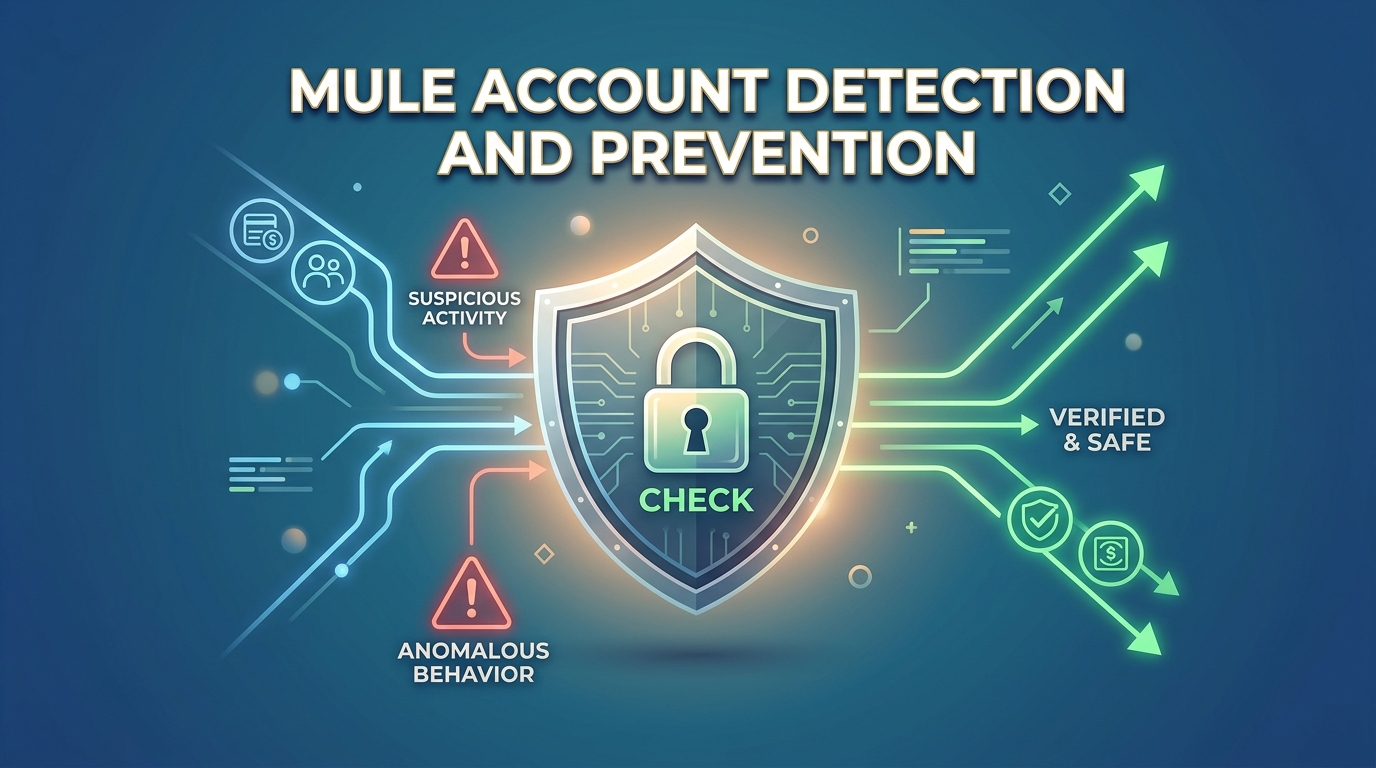
As digital banking and online payments continue to grow, financial criminals are developing new ways to move stolen money while evading detection. One common method used in financial fraud and money laundering is... Mule Account Or horse accounts. Although many people associate cybercrime with hackers and fraudsters, horse accounts are often a hidden mechanism behind the transfer of illegal funds and to conceal the source of those funds.
Understanding what a mule account is, how it works, and how to protect yourself is crucial for individuals, businesses, and financial institutions. In many cases, people may become involved in mule account schemes without realizing they are participating in illegal activity. However, the consequences can be severe, including financial losses, suspended bank accounts, and potential legal action.
What is a Mule Account?
Mule Account or horse account A "middleman" account is a bank account used to receive, transfer, or withdraw money on behalf of criminals. Criminal groups use mum accounts to conceal the source and destination of illegally obtained funds. Sending money through multiple accounts makes it difficult for law enforcement and financial institutions to trace the money back to the original criminal source.
Why is a Mule Account dangerous?
Horse accounts can be used to support various forms of financial crime, such as:
- online scams
- Phishing
- investment fraud
- Romance scams are forms of deception that occur within relationships.
- Business Email Compromise (BEC)
- money laundering
- identity theft
- Payment fraud
For businesses, the impact is not limited to financial losses. Fraud can lead to reputational damage, regulatory issues, customer complaints, and a loss of trust.
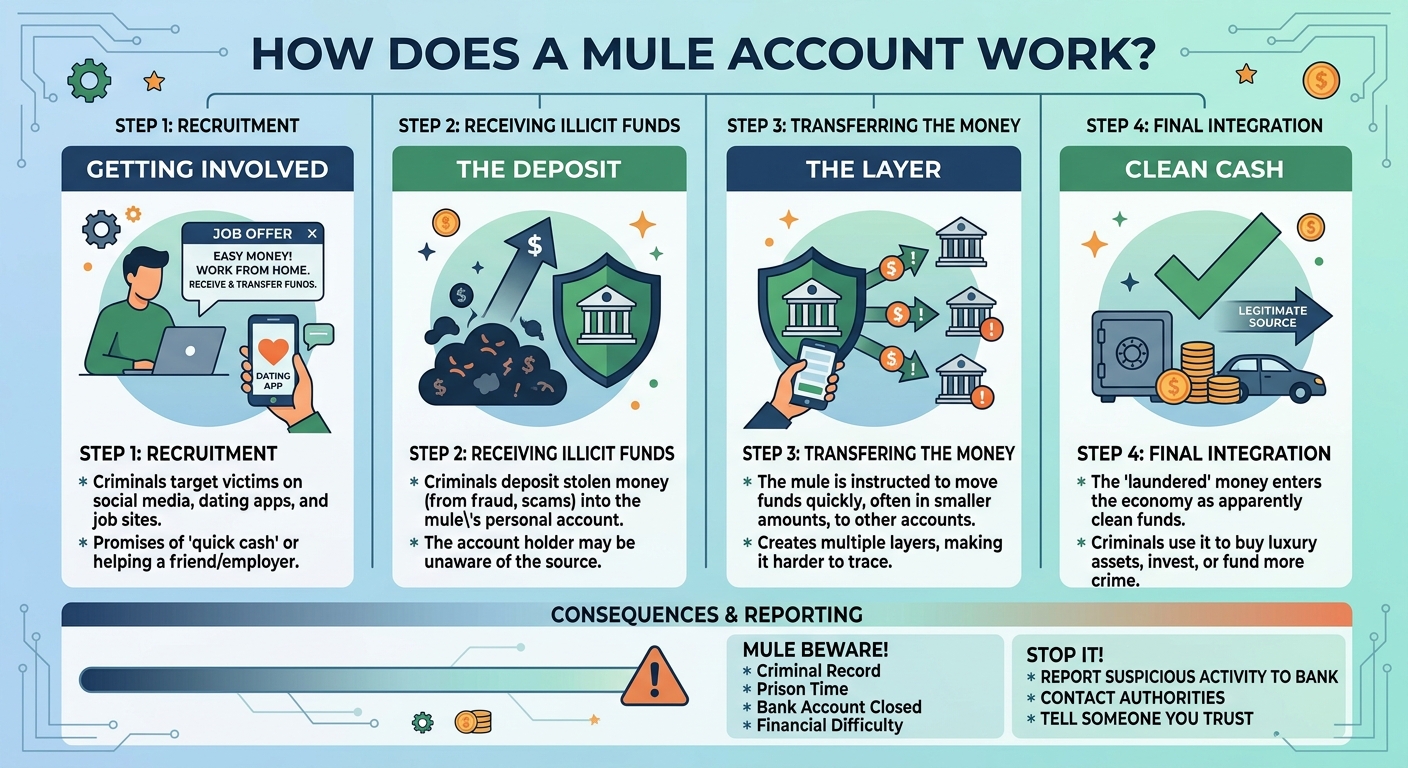
How does a Mule Account work?
Common patterns of fraud may include the following:
Criminal → Victim → Hash Account → Other Account → Criminal
For example, victims may be tricked into transferring money to an account controlled by the scammer, which is then quickly transferred to other accounts to make it difficult to trace the money trail.
In more complex cases, criminals may use multiple accounts, payment services, or various digital platforms.
The faster money moves, the more difficult it becomes for organizations and financial institutions to trace the entire transaction path.
Types of Mule Accounts
- Unknowing Mule Accounts
This is a case where an individual is unaware that they are involved in criminal activity. They may believe they are working for a legitimate company or assisting another person in conducting financial transactions. - Negligent Mule Accounts
Some account holders may notice certain warning signs but choose to ignore them because of the financial rewards. They may suspect something is wrong but continue to participate. - Complicit Mule Accounts
These individuals are aware of and assist criminals in money laundering. They may intentionally open accounts or provide banking services in exchange for payment. - Synthetic Mule Accounts
Scammers may create accounts using stolen or fabricated credentials. In this case, the actual person whose personal information was used may be unaware of the existence of such an account.
Common signs of a Mule Account
Detecting suspicious activity early can help prevent financial fraud.
unusual transactions
A large sum of money was transferred into the account, and then immediately transferred to another account.
Frequent money transfers
There are numerous incoming and outgoing transactions without any apparent business reason or explanation.
Requesting use of your account
Someone else has asked you to receive the money and transfer it on their behalf.
Easy money offer
I was offered a chance to make money quickly with little to no effort.
Requesting to share account information.
Someone else has requested your banking login information, debit card details, or account details.
How do financial institutions detect Mule accounts?
Banks use technology and transaction monitoring systems to identify accounts with suspicious behavior.
Transaction Monitoring
Detect unusual transaction patterns and money movements quickly.
Customer Verification (CDD & KYC)
Verify customer identity and assess risk from the account opening stage.
Behavior Analysis
Analyze activities that deviate from typical customer behavior.
Network Analysis
Track the connections between accounts and transactions to uncover fraud networks.
How can individuals protect themselves from getting involved with a Mule Account?
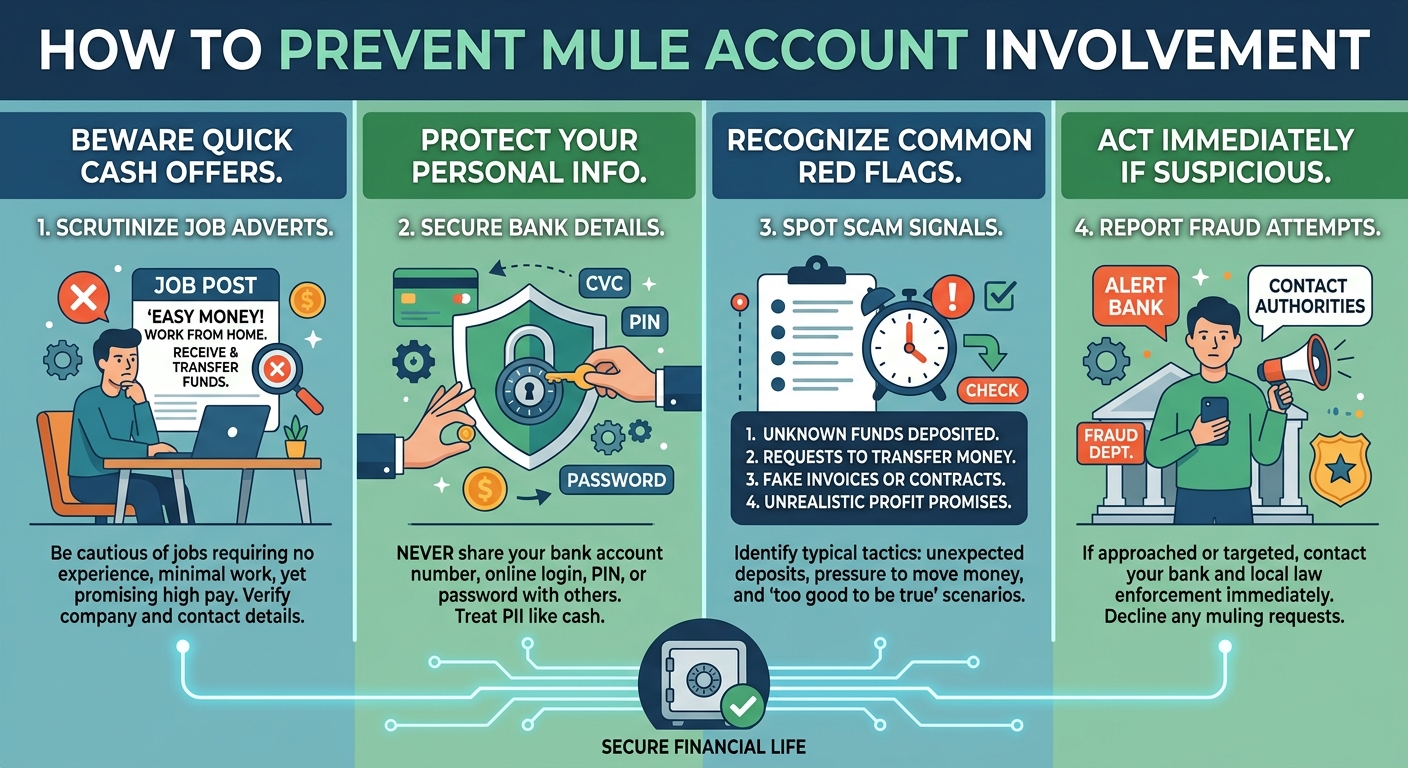
Self-protection begins with being aware of the risks.
Do not disclose your bank account details, debit card information, online banking login details, or personal identification documents to anyone. Be wary of job offers that involve receiving and transferring money on behalf of other individuals or companies.
Job offers should be verified through official channels, and the organization's information should be researched before undertaking any financial transactions. If any transaction seems suspicious or offers unrealistically high compensation, it's best to be suspicious.
Additional preventive measures include:
- Check your account activity regularly.
- Use a highly secure password and Multi-Factor Authentication (MFA).
- Report any suspicious messages or communications.
- Review the money transfer request before proceeding.
- Avoid investment opportunities with unknown sources.
Good practices for organizations
Businesses can mitigate the risks from Mule Accounts by implementing strong financial controls and raising awareness among employees.
Organizations must:
- Conduct regular audits to ensure compliance with AML (Agricultural Marketing Organization) requirements.
- Use solutions for monitoring and tracking transactions.
- Train employees to be able to recognize the signs of financial crime.
- Enhance the Customer Onboarding process.
- Use a risk-based authentication method.
- Immediately check for unusual payment methods.
A proactive approach helps organizations identify suspicious activity before financial losses occur.
The future of Mule account detection.
As digital transactions become faster and more interconnected, criminals continue to develop new methods. However, advances in Artificial Intelligence (AI), Machine Learning (ML), and Fraud Analytics are enhancing the ability of financial institutions to detect Mule accounts in real-time.
Future detection strategies will focus more on Behavioral Intelligence, Network Analysis, and Predictive Risk Modeling. These technologies can help uncover hidden connections between accounts and identify suspicious transaction patterns before serious damage occurs.
Summary
Mule Account or shill account They may look like ordinary bank accounts, but in many cases, these accounts play a crucial role in financial fraud and money laundering processes. Criminals use such accounts to move stolen money, conceal illegal activities, and evade detection.
For individuals, understanding the risks and warning signs of horse accounts can help prevent unknowingly becoming involved in criminal activities. For businesses and financial institutions, effective detection capabilities, compliance programs, and employee awareness remain crucial components in combating financial crime.
As cybercrime continues to evolve, awareness and proactive prevention are crucial in addressing the increasing threat of mule accounts. Maintaining knowledge and vigilance will enable individuals and organizations to protect the credibility of their financial systems and avoid potential legal repercussions and financial losses.