Many organizations strive to continuously invest in employee development, whether it be learning, career development, or internal mobility.
But even with increased opportunities for growth, clearer career paths, and improved support tools, many organizations still face the same problems.
That means talented people are leaving, engagement is decreasing, productivity isn't meeting expectations, and employees feel far removed from organizational goals.
The key question, therefore, is not just "Does the organization offer good benefits?" but "Do employees truly feel connected to the organization?"
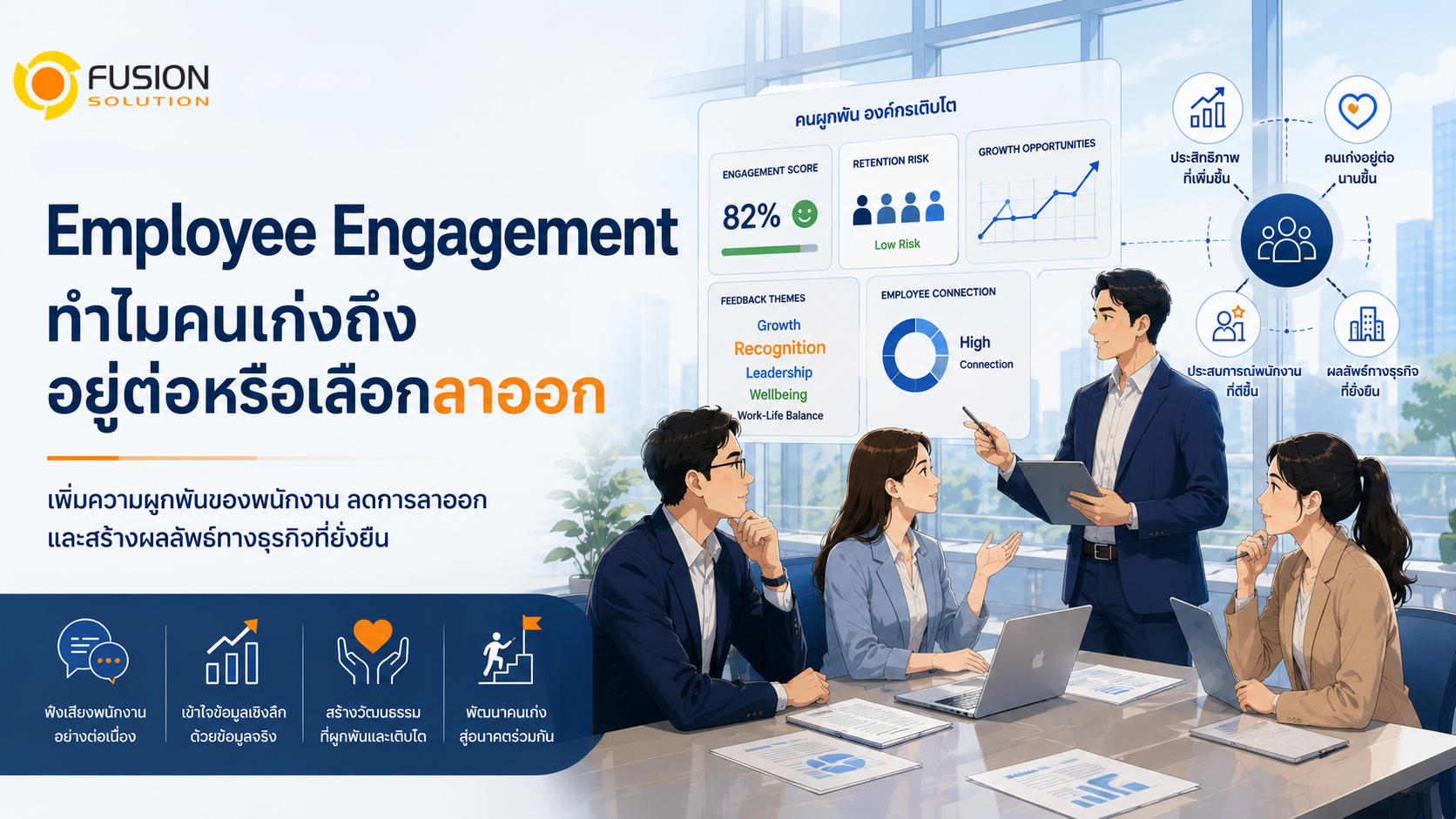
This is why Employee Engagement has become one of the key indicators of human resource management in the modern era.
What is Employee Engagement?
Employee engagement refers to the level of commitment, dedication, and willingness of employees to participate in their work, teams, and organizational goals.
Employees with high engagement tend to...
- Understand the organization's goals
- They feel that their work is meaningful.
- Want to create good work
- Ready to support the team's success
- They are more likely to stay with the organization longer.
Therefore, engagement doesn't just mean happiness, but it's about the long-term connection between employees and the organization.
Why is Employee Engagement important?
When engagement levels decline, the impact is often not limited to individual employees but affects the team and the organization as a whole.
The impact often spreads to...
- Productivity
- Collaboration
- Innovation
- Customer Experience
- Retention
Organizations with high engagement tend to retain top talent better and create an environment conducive to growth and collaboration.
Conversely, if employees feel they are not involved in organizational goals, the risk of turnover tends to increase.
How does Employee Engagement differ from Employee Satisfaction?
Many people use these two words interchangeably, but in reality, there is a clear difference.
Employee Satisfaction | Employee Engagement |
Satisfied with the work | bound to work |
Focus on feelings | Emphasis on behavior and participation. |
They might just remain indifferent. | want to create work |
Measure satisfaction | Measuring engagement |
Employees may be satisfied with their jobs, but that doesn't always mean they will be engaged.
What affects Employee Engagement?
Leadership
Executives and managers play a crucial role in building trust and clarity.
Career Growth
Employees must see opportunities for growth within the organization.
Learning and Development
Skill development helps employees feel like they are progressing.
Recognition
Receiving recognition helps boost motivation at work.
Employee Wellbeing
Good health enables employees to work to their full potential.
Internal Opportunities
Having new opportunities within the organization reduces the need to seek opportunities from outside.
How does employee engagement help organizations?
Organizations with high levels of engagement often reap several benefits.
- Reduce the turnover rate
- Increase Productivity
- Increase Employee Retention
- Add Collaboration
- Increase the quality of customer service
- Build a strong Employer Brand.
- Support long-term business growth
Instead of viewing engagement solely as an HR matter, many organizations are beginning to see it as a driver of business results.

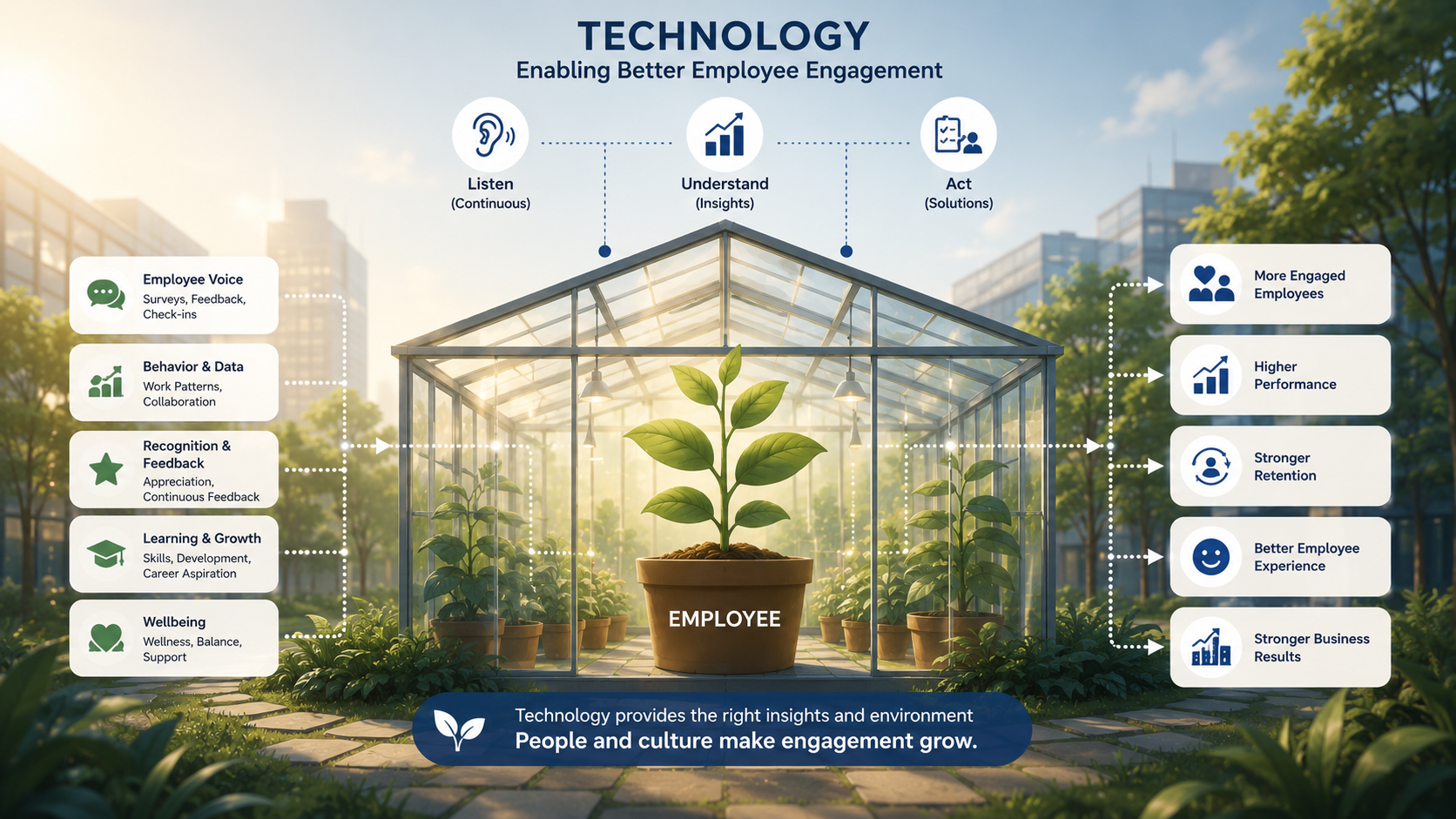
How does technology help employee engagement?
In the past, engagement measurements might only be done once a year through an Employee Survey, but today technology allows organizations to gain a deeper and more continuous understanding of their workforce.
Examples of key competencies include:
- Employee Surveys
- Continuous Listening
- Employee Feedback
- Manager Insights
- Sentiment Trends
- Workforce Analytics
- Engagement Dashboards
This data helps organizations identify problems and take action more quickly than waiting for the annual survey results.
Good engagement isn't just about high scores.
Many organizations focus on increasing survey scores, but true engagement is not measured by scores alone.
Importantly:
- Employees feel valued
- Employees see opportunities for growth
- Employees understand the organization's goals.
- Employees are ready to contribute to the team's success.
When employees feel truly connected to the organization, engagement becomes a natural outcome.
Summary
Employee engagement refers to the level of commitment and dedication employees have to the organization, their work, and business goals.
Organizations that can create continuous engagement tend to have a highly motivated workforce, retain talented individuals well, and are ready to support long-term business growth.