
Many organizations believe that employees leave because of salary issues, but in reality, a significant number of employees decide to seek new opportunities because they don't see a future for themselves within the organization.
When employees are unsure about their growth potential, what skills they need to develop, or don't see opportunities for advancement, their commitment to the organization tends to decrease as well.
Conversely, organizations that provide employees with a clear growth path tend to retain top talent, motivate them, and develop their potential better.
This is why Career Development has become one of the key topics in modern human resource management.
What is Career Development?
Career development is the process of helping employees plan, develop, and continuously grow in their careers.
The goal of Career Development is not just about promotion, but about helping employees develop the knowledge, skills, and experience necessary for future opportunities.
Career development typically consists of:
- Career Path
- Skills Development
- Learning Opportunities
- Career Conversation
- Development Plan
- Internal Opportunities
- Career Goal Setting
Why is Career Development important?
Today's employees are not just looking for a job; they are looking for opportunities for growth.
If employees don't see a future for themselves within the organization, the organization may face problems.
- The resignation rate has increased.
- Employee engagement has decreased.
- Talented people look for opportunities from outside.
- Key positions are lacking talented individuals ready for growth.
- The personnel development program has not yielded clear results.
Conversely, Career Development helps organizations.
- Add Employee Engagement
- Supporting Employee Retention
- Create a Talent Pipeline.
- Developing the next generation of leaders.
- Linking learning with business goals.
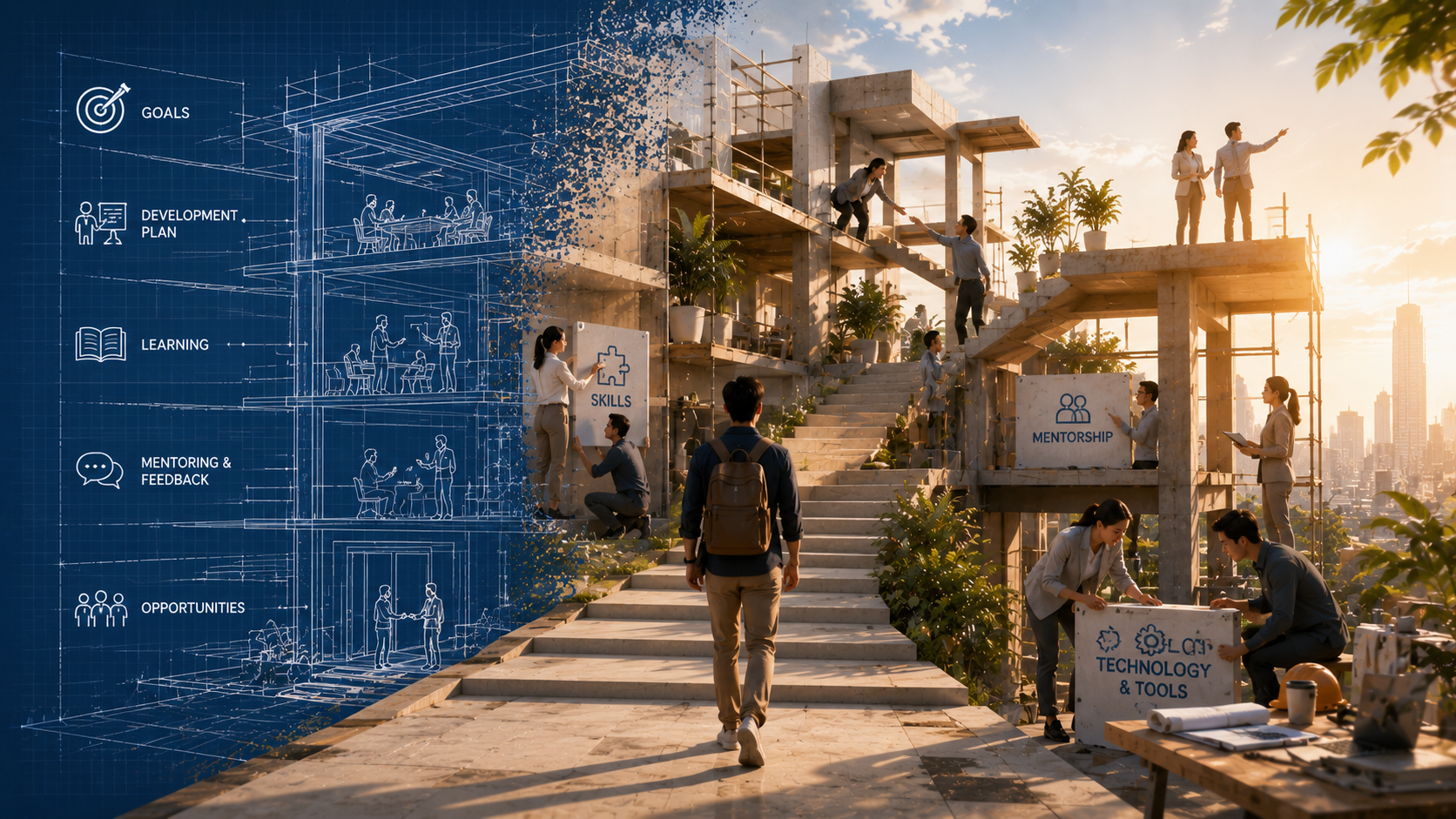
Career development is not just about getting promoted.
One common misconception is thinking that Career Development only refers to promotions.
In fact, career development can take many forms, such as:
- Developing new skills
- Changing careers
- Taking on more challenging tasks.
- Participating in important projects.
- Becoming a specialist.
- Preparing for a Leadership Role
Therefore, career growth is not limited to vertical paths; it also includes horizontal growth and self-improvement.
How does a career path differ from career development?
Many organizations use these two terms interchangeably, but there is actually a difference.
Career Path | Career Development |
Focus on the route/location. | Focus on the growth process. |
Tell me what positions I can apply for. | Tell me what needs to be improved. |
Looking at the career structure. | Recognize the potential of individuals. |
Focus on the destination. | Focus on travel. |
A career path is a map, while career development is the process of traveling towards that goal.
Key components of Career Development
- Career Framework
Employees should be able to see the ways in which each role can develop. - Skills Development
Organizations should help employees understand what skills they need to develop in order to achieve their desired goals. - Development Plan
Development should have clear goals and plans, not just aimless training. - Career Conversation
Managers should play a role in helping employees plan their careers and discuss their future regularly. - Learning Opportunities
Learning should be aligned with employee goals and organizational needs. - Internal Opportunities
Employees should be able to see new positions, projects, or opportunities within the organization.
What should Career Development be connected to?
Performance Management
It helps employees understand their strengths and areas for improvement.
Learning Management
Helps build skills essential for growth.
Succession Planning
Help prepare talent for key positions in the future.
Internal Mobility
It helps create opportunities for employees to grow within the organization.
Skills-Based Organization
It helps connect skills with career opportunities.
Workforce Analytics
Helps measure the long-term outcomes of human resource development.

How can technology help with career development?
Many organizations still manage career development through Excel documents or informal discussions.
Modern HR technology can help with...
- Talent Profiles
- Skills Data
- Career Path Recommendations
- Personalized Learning
- Internal Mobility
- Talent Marketplace
- Career Development Dashboard
- Workforce Analytics
When all the information is interconnected, employees will have a clearer view of their opportunities, while organizations can develop their people more effectively.
How to start creating Career Development in your organization?
- Define Career Framework
- Identify the key skills for each role.
- Open a Career Conversation between the Manager and the employee.
- Create an individual Development Plan.
- Connecting Learning with Career Goals
- Opening up opportunities for Internal Mobility.
- Continuously monitor the results.
Good career development isn't just about a career path document.
Many organizations already have a career path in place, but employees don't know where to start.
Good career development should help employees.
- Seeing one's own future.
- Understand the skills that need to be developed.
- Access to appropriate learning.
- I received advice from the Manager.
- Identifying opportunities within the organization.
When employees know where they are headed, they will be more motivated to develop themselves and stay with the organization.
Summary
Career development is a process that helps employees plan, develop, and continuously grow in their careers.
Organizations that invest in career development not only help employees visualize their future more clearly, but also retain talented individuals, build a talent pipeline, and support long-term business growth.