Artificial Intelligence (AI) is changing how businesses operate. Organizations are increasingly using AI agents to analyze information, automate workflows, access business applications, and perform tasks with minimal human intervention.
However, greater AI capabilities also introduce new cybersecurity risks. AI-powered attackers can discover software vulnerabilities faster, automate attacks, and exploit weaknesses at a scale that traditional security operations may struggle to handle.
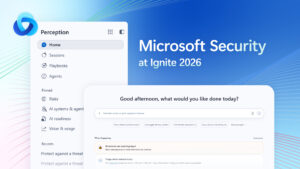
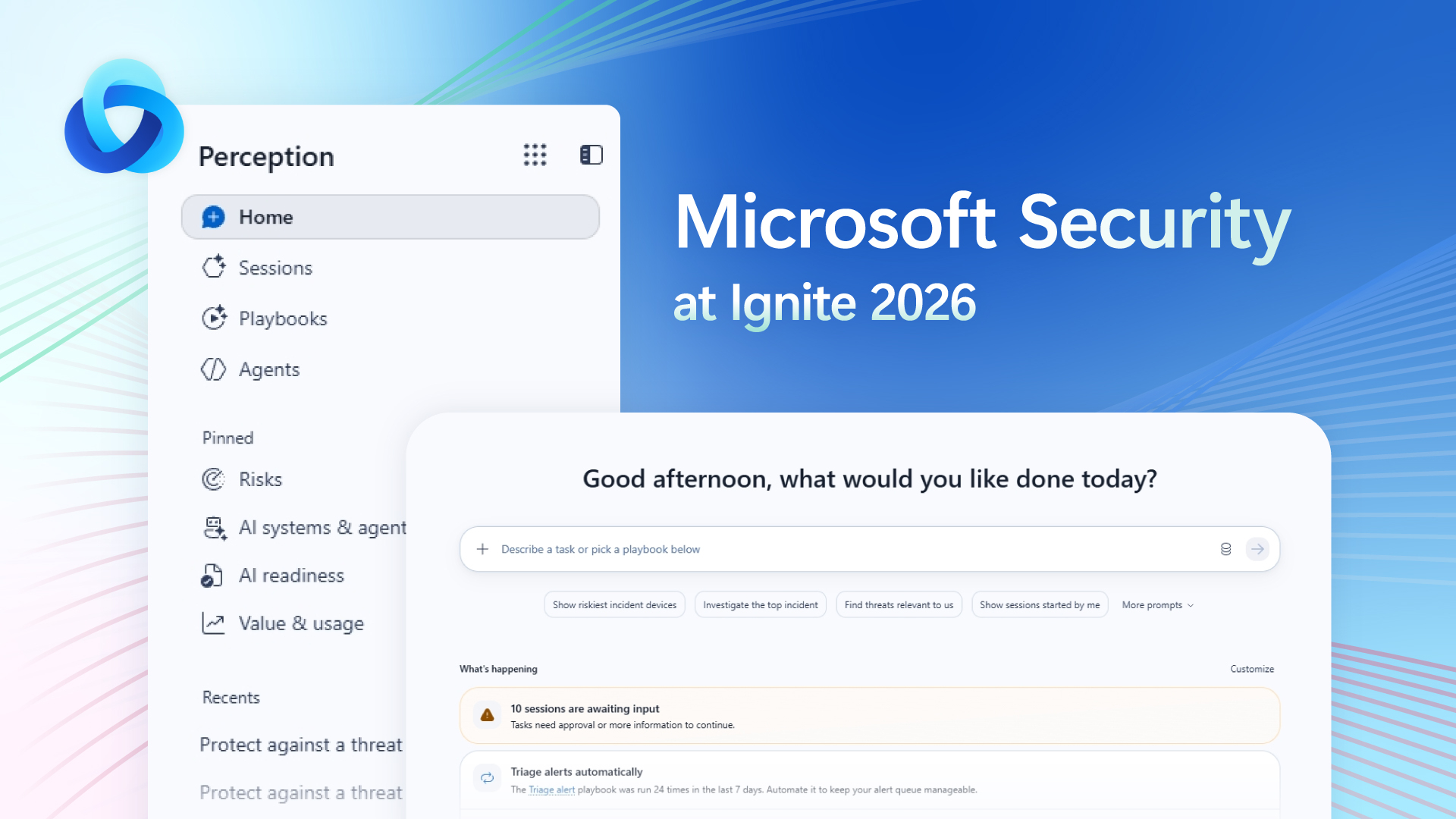
To address these challenges, Microsoft introduced Microsoft Perception, a security platform designed to help organizations defend against increasingly sophisticated threats using coordinated AI agents.
For SMBs, SMEs, and business managers, understanding this development is important as cybersecurity becomes a critical part of adopting AI safely.
What Is Microsoft Perception?
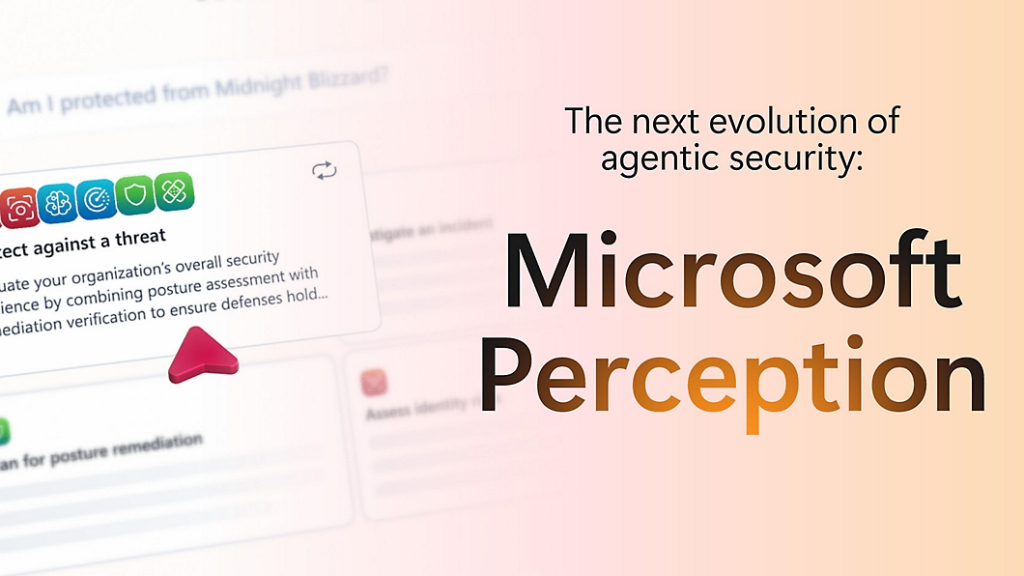
Microsoft Perception is Microsoft's agentic security platform designed to coordinate specialized AI agents to improve cybersecurity operations.
Announced as generally available in Microsoft's November 17, 2026 security announcement, Perception brings together different security agents that work collaboratively to identify vulnerabilities, investigate threats, and take remediation actions.
Instead of relying entirely on security professionals to manually review alerts and respond to incidents, the platform uses AI agents to automate repetitive security activities and accelerate decision-making.
Microsoft Perception is part of Microsoft's broader security ecosystem, working alongside technologies such as Microsoft Defender, Microsoft Entra, Microsoft Sentinel, and Microsoft Purview.
Its main objective is to help security teams move from reactive threat management toward more proactive and automated protection.
Why Does the Agentic Era Require a New Approach to Cybersecurity?
Traditional cybersecurity approaches were primarily designed to protect people, devices, applications, and business data.
However, AI agents introduce another layer of complexity because they can independently perform tasks, access information, interact with applications, and communicate with other agents.
This creates several security challenges.
- AI-powered attacks are becoming faster. Attackers can use AI to discover software vulnerabilities and develop exploits more quickly, reducing the time organizations have to respond.
- Security threats can become automated. AI can help attackers execute multiple stages of an attack, from identifying weaknesses to carrying out more complex campaigns.
- AI agents create new security risks. Business agents may have access to sensitive information and important applications. If an agent is compromised, misconfigured, or manipulated, it could expose business data or perform unauthorized actions.
These challenges mean organizations need security systems that can monitor activities continuously, understand context, and respond at machine speed.
How Microsoft Perception Works
Microsoft's new cybersecurity architecture consists of three main layers that work together to provide intelligent security operations.
Signals, Sensors, and Actuators
The foundation collects security information from different sources across an organization's IT environment.
These include devices, networks, operating systems, cloud services, applications, and Microsoft security products.
Sensors identify suspicious activities and potential threats, while actuators allow security systems to take action.
For example, they can help isolate a compromised device, revoke unauthorized access, or block an agent from performing restricted activities.
Context Layer
Collecting security alerts is not enough. Security systems must also understand what those alerts mean.
The context layer organizes information from different sources and combines it with an organization's environment and threat intelligence.
This provides AI agents with a clearer understanding of security conditions, helping them investigate incidents and prioritize risks more effectively.
Agents, Harness, and Models
The top layer contains specialized AI agents that collaborate through predefined playbooks and coordinated workflows.
Microsoft uses different AI models depending on the task, while the harness helps direct and coordinate agent activities.
This allows multiple agents to work together rather than operating independently.
Three Types of Security Agents in Microsoft Perception
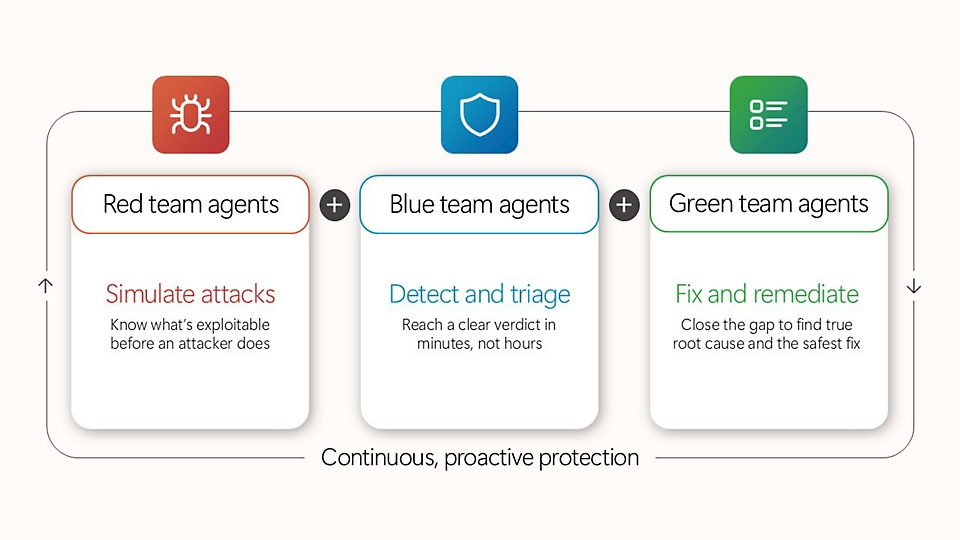
One of the most interesting features of Microsoft Perception is its use of three specialized agent teams.
Agent Type | Main Responsibility | Example Activities |
Red Team Agents | Think like attackers | Discover vulnerabilities and simulate attacks |
Blue Team Agents | Detect and investigate threats | Analyze alerts and investigate suspicious activities |
Green Team Agents | Improve security protection | Prioritize risks and coordinate remediation |
These agents work together through coordinated playbooks.
For example, a red team agent may identify a weakness in a web application. A blue team agent can investigate related security risks, while a green team agent helps coordinate the necessary fixes.
This creates a continuous security improvement cycle that helps organizations identify and address weaknesses before they become serious incidents.
Key Benefits of Microsoft Perception for Businesses
Although Microsoft Perception is designed for enterprise-level security operations, its approach highlights several important benefits for businesses of different sizes.
Faster Threat Detection and Response
AI agents can automatically analyze security alerts and investigate potential threats, reducing the time security teams spend on repetitive activities.
Proactive Vulnerability Management
Organizations can identify weaknesses before attackers exploit them. Automated playbooks also help prioritize vulnerabilities based on their potential business impact.
Reduced Manual Security Work
By automating investigation, alert triage, and remediation workflows, security professionals can focus on more complex decisions and strategic security improvements.
Better AI Agent Governance
As organizations introduce more AI agents, they need to manage agent identities, permissions, and activities. Microsoft's broader security ecosystem helps organizations discover, govern, and protect these AI agents.
Human-Controlled Automation
Automation does not mean removing people from security decisions. Microsoft Perception supports predefined guardrails and human approval for high-impact actions, allowing organizations to maintain control over important security operations.
What Should SMBs and SMEs Learn from Microsoft Perception?
Not every SMB or SME needs a dedicated agentic security platform. However, the security challenges highlighted by Microsoft are relevant to businesses adopting AI technologies.
Business owners and IT managers should consider several practical steps.
- Strengthen identity security: Use multifactor authentication (MFA) and appropriate access controls to protect business accounts.
- Protect sensitive information: Establish data access policies and prevent unauthorized sharing of confidential business information.
- Manage AI agent permissions: Give AI agents access only to the applications and information required for their tasks.
- Maintain software updates: Regularly update operating systems, applications, and security tools to reduce vulnerabilities.
- Monitor suspicious activities: Use security solutions that provide visibility into user accounts, devices, applications, and cloud environments.
These practices provide a foundation for adopting AI while reducing unnecessary cybersecurity risks.
Conclusion
The increasing adoption of AI agents is changing both business operations and the cybersecurity landscape. Traditional security approaches must evolve to address automated attacks, complex AI workflows, and new risks associated with autonomous agents.
Microsoft Perception represents Microsoft's approach to this challenge by combining security intelligence, coordinated AI agents, and automated response capabilities into a connected security architecture.
For SMBs and SMEs, the key takeaway is that AI adoption and cybersecurity should develop together. Businesses should strengthen identity protection, secure sensitive data, manage AI permissions, and establish appropriate security controls before expanding their use of AI agents.
Building a secure foundation today will help organizations take advantage of AI innovation with greater confidence.