Many organizations still manage their people primarily based on data such as job title, department, years of experience, or career path.
This approach may have been sufficient in the past, but today the world of work is changing faster than organizational structures can adapt. New skills emerge every year, while some skills are becoming obsolete more quickly than before.
The result is that many organizations face similar problems, such as difficulty finding suitable candidates, increasing skill gaps, constant need to outsource, difficulty achieving internal mobility, and talent marketplaces that don't accurately match opportunities.
In reality, the organization may already have people with the right skills, they just don't know what those employees possess.
This issue is directly related to Internal Mobility: moving talented people to the right jobs before needing to find new ones. Because accurately moving people to new opportunities requires understanding the employees' true skills first.
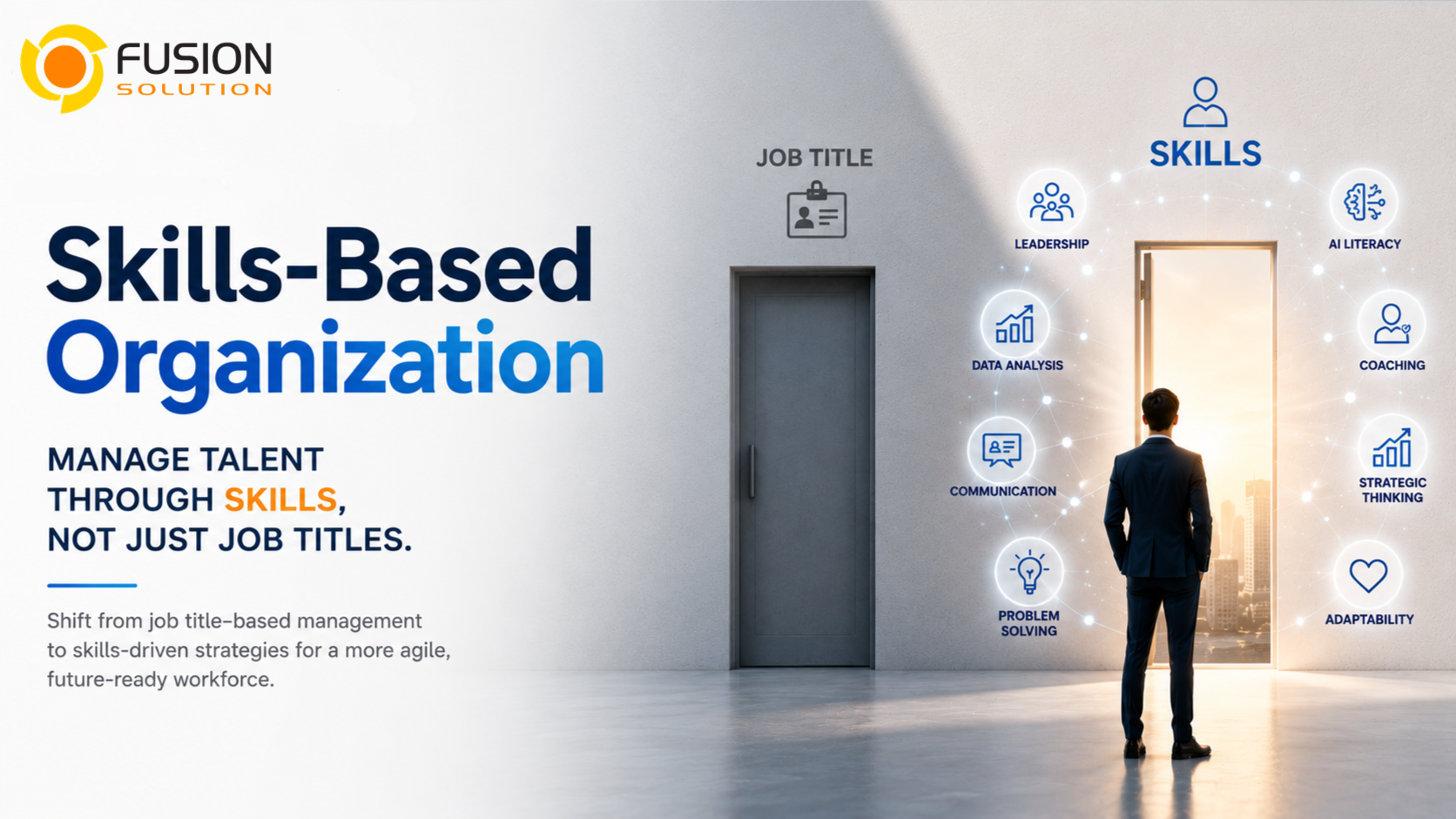
This is the starting point of the Skills-Based Organization concept, which is becoming a crucial foundation for talent management in modern organizations.
What is a skills-based organization?
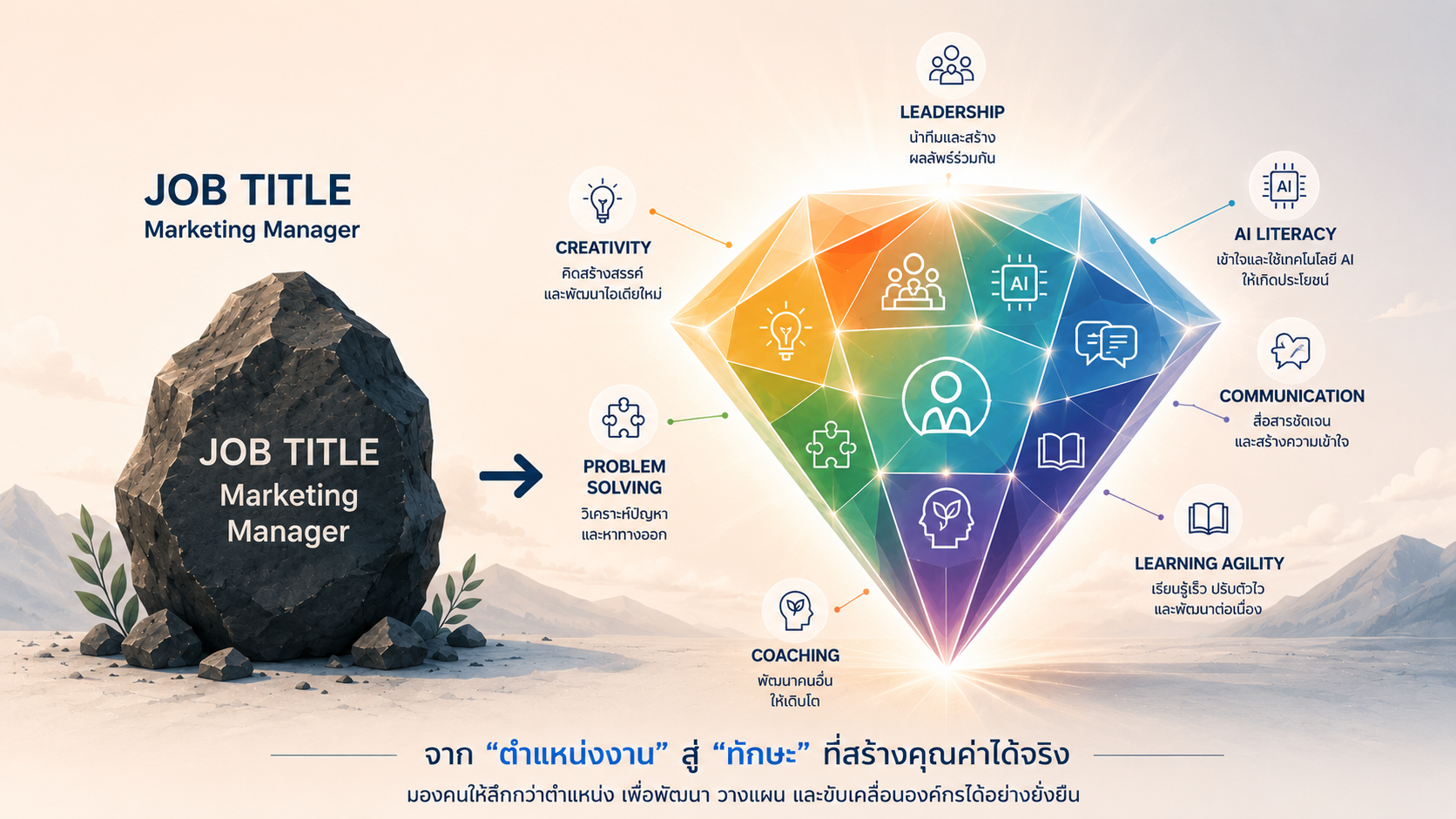
In the past, organizations often viewed employees primarily through their job titles, such as HR Manager, Marketing Manager, or Project Manager.
But having the same position doesn't always mean having the same abilities.
The concept of a Skills-Based Organization is about managing an organization by using skills data as a key component in talent decision-making, rather than relying solely on job titles.
Relevant decision-making models include:
- Recruitment
- Learning and development
- Career Development
- Internal Mobility
- Succession Planning
- Workforce Planning
Organizations will shift from asking, "What is this employee's position?" to, "What skills does this employee possess, and what value can they create in their role?"
Why are Skills-Based Organizations important?
Today, business needs are changing faster than job descriptions.
Many organizations are seeking new skills that are not part of their previous job roles, while at the same time, many employees have potential beyond the tasks they are currently performing.
If organizations only look at talent through job titles, they may miss important opportunities to utilize the potential of their existing employees.
The main benefits include:
- Revealing hidden skills within the organization
- Reduce reliance on outsourcing
- Developing employees in a way that meets their actual needs.
- Increase the accuracy of Talent Marketplace
- Supporting Internal Mobility
- Create Workforce Agility
- Better able to adapt to business changes
This concept is also connected to the Talent Marketplace: what is it? It increases employee growth opportunities because matching people with opportunities happens better when organizations have accurate and up-to-date skills information.
How do skills-based organizations differ from traditional organizations?
Traditional Organization | Skills-Based Organization |
Judging people by their Job Title | Judging people by their skills |
Emphasis is placed on experience in the position | Focus on Capability and Potential. |
Career paths are quite fixed | Career paths are more flexible |
Learning ตามตำแหน่ง | Learning according to the Skill Gap |
Find people based on job titles | Find people based on their skills |
Workforce Planning จาก Headcount | Workforce Planning from Skills |
The key difference is that organizations are no longer just looking at who holds what position, but are beginning to see what skills each person possesses and what opportunities they can grow through.
Skills-Based Organization does not mean the cancellation of Job Titles
Many people mistakenly believe that skills-basedorganizations will no longer have job openings.
In reality, the organization still maintains the same job structure, responsibilities, and career paths.
What has changed is the increased use of data and skills in making decisions.
- Recruitment is based on necessary skills, not the original job title
- Recommended learning based on the Skill Gap
- Career development based on skills that will be needed in the future.
- Internal Mobility using Skills Matching
- Succession Planning that considers readiness from a capability perspective.
ดังนั้น Skills-Based Organization จึงไม่ใช่การแทนที่โครงสร้างเดิม แต่เป็นการยกระดับวิธีการมอง Talent ให้ละเอียดขึ้น
องค์ประกอบสำคัญของ Skills-Based Organization
1. Skills Taxonomy
Organizations need a clear skills structure to serve as a common language for talent management.
2. Skills Profile
Each employee should have up-to-date information on their skills, expertise, and interests.
3. Skills Gap Analysis
Organizations need to know which skills they already possess and which skills are essential for the future of their business.
4. Skills-Based Learning
Learning should be linked to bridging skill gaps and aligning with employee growth goals.
5. Skills-Based Mobility
Internal role transitions should rely more on skills than solely on previous position.
6. Skills-Based Workforce Planning
Workforce planning should consider both the number of people and the skill sets that a business needs.

How do skills-based organizations help employees?
For employees, this approach provides greater flexibility for growth within the organization.
The benefits received include:
- Clearer view of own skills.
- Knowing what needs to be improved next.
- Received Learning materials that met needs
- Seeing new opportunities within the organization
- Expand career path to a wider range of options
- Increase opportunities for growth.
When employees understand the value of their existing skills, career development will not be limited to their job title alone.
How do skills-based organizations help other organizations?
Organizations that manage talent through skills can make more accurate decisions.
The benefits that the organization receives include:
- See the true capabilities of the workforce.
- Reduce Talent Shortage
- Develop employees in a targeted manner.
- Better workforce planning.
- Increase the accuracy of Talent Marketplace
- Supporting Internal Mobility
- Build a strong Talent Pipeline.
- Increase Workforce Agility
Instead of asking, "How many people do we have?", organizations begin to ask, "Do we have the skills the business needs?"
How does technology help skills-based organizations?
Managing skills in large organizations can no longer rely on spreadsheets.
Modern HR technology supports this through:
- Skills Profile
- Skills Intelligence
- Skills Taxonomy
- Learning Recommendations
- Talent Marketplace
- Internal Mobility Matching
- Workforce Analytics
- Skills Gap Analytics
Workday Skills Cloud states that organizations can use AI to connect, analyze, and gain clearer visibility into the workforce's skills, supporting talent development, internal growth, and workforce agility.
A good skills-based organization is not just a database of skills.
Some organizations start by creating a skills database, but if that data isn't used for actual decision-making, it may just be another database with no impact on the business.
A good approach is to apply skills in key HR processes, such as:
- Recruiting
- Learning
- Performance
- Career Development
- Talent Marketplace
- Internal Mobility
- Succession Planning
- Workforce Planning
When skills are actually used in these processes, organizations can transform skills data into decision-making that delivers business results.
Summary
A skills-based organization is a management approach that uses skills as the primary basis for talent decisions, rather than solely relying on job titles.
When organizations truly understand the skills of their workforce, they can develop employees in a targeted manner, support internal mobility, accurately match opportunities, and plan their workforce in alignment with business goals.
This concept is a key foundation for the next EP, Skills Intelligence, because once organizations start managing people using skills, the next question is: how will the organization obtain information about those skills?