A guide to m365 apps and their usage to improve productivity

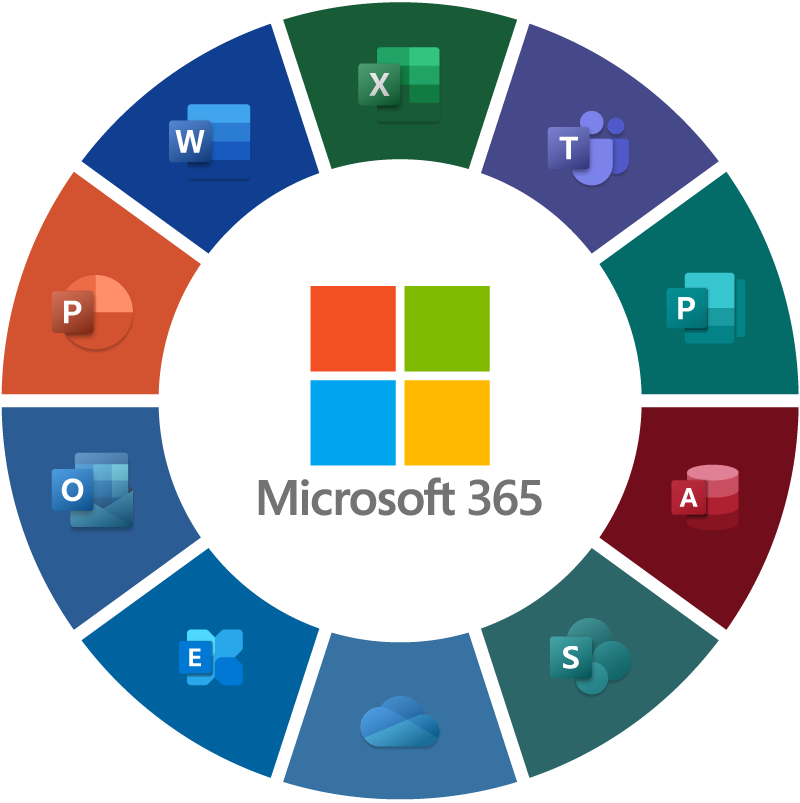
When it comes to creating a flexible, collaborative, and secure workplace, Microsoft 365 (M365) offers a powerful suite of tools to meet all business needs. These applications, collectively known as m365 apps, enable organizations to communicate effectively, increase productivity, and secure their digital environment—all on a single platform.
This guide describes the key m365 apps, showcases their main functions, and explains how each app complements the modern digital workplace.
What are M365 apps?
Microsoft 365 apps are a suite of tools for work, collaboration, security, and business management, integrated into the Microsoft 365 ecosystem. These apps are designed to work seamlessly across devices and are closely linked to create an efficient and connected work environment. Whether you're writing documents, managing projects, holding online meetings, or protecting company data, there's a specific app designed to meet your needs.
The main apps in M365 and their key objectives
App | Objective |
Word | Create, edit, and format documents professionally, perfect for reports, proposals, and contracts. |
Excel | Analyze, display, and manage data in spreadsheet format. Used for budgeting, forecasting, and reporting. |
PowerPoint | Design and present effective materials, ideal for meetings, sales, and training. |
Outlook | Manage emails, calendars, and contacts. Connect with Teams and SharePoint for seamless communication. |
Teams | Collaborate through chat, video conferencing, and file sharing—the central hub for collaboration in Microsoft 365. |
OneNote | Take notes, organize ideas, and collaborate on research projects or appointments. |
SharePoint | Share, manage, and collaborate on documents and content within the organization. |
OneDrive for Business | Securely store files, synchronize data, and share files across devices. Ideal for remote work and data backup. |
Planner | Plan team projects by defining and tracking tasks on a user-friendly board, ideal for managing small projects. |
Power Automate | Automate workflows between apps and services to improve efficiency. |
Power BI | Connect data sources, create dashboards, and visualize business insights interactively. |
Yammer | Build an internal social network and promote internal culture and communication. |
Forms | Create questionnaires, quizzes, and polls to collect data and opinions. |
Bookings | Manage appointments and bookings online; ideal for service businesses. |
Stream | Securely upload, share, and manage company videos, ideal for internal training and communication. |
Lists | Track information and manage workflows with customizable lists. Use it for stock tracking, issues, or event planning. |
Delve | Find and organize relevant information from Microsoft 365 based on user activity and collaboration. |
Sway | Create beautiful and easy-to-understand newsletters, reports, or presentations quickly. |
How M365 apps are transforming the workplace
Understanding the purpose of Microsoft 365 apps helps us see how they work together to create a connected, unified digital environment:
- More effective collaboration.
Apps like Teams, SharePoint, and OneDrive make collaboration across different locations easy, supporting real-time co-authoring and seamless file sharing. - Efficient automation
Power Automate helps teams automate approval, notification, and data collection processes, saving time and allowing them to focus on strategic tasks. - Decision making based on information
Power BI transforms raw data into actionable insights, enabling executives to make faster and more accurate decisions. - Flexible communication
Outlook and Teams are reliable internal and external communication channels, combining email, messaging, and video conferencing. - Content management
With SharePoint and OneDrive, businesses can store data in an organized, easily accessible, and secure manner. - Task and project management.
Planner and Lists help teams manage tasks efficiently without needing complex external project management tools.
Choosing the right M365 apps for your organization.
Choosing to use Microsoft 365 apps The appropriate choice depends on the size of your organization, the industry, and your specific needs:
Organization type | Recommendations for selecting main apps |
small business | Outlook, Teams, Word, Excel, OneDrive |
medium sized organization | Teams, SharePoint, Power BI, Planner, Power Automate |
Large organizations | Utilize a comprehensive suite of apps, with a focus on Power BI, Yammer, and advanced security tools (such as integration with Microsoft Defender). |
Academic Sector | Teams for Education, OneNote, Forms, Stream |
healthcare sector | Outlook, Bookings, SharePoint, Compliance Manager |
🔹 Special tip:
When using M365, be sure to utilize Microsoft's security and compliance features (such as multi-factor authentication and data loss protection) to protect your important data while fully enjoying the app.
Conclusion
The power of Microsoft 365 apps doesn't just lie in the capabilities of Word, Excel, or Teams, but in their seamless design to transform how we collaborate, automate, and communicate within organizations. Whether you're a startup or a multinational corporation, choosing the right suite of M365 apps will help your organization achieve its goals faster, with superior flexibility and security.
Interested in Microsoft products and services? Send us a message here.
Explore our digital tools
If you are interested in implementing a knowledge management system in your organization, contact SeedKM for more information on enterprise knowledge management systems, or explore other products such as Jarviz for online timekeeping, OPTIMISTIC for workforce management. HRM-Payroll, Veracity for digital document signing, and CloudAccount for online accounting.
Read more articles about knowledge management systems and other management tools at Fusionsol Blog, IP Phone Blog, Chat Framework Blog, and OpenAI Blog.
If you want to stay up-to-date with the latest technology and AI news, check out this website It's updated daily!
Related Articles
- What is Microsoft 365?
- Microsoft 365 for Frontline Workers: Enhancing Productivity and Collaboration
- Introducing new feature Computer Use in Copilot Studio for UI Automation
- Windsurf and Cursor Ultimate Comparison
- Unleashing Image Generation in Azure AI Foundry with GPT-image-1
- OpenAI Introducing latest image generation model gpt image 1 API
Frequently Asked Questions (FAQ)
What are Microsoft 365 Apps?
Microsoft 365 Apps is a suite of pre-installed Office applications such as Word, Excel, PowerPoint, Outlook, OneNote, and Publisher (for PC) that users can use both offline and online, with continuous updates to features and security.
How do Microsoft 365 Apps differ from other Microsoft 365 plans?
Microsoft 365 Apps focuses on using Office applications on desktop and mobile, but does not include Exchange email, SharePoint, or Teams as supplementary services like the Microsoft 365 Business Standard or Enterprise plans.
How many devices can I install Microsoft 365 Apps on?
Eligible users can install Microsoft 365 Apps on a maximum of 5 devices per device type, including PCs, Macs, tablets, and smartphones, under the same account.
Is a constant internet connection required when using Microsoft 365 Apps?
A constant internet connection is not required as it can function offline. However, a periodic internet connection is needed to verify licenses and receive software updates.
How do updates in Microsoft 365 Apps work?
Microsoft 365 Apps receive regular automatic updates, including new features, security patches, and performance improvements, ensuring users have the best and most secure experience.