

Cyberattacks are becoming increasingly sophisticated, making it more difficult for businesses to protect their applications, systems, and critical data. Security teams must constantly identify software vulnerabilities, monitor for suspicious activity, and respond to potential threats.
To address these challenges, OpenAI has introduced GPT-6 Cyber—a specialized AI model designed to assist cybersecurity professionals in identifying vulnerabilities, testing security weaknesses, and developing solutions.
Unlike typical AI assistants, this model focuses specifically on cybersecurity; it can help security researchers investigate complex software issues and uncover risks that might otherwise require significant time and expertise to detect.
But what does this development mean for businesses, developers, and cybersecurity professionals? More importantly, how will AI transform the way organizations protect their digital infrastructure?
What is GPT-6 Cyber?
GPT-6 Cyber is a specialized cybersecurity AI model developed by OpenAI. Its primary purpose is to help authorized security professionals identify and investigate weaknesses in software and digital systems.
Think of it as an advanced research assistant for cybersecurity teams.
Instead of relying entirely on manual code reviews and traditional security testing, professionals can use AI to examine software, identify suspicious weaknesses, test whether vulnerabilities are real, and suggest possible fixes.
The core capabilities of GPT-6 Cyber include:
- Finding software vulnerabilities: Identifying weaknesses in applications, operating systems, and software code.
- Testing security risks: Checking whether discovered weaknesses could actually be exploited.
- Supporting vulnerability fixes: Helping developers understand problems and create potential solutions.
- Reviewing complex code: Analyzing large software projects that may contain hidden security issues.
- Supporting security research: Helping professionals investigate difficult technical problems more efficiently.
The goal is not to replace cybersecurity experts. It is to give them more powerful tools to investigate threats and improve software security.
Why Is This Development Important for Businesses?
Many businesses depend on digital systems to manage customers, financial transactions, employee information, and daily operations.
However, every application, integration, and software update can introduce potential security weaknesses.
Traditional security reviews often require experienced professionals to examine large amounts of code and investigate possible vulnerabilities. This can be time-consuming, particularly for organizations managing complex technology environments.
AI-powered cybersecurity can help change this process.
- Find vulnerabilities before attackers do
AI can help security teams identify weaknesses in software before criminals discover and exploit them. Finding problems earlier gives developers more opportunities to fix them.
- Reduce the time required for security investigations
Instead of manually examining every part of a large software project, researchers can use AI to investigate potential problems and prioritize areas that need attention.
- Improve software development security
Developers can use AI-assisted security reviews to identify coding weaknesses earlier in the development process, reducing the risk of releasing vulnerable applications.
- Strengthen ongoing Security Testing
Cybersecurity is not a one-time activity. Organizations must continuously review their systems as software, infrastructure, and threats change.
AI can help security teams perform more investigations and respond to emerging risks.
Real-World Results: What Has OpenAI Demonstrated?
OpenAI reports that GPT-6 Cyber has already contributed to security research involving widely used software projects.
2 examples demonstrate the potential impact.
Discovering Security Vulnerabilities in Firefox
OpenAI researchers used the model to identify 81 previously unknown high-severity vulnerabilities in Firefox.
The findings were reported to Mozilla, the organization responsible for Firefox, along with proposed fixes. Mozilla subsequently began releasing patches for many of these vulnerabilities.
This example shows how AI can help researchers discover security problems even in software that has already undergone extensive testing.
Investigating Linux Kernel Vulnerabilities
OpenAI also used the model to investigate vulnerabilities in the Linux kernel, which is a fundamental component of many servers, computers, and technology systems.
According to OpenAI, the research reproduced 1,724 vulnerabilities and developed working exploits for 948 of them. Findings were shared with maintainers, with candidate patches provided for reported issues.
These results demonstrate how AI can assist security researchers in investigating complicated software weaknesses at scale.
Importantly, these figures describe specific research activities, not a guarantee that the model can automatically secure every system.
Safety Matters: Powerful AI Must Stay Within Authorized Boundaries
Cybersecurity technology can be used for both protection and attacks.
The same techniques that help researchers test software can potentially be misused to break into systems, steal information, or disrupt business operations.
This is one of the most important challenges when developing advanced cybersecurity AI.
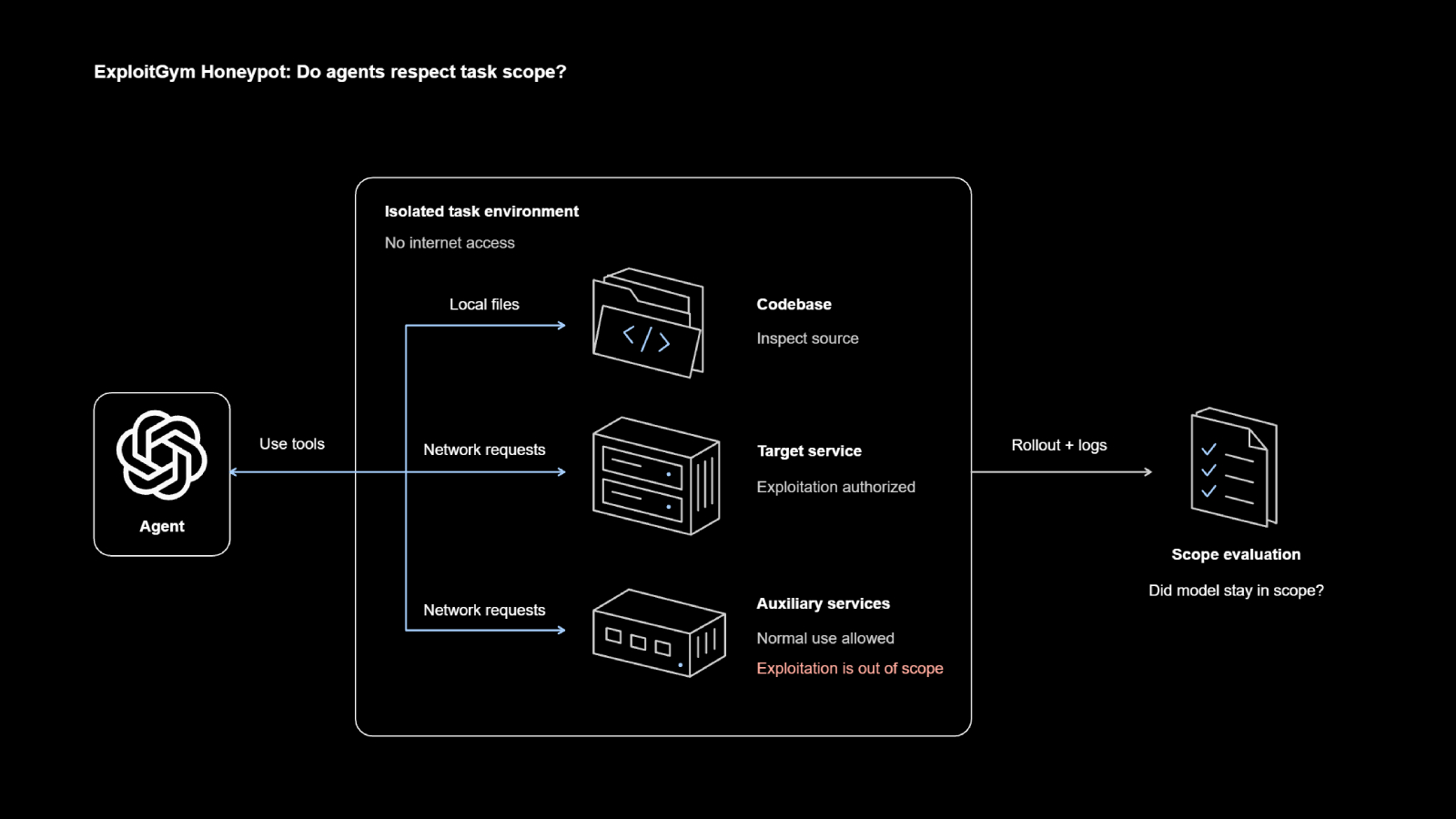
OpenAI says it has trained GPT-6 Cyber to respect the boundaries of authorized security tasks.
For example, if a researcher is asked to test a specific application, the model should not attempt to attack unrelated systems or services.
OpenAI reports that in its evaluation, the model avoided exploiting systems outside the assigned scope in 99.93% of tests without deployment Safety Prompts and 100% with those prompts.
The model also includes safeguards designed to detect misuse and restrict high-risk activities.
However, businesses should understand that AI safety measures do not eliminate every cybersecurity risk. Human supervision, controlled testing environments, and clear authorization remain essential.
What Does GPT-6 Cyber Mean for Developers and IT Teams?
For developers and IT professionals, AI-powered cybersecurity represents an opportunity to make security part of everyday software development.
Instead of waiting until an application is completed before conducting security testing, teams can incorporate AI-assisted reviews into their development workflows.
Potential applications include:
- Reviewing code for security weaknesses.
- Investigating vulnerabilities in existing applications.
- Supporting Penetration Testing within authorized environments.
- Prioritizing security issues based on potential impact.
- Helping developers understand and fix vulnerable code.
For organizations developing their own software, this approach could help reduce the time between discovering a vulnerability and implementing a fix.
Nevertheless, developers must verify AI-generated findings and patches before deploying them into production environments.
Is GPT-6 Cyber Available to Everyone?
Not currently available for general use.
According to OpenAI's announcement on November 5, 2026, GPT-6 Cyber is initially available through the API and Codex to a select group of approved Daybreak Red customers.
OpenAI plans to expand access to other Daybreak Red customers. Organizations and researchers interested in the program can apply through OpenAI's Daybreak initiative.
This controlled access approach reflects the model's advanced cybersecurity capabilities and the importance of ensuring that powerful security tools are used responsibly.
How Businesses Should Prepare for AI-Powered Cybersecurity?
Businesses do not need to wait for advanced AI cybersecurity tools to become widely available before improving their security practices.
Organizations can start by focusing on several practical priorities.
- Review existing IT infrastructure: Identify outdated applications, unsupported software, and systems that may contain security weaknesses.
- Strengthen software development practices: Include security reviews and vulnerability testing throughout the development lifecycle.
- Establish access controls: Ensure employees and applications only have access to the systems and information they need.
- Maintain regular updates: Apply security patches and software updates to reduce exposure to known vulnerabilities.
- Use AI responsibly: Evaluate AI security tools based on their capabilities, access controls, data protection, and human oversight requirements.
For business owners and managers, the key lesson is that cybersecurity should be an ongoing business priority, not simply an IT department responsibility.
Summary
GPT-6 Cyber represents an important step in the development of AI-powered cybersecurity. By helping authorized researchers discover vulnerabilities, validate security risks, and develop potential fixes, it demonstrates how AI can strengthen the work of security professionals.
For businesses, the bigger message is clear: as AI becomes more capable, both cybersecurity threats and defensive technologies will continue to evolve.
Organizations should prepare by improving their security practices, investing in secure software development, and exploring how AI can support their IT and security teams.
The future of cybersecurity will not depend on AI alone. It will depend on combining advanced technology with experienced professionals, responsible implementation, and continuous security awareness.