
OpenAI is taking another step in the development of advertising within ChatGPT with the launch of a new way for businesses to participate in the platform's growing advertising system. The company announced expanded access to ChatGPT advertising through agency and technology partners, along with the launch of a beta version of its self-serve Ads Manager platform in the United States.
This update is designed to make it easier for businesses of all sizes to purchase ChatGPT ads, while continuing to prioritize user privacy, transparency, and control.
Importantly, OpenAI reiterates that "advertisements" will be clearly separated from ChatGPT responses to maintain the credibility and neutrality of AI-generated answers.
A new era of advertising in ChatGPT
When OpenAI first launched its experimental advertising project, access was limited to select advertisers only. The purpose was to study how ads would function in a Conversational AI environment.
The company is now moving out of its experimental phase by opening up access through major advertising and technology partners.
Our agency partners include:
- Dentsu
- Omnicom
- Publicis
- WPP
Meanwhile, OpenAI is also collaborating with technology partners such as:
- Adobe
- Criteo
- Kargo
- Pacvue
- StackAdapt
This ecosystem enables businesses to purchase ChatGPT ads through familiar tools and workflows and easily integrate with their existing marketing systems.
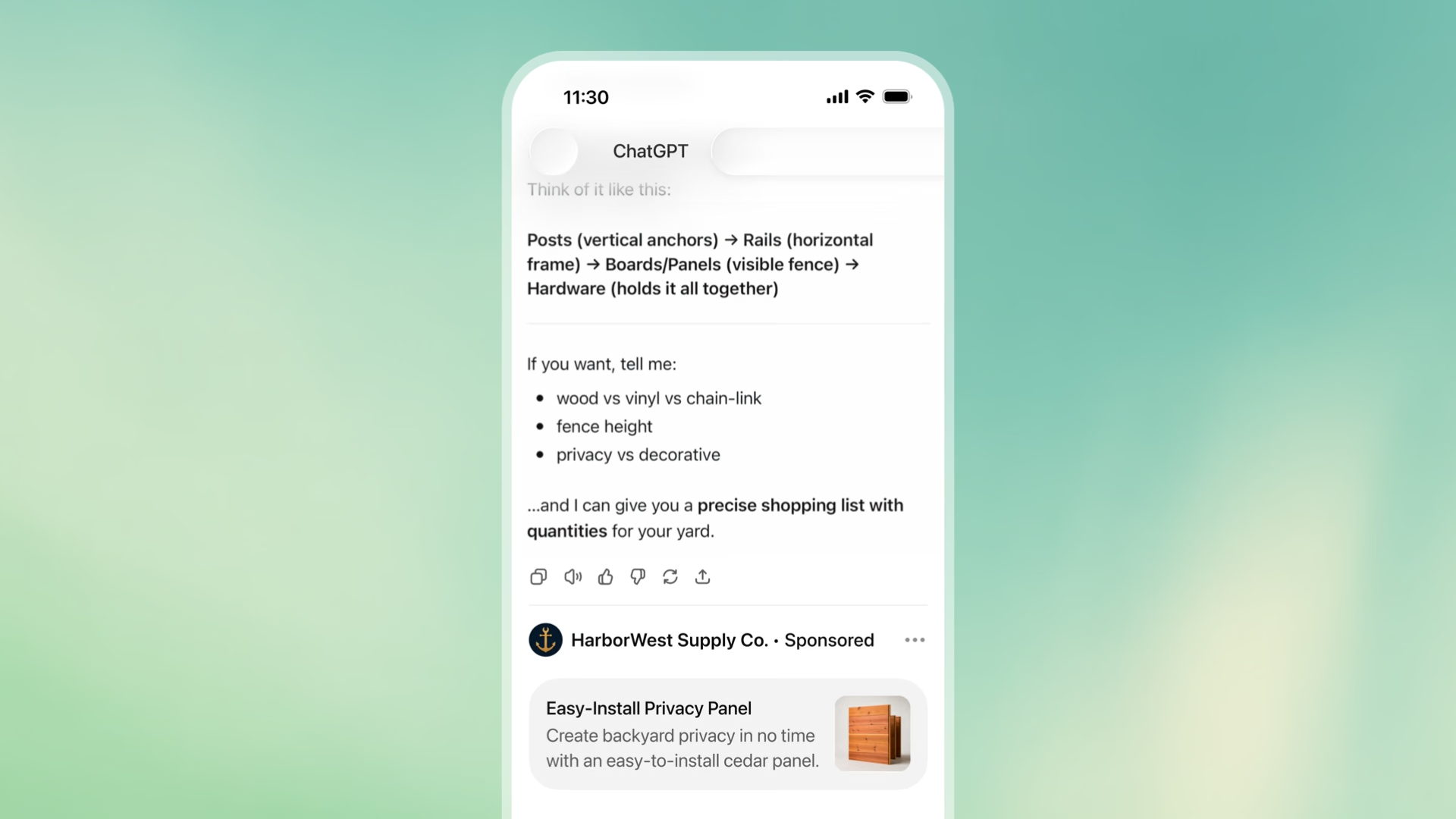
Beta Ads Manager makes it easier to buy ChatGPT ads
One of the most significant announcements was the launch of the Ads Manager Beta Version a self-serve platform that allows businesses in the US to purchase and manage ChatGPT ads directly.
This platform supports:
- Small Businesses and startups
- Medium-sized companies
- Global corporate brands
Within Ads Manager, advertisers can:
- Register and manage your advertising account.
- Add a payment method.
- Set a budget and bid.
- Upload creative advertisements.
- Activate and track campaigns.
- Review the results and performance of the campaign.
The gradual rollout demonstrates that OpenAI is carefully refining the user experience before expanding to the global market.
Introducing the CPC Bidding system for results-focused campaigns
In the early days of ChatGPT advertising, most campaigns used the CPM (Cost Per Thousand Impressions) model, which allowed OpenAI to study impression behavior and advertising needs in a Conversational AI environment.
OpenAI is currently adding a Cost-Per-Click (CPC) Bidding option to give advertisers more control over their spending based on performance.
This change is very important because ChatGPT interactions are often high in "intent," and users tend to:
- Product research
- Comparing services
- Evaluate the purchasing decision
- Please give me some advice
In these situations, "clicks" become a more significant indicator of relevance and engagement than impressions alone.
With the CPC system:
- Advertisers only pay when there's a click.
- Campaigns can be linked to more clearly measurable results.
- Businesses have the flexibility to customize and optimize their campaigns.
OpenAI also confirmed that the CPM and CPC systems will continue to work together, and additional bidding models may be added in the future.
More accurate measurement results while maintaining privacy.
Measurement has been one of the most requested features by advertisers since the trial period of ChatGPT advertising. To address this, OpenAI has launched several new performance measurement tools.
include:
- Conversions API
- Pixel-based measurement system
These technologies help advertisers understand what happens after users interact with ads, such as:
- Purchasing goods
- Lead Generation
- Subscription
- Or other meaningful business outcomes
However, OpenAI continues to emphasize that "privacy" remains a core principle in the design of this system.
Advertisers will only receive aggregated insights and will not have access to:
- Conversations between individual users
- Personal information
- Prompt or private interaction
This approach allows OpenAI to improve ad accuracy and campaign optimization without compromising user trust.
Building a new kind of AI advertising platform
Unlike traditional digital advertising platforms, ChatGPT's advertising system is designed based on "conversational intent" rather than passive content consumption.
OpenAI sees an opportunity to help users discover relevant products and services during the time they are:
- Explore ideas
- Solve the problem
- Making Decisions
- Or search for important information.
The company stated that several key principles remain unchanged, including:
- ChatGPT's answers remain ad-free
- Conversations remain private
- Users stay in control of their experience
This is extremely important because it clearly separates "AI responses" from "Sponsored Content," ensuring the platform remains transparent and trustworthy.
What This Means for Businesses
Expanding the advertising system in ChatGPT represents a significant opportunity for businesses seeking to reach users in highly interactive and decision-driven environments.
As conversational AI becomes part of how people search for, learn about, and evaluate products, advertising budgets may begin to shift towards platforms where users have a higher level of "intent."
For marketers, the ability to:
- Purchase ChatGPT ads directly
- Optimize campaigns through CPC bidding
- Measure meaningful conversions
- Maintain privacy-safe targeting
We are creating a new marketing channel that seamlessly integrates AI interaction with performance marketing.
Conclusion
OpenAI's latest advertising update marks a significant step in monetizing Conversational AI by expanding reach through partners, launching a self-serve system, and adding CPC bidding, making advertising in ChatGPT more accessible and results-oriented.
Meanwhile, OpenAI continues to prioritize "privacy" and "transparency," clearly separating advertisements from conversations and AI responses.
As the ChatGPT advertising platform evolves, it could become a major turning point for the digital advertising industry, shifting from traditional display ads to truly context- and intent-driven advertising experiences powered by AI.