As Digital Sovereignty becomes a board-level priority, organizations across government, defense, finance and regulated industries are redefining how critical infrastructure and AI systems are deployed.
The need is clear: maintain full control over data, identities and operations—while still leveraging modern cloud innovation.
Microsoft addresses this challenge with Microsoft Sovereign Cloud , a comprehensive approach that enables enterprises and public sector organizations to operate securely and independently across public, hybrid and fully disconnected environments.
This latest expansion introduces powerful new capabilities that strengthen governance, ensure productivity continuity and enable support for large AI models—even in fully isolated infrastructures.
What Is Microsoft Sovereign Cloud?
Microsoft Sovereign Cloud is designed to give customers control over:
- Data residency and protection
- Regulatory compliance and enforceable governance
- Operational continuity in high-risk or restricted environments
- Infrastructure independence without architectural fragmentation
It delivers a continuum of sovereign options, allowing organizations to choose the appropriate control posture for each workload—without increasing operational complexity.
At its core, the solution integrates:
- Productivity services
- Cloud infrastructure
- Security controls
- AI capabilities
All while preserving sovereign boundaries.
Major Updates to Microsoft Sovereign Cloud
Microsoft announced three major enhancements that significantly expand sovereign capabilities.
- Azure Local Disconnected Operations (Now Available)
Azure Local now supports fully disconnected operations.
This means mission-critical workloads can run locally—even with no cloud connectivity.
Core competencies:
- Azure-consistent governance and policy enforcement
- Local execution of management and workloads
- No dependency on continuous public cloud connection
- Scalable infrastructure from small deployments to AI-intensive environments
This is particularly critical for:
- Classified systems
- National security environments
- Isolated industrial networks
- High-regulation sovereign operations
Organizations maintain Azure-like experiences and tooling while operating entirely within customer-controlled infrastructure.
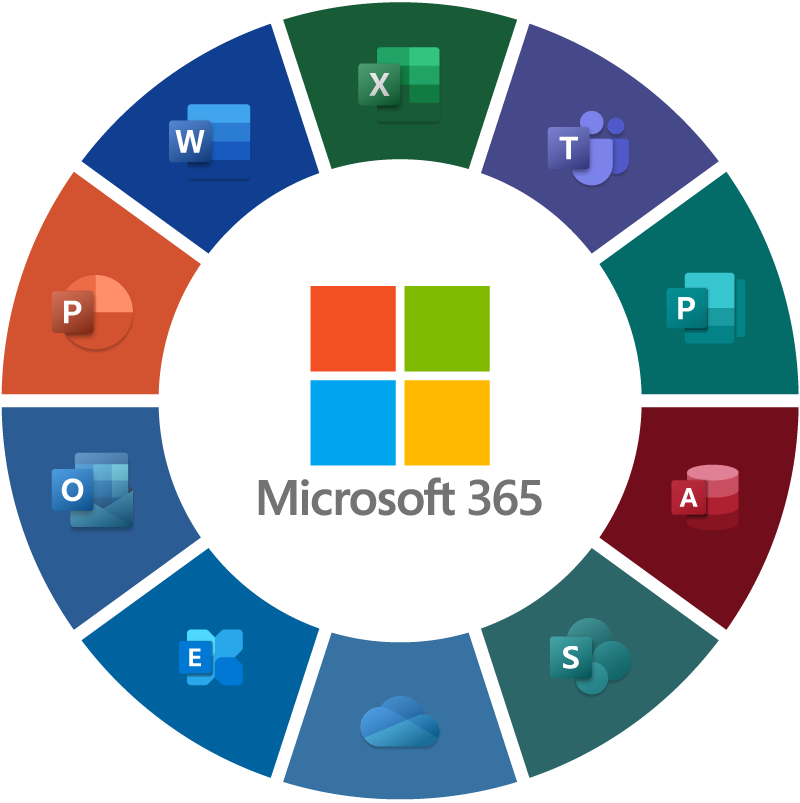
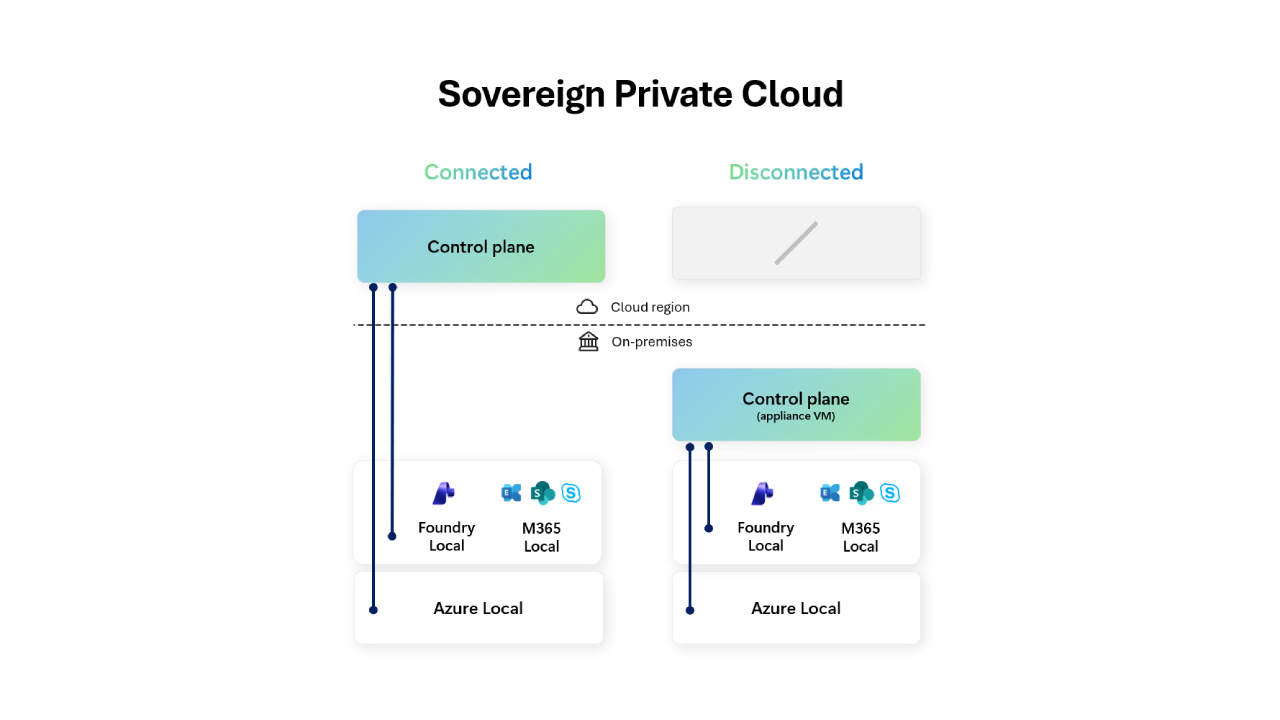
- Microsoft 365 Local Disconnected (Now Available)
Microsoft 365 Local brings core collaboration tools into sovereign private environments.
Supported server workloads include:
- Exchange Server
- SharePoint Server
- Skype for Business Server
These services are supported through at least 2035, ensuring long-term operational continuity.
What This Means:
- Teams remain productive in fully disconnected environments
- Collaboration and communication stay inside sovereign boundaries
- Data resiliency and compliance are fully customer-controlled
- Governance aligns with Azure-consistent management
Infrastructure and productivity now operate together in complete isolation when required.
- Foundry Local: Running Large AI Models in Sovereign Environments
One of the most strategic updates is the expansion of Foundry Local to support modern infrastructure and large multimodal AI models.
Built to integrate with Azure Local, Foundry Local enables:
- Deployment of large AI models inside sovereign private clouds
- Local inferencing and APIs
- Full data boundary control
- Operation in fully disconnected environments
Using modern GPU infrastructure from partners like NVIDIA, organizations can now deploy advanced multimodal models directly onto their own hardware.
Why This Matters
Previously, many AI capabilities required some form of cloud connectivity. With Foundry Local:
- AI inferencing runs entirely on-premises
- Sensitive data never leaves the sovereign boundary
- Large models (not just small edge models) are supported
- Microsoft provides deployment and lifecycle support
This therefore extends the capabilities of enterprise-level AI into a system with classified confidential data and truly segregated infrastructure.
Built for Connected, Hybrid and Fully Disconnected Modes
Disconnected environments introduce real-world constraints:
- Restricted or zero external connectivity
- Prohibited external dependencies
- Mandatory operational continuity
- High national or institutional security requirements
Microsoft Sovereign Cloud supports:
Environment Type | Ability |
Connected | Public cloud with sovereign controls |
Hybrid | Mixed local and cloud workloads |
Intermittently Connected | Controlled sync environments |
Fully Disconnected | Complete sovereign private cloud |
Organizations can standardize governance and operational models across all scenarios.
Sovereign Private Cloud Without Added Complexity
The Microsoft Sovereign Private Cloud strategy helps organizations ensure that:
- No architectural fragmentation
- No increase in operational risk
- Unified governance across deployments
- Flexibility to scale AI and data workloads
Customers gain choice and control without sacrificing simplicity.
This is particularly critical for:
- National governments
- Defense agencies
- Financial institutions
- Regulated healthcare systems
- Strategic infrastructure operators
Availability
- Azure Local disconnected operations: Available worldwide
- Microsoft 365 Local disconnected: Available worldwide
- Large models on Foundry Local: Available to qualified customers
Why is Microsoft Sovereign Cloud important today?
Digital sovereignty is no longer an option.
Organizations must:
- Protect sensitive data
- Maintain operational resilience
- Enforce governance policies
- Deploy AI responsibly
- Operate independently when required
Microsoft Sovereign Cloud delivers a full-stack sovereign architecture—combining infrastructure, productivity, security and AI—capable of running in fully disconnected environments while maintaining modern enterprise capabilities.