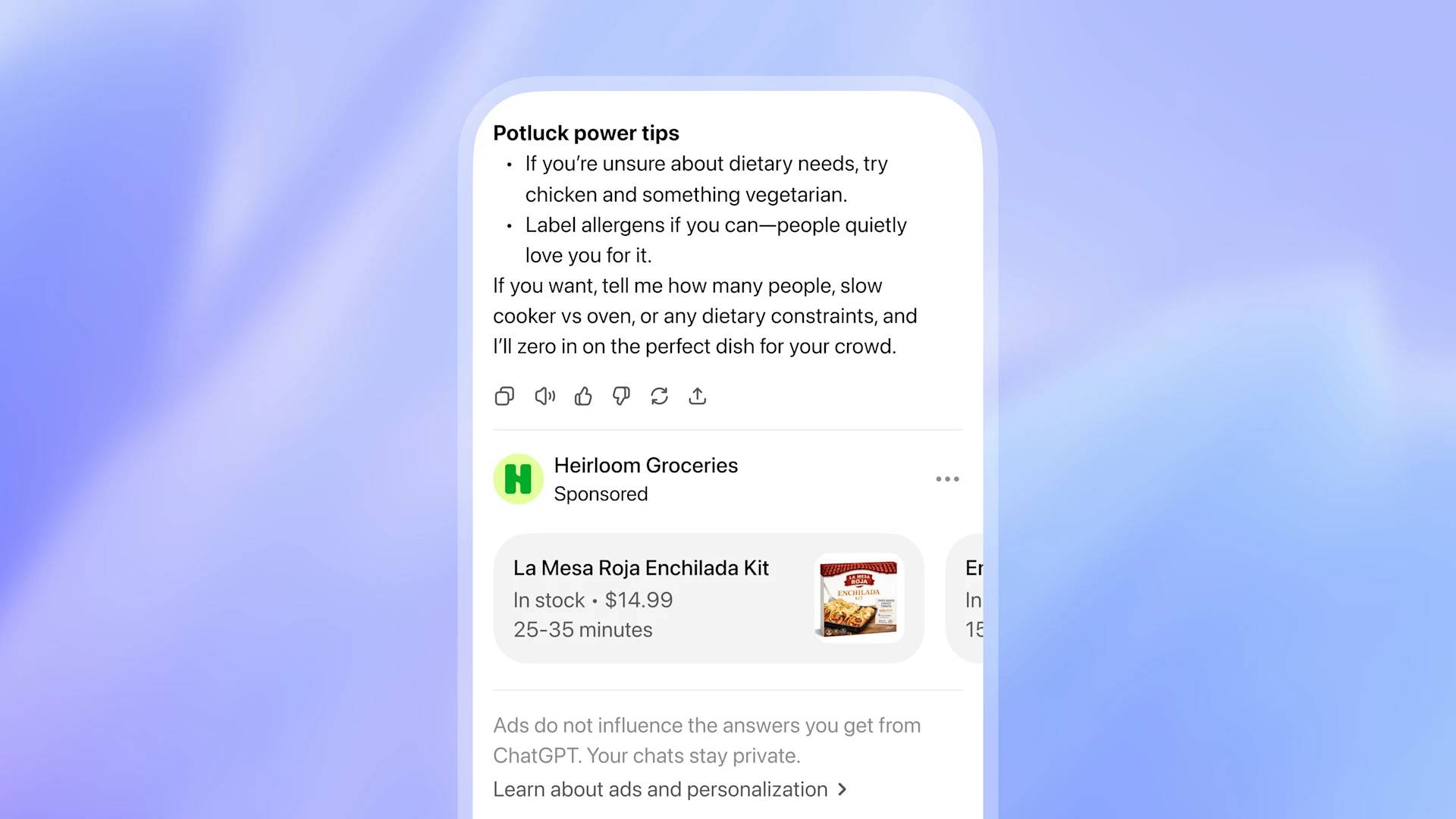
OpenAI has officially begun testing Ads in ChatGPT in the United States. The rollout is limited to logged-in adult users on the Free and Go subscription tiers, while Plus, Pro, Business, Enterprise, and Education plans remain ad-free.
This move reflects a significant shift in the monetization approach of future conversational AI platforms. However, OpenAI reiterates its three core promises: responses remain independent, conversations remain private, and users retain control over their experience.
The following are the details of this test, how it works, and why it's important.
Why start using Ads in ChatGPT?
Currently, ChatGPT has hundreds of millions of users worldwide, for use in various fields such as:
- Learning and research
- Business planning
- Content creation
- Personal decision
Maintaining such a rapid and stable global infrastructure requires ongoing investment.
Advertising therefore helps to support the following areas:
- Maintaining free AI services.
- Developing smarter and more stable models.
- Opening up broad access to advanced features.
- Sustainable long-term growth
Users who prefer not to see ads can:
- Upgrade to Plus or Pro
- Or opt out of ads in the Free tier in exchange for fewer daily free messages
The goal is to strike a balance between accessibility and sustainability without compromising trust.
Does advertising affect ChatGPT responses?
The answer is do not have
A central principle behind Ads in ChatGPT is answer independence.
ChatGPT responses:
- Are optimized for helpfulness
- Are not influenced by advertisers
- Remain separate from sponsored content
Advertisements are:
- Clearly labeled as sponsored
- Visually separated from organic AI responses
A clear distinction between commercial content and AI-generated answers is crucial for credibility, especially in use cases for work, research, or decision-making.
How Ads Are Selected During the Test
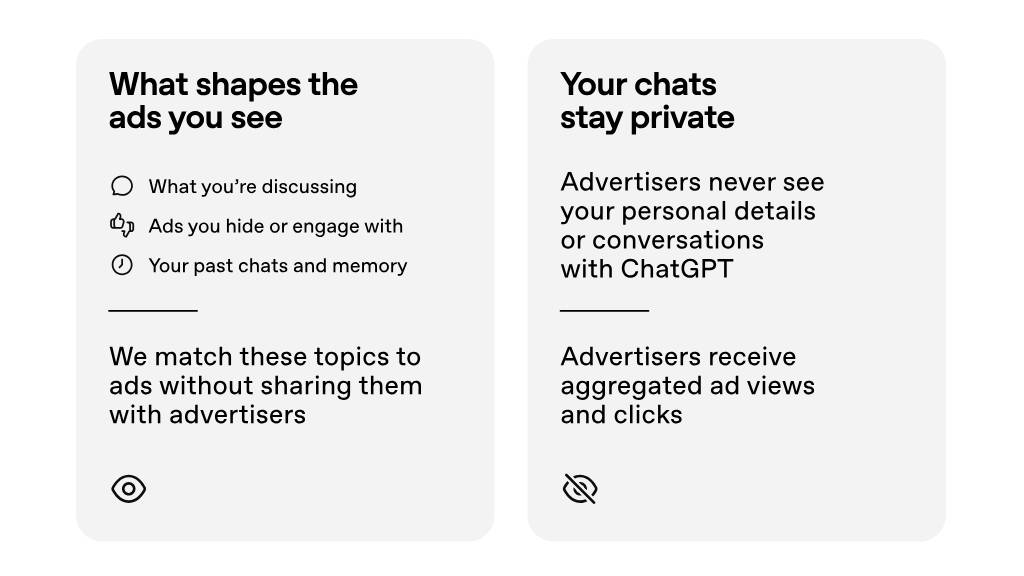
During the test phase, ad selection may consider:
- The topic of your current conversation
- Your past chat activity
- Your past interactions with ads
For example:
- Searching for recipes may trigger ads for meal kits
- Exploring travel ideas may result in ads for booking platforms
If multiple advertisers are eligible, the most relevant ad is shown first.
Importantly:
- Advertisers do not see your conversations
- Advertisers do not access your chat history
- Advertisers do not receive personal details
They receive only aggregated performance data such as impressions and clicks.
Privacy Protections in Ads in ChatGPT
Privacy remains a core design requirement.
OpenAI states:
- Conversations are kept private from advertisers
- Ads do not appear near sensitive topics such as health, mental health, or politics
- Ads are not shown to accounts identified or predicted to belong to users under 18
Safeguards include:
- Aggregate reporting only
- No sharing of personal chat data
- Guardrails against narrow or exploitative ad targeting
- Careful screening of advertisers
As the program evolves, privacy and safety protections are expected to expand with it.
User Choice and Control
Users maintain control over their ad experience.
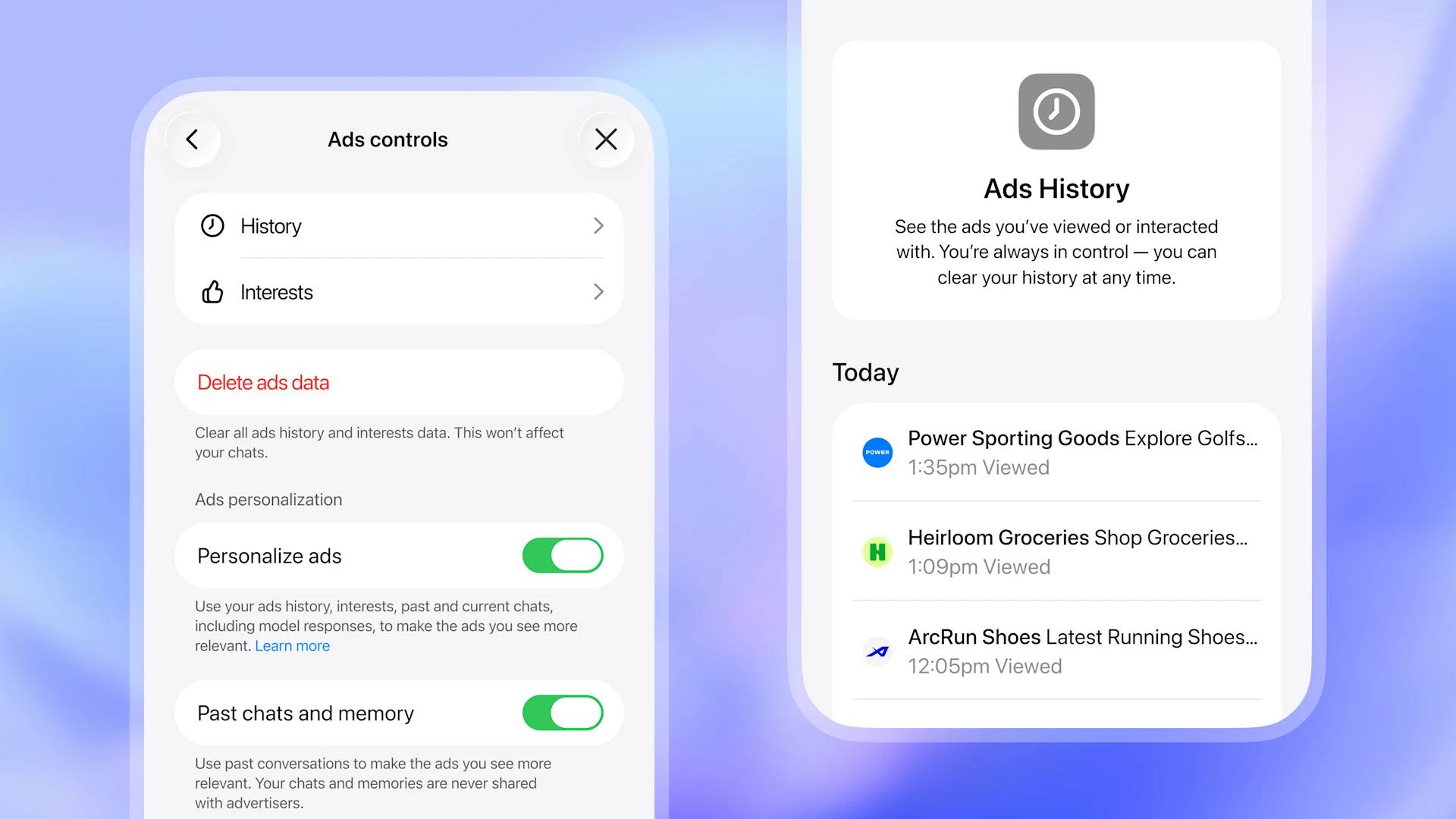
Within ChatGPT, you can:
- Dismiss ads
- Provide feedback
- Learn why a specific ad is shown
- Delete ad-related data
- Adjust ad personalization settings
This approach aligns with broader transparency trends in digital advertising, but integrates controls directly into the conversational interface.
Why Conversational Ads Are Different
Traditional digital advertising operates within static feeds or search result pages. Conversational interfaces create a different context.
Users often turn to ChatGPT when they are:
- Exploring product options
- Comparing services
- Planning purchases
- Seeking ideas
In these “intent-rich” moments, well-matched ads can feel more relevant than intrusive.
The challenge will be ensuring ads remain:
- Helpful rather than disruptive
- Complementary rather than distracting
- Clearly distinct from AI-generated responses
Early testing will focus on refining this balance.
Who Will See Ads?
Currently, Ads in ChatGPT are limited to:
- Logged-in adult users
- Free tier accounts
- Go subscription tier accounts
- U.S.-based testing environment
These plans will not see ads:
- Plus
- Pro
- Business
- Enterprise
- Education
Future expansion will depend on test results, user feedback, and evolving safeguards.
What This Means for the Future of AI Platforms
The launch of Ads in ChatGPT signals a broader shift in how generative AI platforms may structure their monetization models.
Key long-term implications:
- Free AI access supported by advertising
- Tiered subscription differentiation
- Greater emphasis on transparency
- Heightened focus on privacy-by-design
The most important assurance remains intact:
ChatGPT’s answers stay independent and unbiased.
If that boundary holds, conversational advertising could become a sustainable model for keeping advanced AI broadly accessible.
Conclusion
The launch of Ads in ChatGPT is not a full-scale rollout — it is an early test focused on learning and refinement.
OpenAI is positioning this move around three pillars:
- Independence of answers
- Protection of user privacy
- Meaningful user control
If executed carefully, the model could support broader access to powerful AI while maintaining trust — a balance that will define the next era of conversational platforms.
As testing continues, user feedback will shape how ads evolve inside ChatGPT — and how the future of AI accessibility is funded.