Artificial intelligence (AI) is no longer an experimental technology reserved for giant tech companies. AI For Business It has become a practical and proven approach for organizations of all sizes to enhance efficiency, decision-making, and competitiveness. From automating routine tasks to unlocking new insights, AI is transforming the way businesses operate across every industry.
This article explains the true meaning of this concept, how to effectively deploy AI, and the tangible benefits that companies can gain when strategically adopting AI.
What is AI for Business?
AI For Business This refers to the use of artificial intelligence technology, such as Machine Learning, Natural Language Processing (NLP), Computer Vision, and automation, to solve real-world business problems and improve operational results.
Instead of viewing AI as a separate, isolated innovation, successful organizations integrate AI with:
- direct business processes
- Decision workflow
- Interaction with customers
- Delivery of products and services
The goal is not just to adopt the technology, but to create measurable business value.
The main benefits of AI for Business
- Increase operational efficiency: AI automates repetitive and time-consuming tasks, such as data entry or answering basic customer questions, allowing employees to focus on higher-value work.
- Better Decisions: AI systems can analyze large datasets to find relationships and predict the future, helping business leaders make data-driven decisions instead of relying solely on intuition.
- Cost reduction: Optimizing processes and detecting delays reduces operating costs. Furthermore, predictive maintenance helps minimize system downtime and losses.
- Elevate the customer experience: AI-powered chatbots and product recommendation systems enable businesses to respond to customers more quickly and accurately across all channels.
- Scalability: AI systems can more easily handle increased workloads than human-based processes, enabling businesses to grow without increasing personnel or infrastructure proportionally.
Popular AI tools used in business.
Organizations today are choosing to use a variety of AI tools to support different needs:
- ChatGPT: Used for content creation, brainstorming, and data summarization to accelerate knowledge-based work.
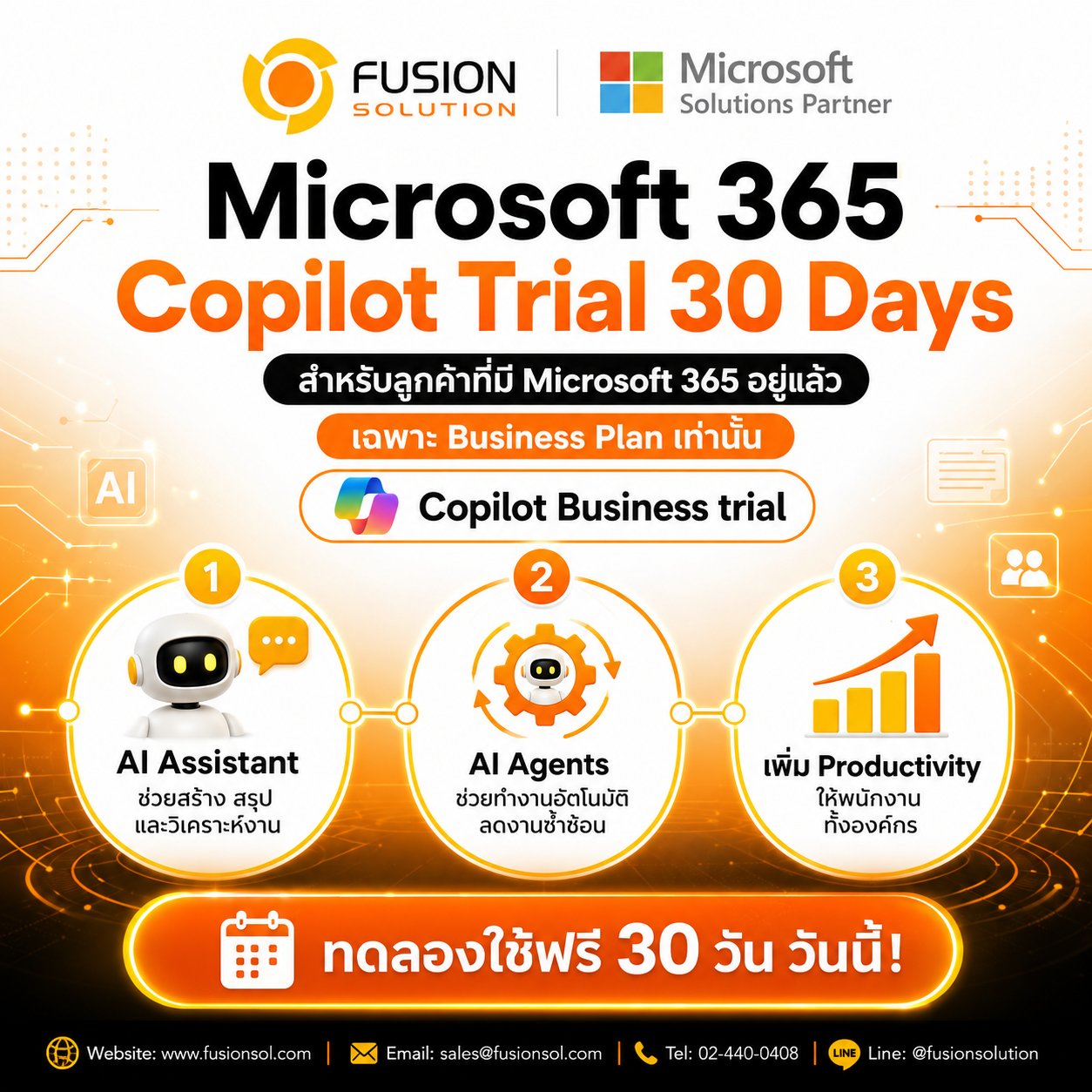
- Microsoft Copilot: Enterprise-grade AI integrated with Microsoft products to support productivity, software development, and customer management.
- Google Gemini: It is commonly used in Google Workspace for creating documents, analyzing data, and conducting research.
- Claude AI: Excellent at handling long documents, tasks requiring rigorous reasoning, and analyzing complex data structures.
- Meta AI: Often used in marketing, social media, and customer engagement across Meta platforms.
- Grok (xAI): The focus is on conversation and exploring real-time trends to gain quick insights in a media and data-intensive environment.
Why is Microsoft Copilot different?
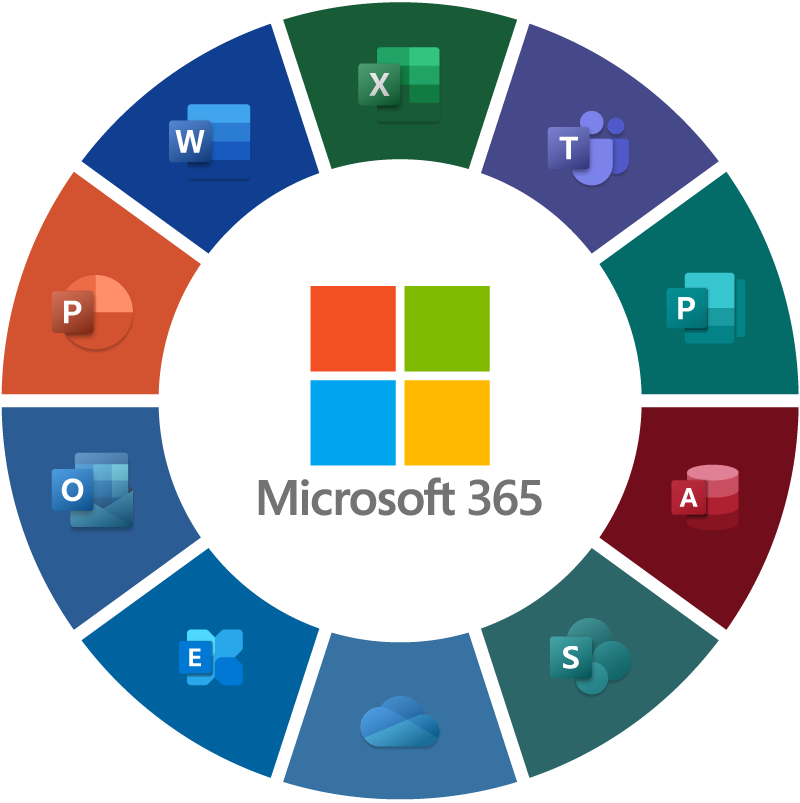
While many AI tools operate as standalone assistants, Microsoft Copilot is designed to work deeply within the Microsoft ecosystem, being embedded across multiple platforms such as GitHub Copilot for developers, Microsoft 365 Copilot for everyday office tasks, Copilot for Security for security operations, and Copilot in Dynamics 365 for sales and customer service. This approach allows AI to support users directly within the tools they are already using.
AI covers every business workflow.
The strength of Microsoft Copilot lies in its ability to support AI adoption across different roles and departments—from developers and IT teams to everyday users and security professionals. It enables organizations to apply AI technology in a consistent, secure, and scalable manner. This unified experience helps reduce siloed work and ensures that AI-generated insights align with business data, access permissions, and organizational governance policies.
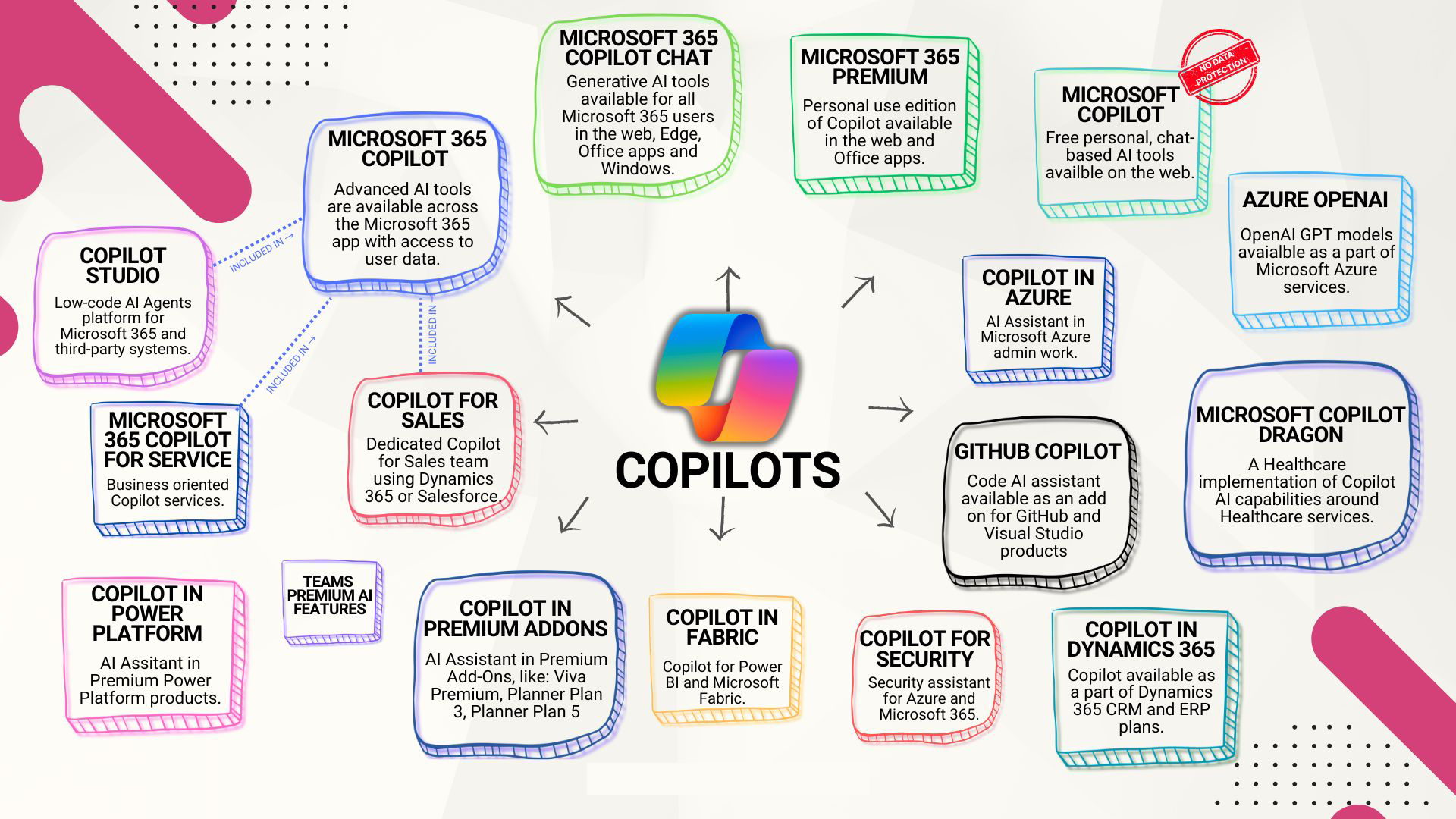
Working with trusted Microsoft partners.
Successful AI adoption is not just about choosing the right technology; it also involves proper planning and implementation. Organizations often work with Microsoft partners to evaluate use cases, manage licensing, and support deployment. Fusion Solution As a trusted Microsoft partner, we help your organization explore and implement Microsoft Copilot in a way that meets your real business needs and long-term digital transformation goals.
5 Steps to Effective AI Deployment
- Let's start with the business objectives: AI projects should start with clear goals, such as reducing costs, increasing revenue, or enhancing customer satisfaction.
- Prepare the data foundation: AI relies on high-quality, well-structured data. Organizations must verify the accuracy, security, and accessibility of the data before deployment.
- Choose the right approach: Not every problem requires sophisticated AI. Businesses should choose tools that meet their needs, ranging from conditional automation to advanced generative AI.
- Connect to the existing system: AI performs best when embedded within existing applications and workflows, rather than as a standalone tool.
- Focus on Change Management: Employees need training and trust in the system. Success depends on the collaboration between humans and AI.
The application of AI in various sectors of business.
Today, AI is increasingly being embedded into various organizational functions to enhance efficiency, accuracy, and decision-making. Rather than being limited to technical teams, this technology now supports the daily operations of multiple departments.
Human Resource Management (HR)
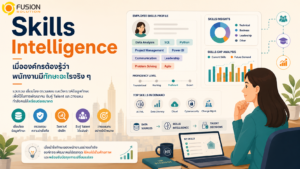
AI simplifies HR processes such as candidate screening, employee data analysis, and performance evaluation. By analyzing data at scale, intelligent systems help HR teams identify skill gaps, reduce bias in recruitment, and make data-driven personnel decisions.
Customer service
In customer service, AI-powered chatbots and virtual assistants can handle common inquiries, provide 24/7 support, and appropriately escalate complex cases to human agents. This helps reduce response times while maintaining consistent service quality.
Marketing and sales
AI enables businesses to analyze customer behavior, predict satisfaction, and create personalized marketing campaigns. Sales teams can leverage AI insights to prioritize leads, forecast market demand, and improve conversion rates.
Finance and Accounting
Intelligent systems support financial operations by automating data processing, detecting anomalies, and improving forecasting accuracy. This enables finance teams to manage risks, control costs, and make fast, data-driven decisions.
Operations and Supply Chain
In operations, AI enhances inventory efficiency, forecasts demand, and improves logistics planning. These capabilities help organizations reduce waste, avoid disruptions, and maintain sustainable operational performance.
IT and cybersecurity
AI enhances IT management by monitoring system performance, predicting potential failures, and identifying security threats. This proactive approach increases system reliability and protects critical business data.
Business strategy and decision making.
By analyzing large datasets and identifying trends, AI supports executive teams with insights for strategic planning, scenario modeling, and predictive analytics, enabling organizations to respond effectively to market changes.
Challenges and considerations
Although AI offers immense benefits, organizations must address the following issues:
- Privacy and data security.
- Using AI ethically and responsibly.
- Complying with rules and regulations.
- Model accuracy and data bias.
- Long-term maintenance and supervision.
Measuring the business value of AI.
Organizations should track the success of technology adoption using measurable key performance indicators (KPIs), such as:
- Cost savings
- Productivity improvements
- Revenue growth
- Customer satisfaction scores
The future of AI for Business
AI adoption will continue to grow rapidly as the technology advances, becomes more stable, and increasingly accessible. Businesses that invest early in AI capabilities, workforce skill development, and building a strong data foundation can clearly gain a long-term competitive advantage.
Instead of asking the question, should Should organizations adopt AI? Modern organizations should focus on the question of how quickly and effectively they can integrate AI into their core business strategy.
Conclusion
AI For Business AI is no longer just an option; it has become a strategic driver of organizational efficiency, innovation, and growth. Implementing AI with clear objectives, a robust data framework, and responsible governance enables organizations to unlock significant business value while preparing for the future of intelligent work.
Businesses that can connect AI technology to the real-world needs of their operations will have the greatest advantage and be able to grow steadily in the AI-driven economy.
#aiforbusiness #copilot #microsoft365 #microsoft