
Modern AI platforms operate at a scale that many traditional systems were never designed to support. Behind every intelligent response lies massive data processing, coordination, and infrastructure stability at an extraordinary scale—all to meet these demanding requirements. OpenAI uses Azure PostgreSQL. It is a core component of the production architecture, enabling the operation of scalable, resilient, and globally distributed databases.
This decision reflects a broader trend among AI-driven organizations toward adopting cloud-native databases that support horizontal scalability, while maintaining data consistency and operational simplicity.
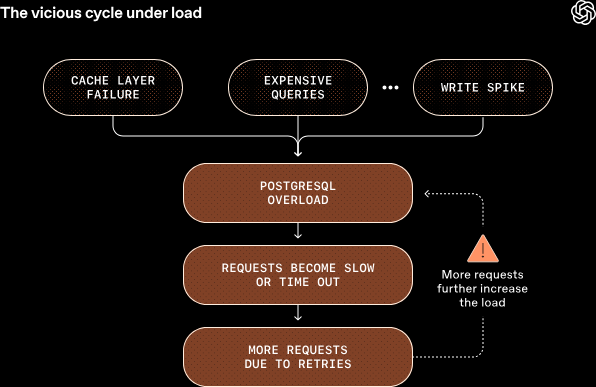
Why did OpenAI choose Azure PostgreSQL?
As OpenAI’s services expand globally, the underlying data platform must be able to support rapid growth without compromising reliability. Azure PostgreSQL provides an enterprise-grade, fully managed PostgreSQL environment that helps reduce the operational overhead typically associated with large-scale databases.
The main reasons for choosing Azure PostgreSQL include:
- Proven compatibility with PostgreSQL. Supports legacy SQL tools and features.
- Managed scalability and high availability reduce operational burdens.
- Deep integration with Azure infrastructure, network, and security systems.
- The ability to perform global replication is essential for providing services to users worldwide.
Building systems on Azure PostgreSQL provides OpenAI with the flexibility to further develop its architecture without needing to rewrite all the core data logic.
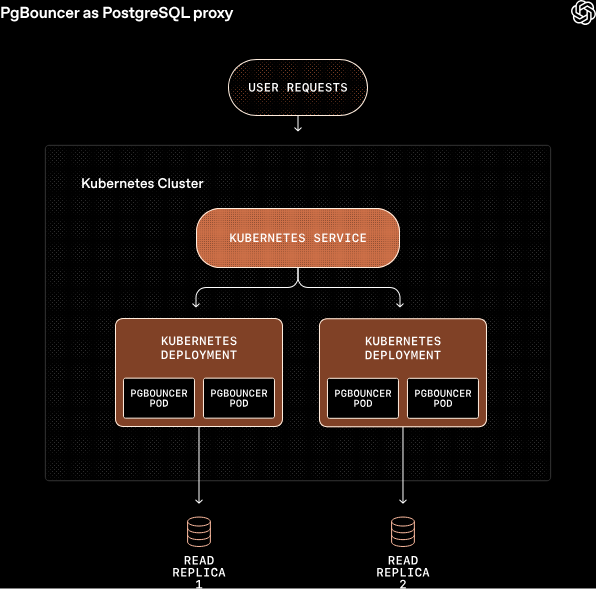
How does Azure PostgreSQL support massive scalability?
Delivering AI services requires databases that can handle high write throughput, massive concurrent access, and rapidly increasing data complexity. Azure PostgreSQL meets these demands through horizontal scalability, the use of read replicas, and automated maintenance.
For OpenAI, this means:
- Supports surge in usage without manual management.
- Low-latency data access for global applications.
- Maintaining the accuracy and consistency of data between services.
- Reduce downtime with the built-in failover mechanism.
These capabilities allow the engineering team to focus on product innovation rather than managing databases.
Reliability, safety, and operational efficiency.
Security and reliability are at the core of AI platforms that process sensitive data. Azure PostgreSQL provides enterprise-grade protections such as encryption at rest and in transit, identity-based access control, and automated backup systems.
From a practical perspective, OpenAI benefits from:
- Automated system updates and patches.
- Continuous monitoring and performance tuning.
- Compliance with compliance standards within the Azure ecosystem.
These features help maintain system stability while supporting rapid experimentation and development.
How does OpenAI extend PostgreSQL in a production environment?
Beyond the advantages of using a managed database, OpenAI’s real-world use of PostgreSQL offers important lessons in handling high-scale workloads. Rather than abandoning traditional relational databases, OpenAI optimized PostgreSQL to operate effectively at massive scale.
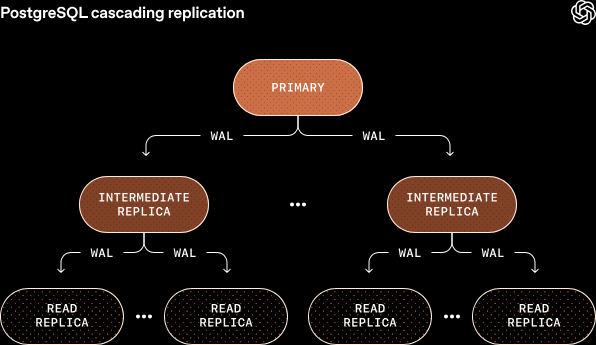
At the core of the architecture is a single PostgreSQL primary instance dedicated to write operations, complemented by multiple read replicas distributed globally. This design allows OpenAI to maintain strong data consistency while scaling read performance to handle millions of concurrent requests from AI services such as ChatGPT.
To address PostgreSQL’s write limitations and MVCC constraints, OpenAI carefully optimized connection management, query patterns, and transaction sizes. They also leveraged Azure’s tools for automated failover, backups, and performance tuning, reducing operational overhead while maintaining high availability.
What does this mean for modern AI architecture?
OpenAI’s decision highlights an important trend: modern AI systems continue to rely on robust relational databases alongside distributed computing infrastructure and AI models. Rather than replacing SQL databases, AI platforms enhance their capabilities through cloud-native scalability and automation.
By choosing Azure PostgreSQL, OpenAI demonstrates that traditional relational databases can still be central to a system—even in cutting-edge AI systems—when integrated with the right cloud architecture.
Source: OpenAI