
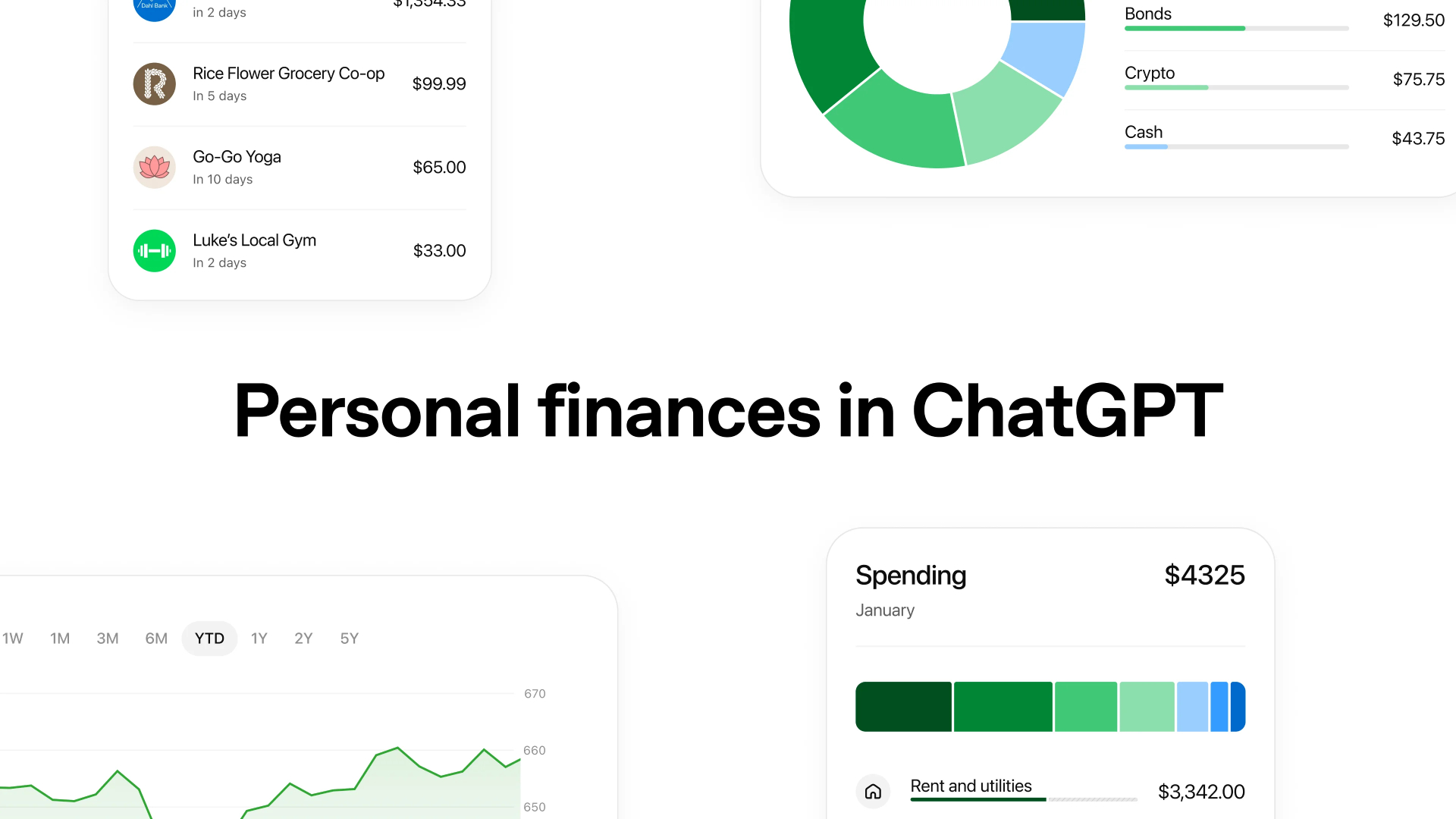
OpenAI is expanding ChatGPT's capabilities beyond productivity and content generation with the launch of a new Personal Finance Experience feature. This allows users to securely connect their financial accounts to ChatGPT and receive AI-powered financial insights based on real financial data, financial goals, and spending habits.
This launch reflects a significant shift in how AI may play a role in assisting with daily financial decision-making in the future. Instead of switching between banking apps, spreadsheets, budgeting tools, and investment platforms, users can have conversations about their finances directly with ChatGPT in a conversational manner.
Transform ChatGPT into a Financial Intelligence Assistant
According to OpenAI, there are currently over 200 million monthly users who use ChatGPT for budgeting, investment planning, financial comparisons, and discussing future goals.
The new Personal Finance Experience builds upon this behavior by integrating GPT-5.5's reasoning capabilities with real-world financial context from connected accounts.
Once your financial account is linked, ChatGPT will be able to analyze:
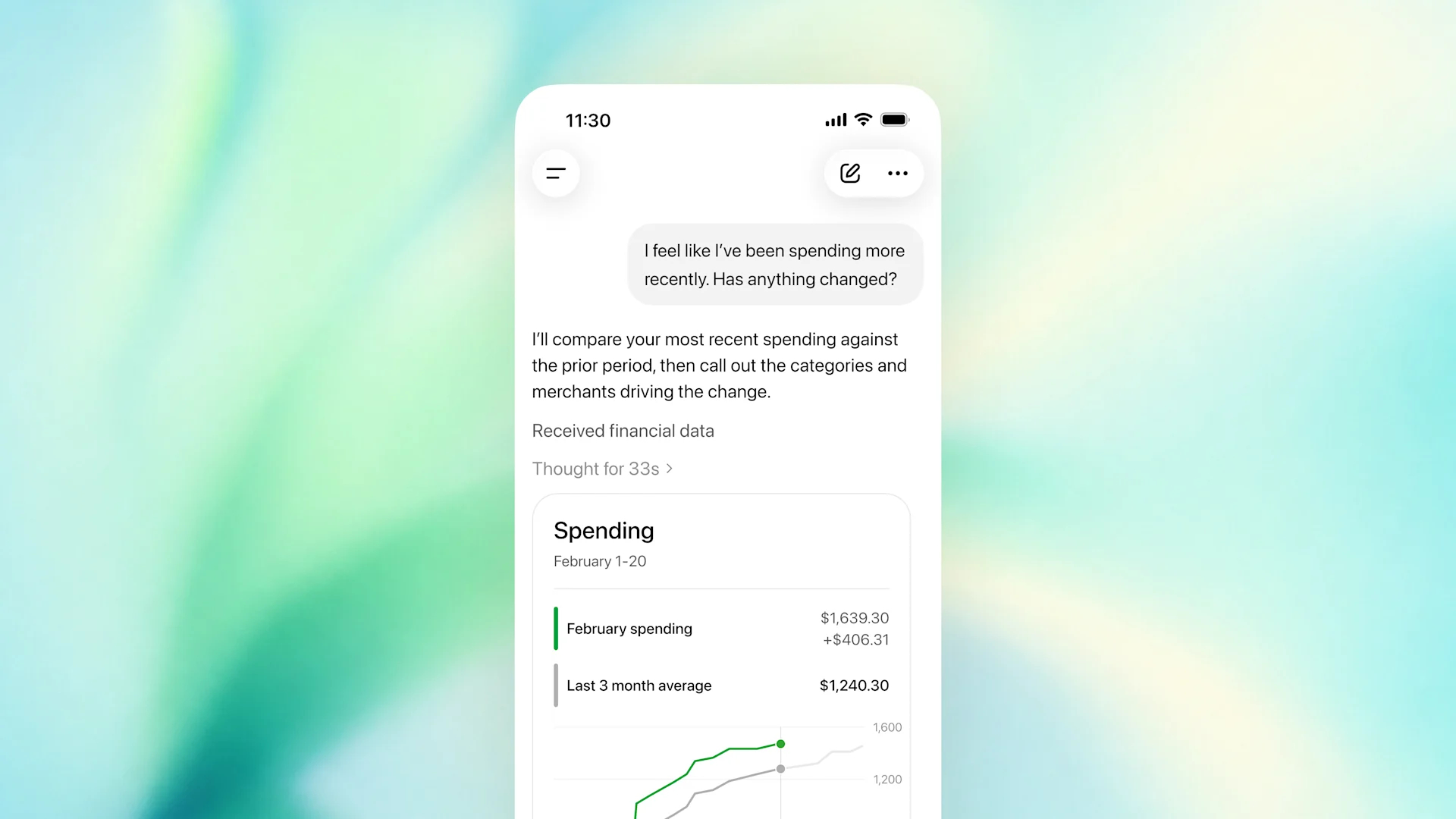
- Spending patterns
- Portfolio performance results
- Recurring subscriptions
- Upcoming bills and payments
- Savings goals
- Debt and liabilities
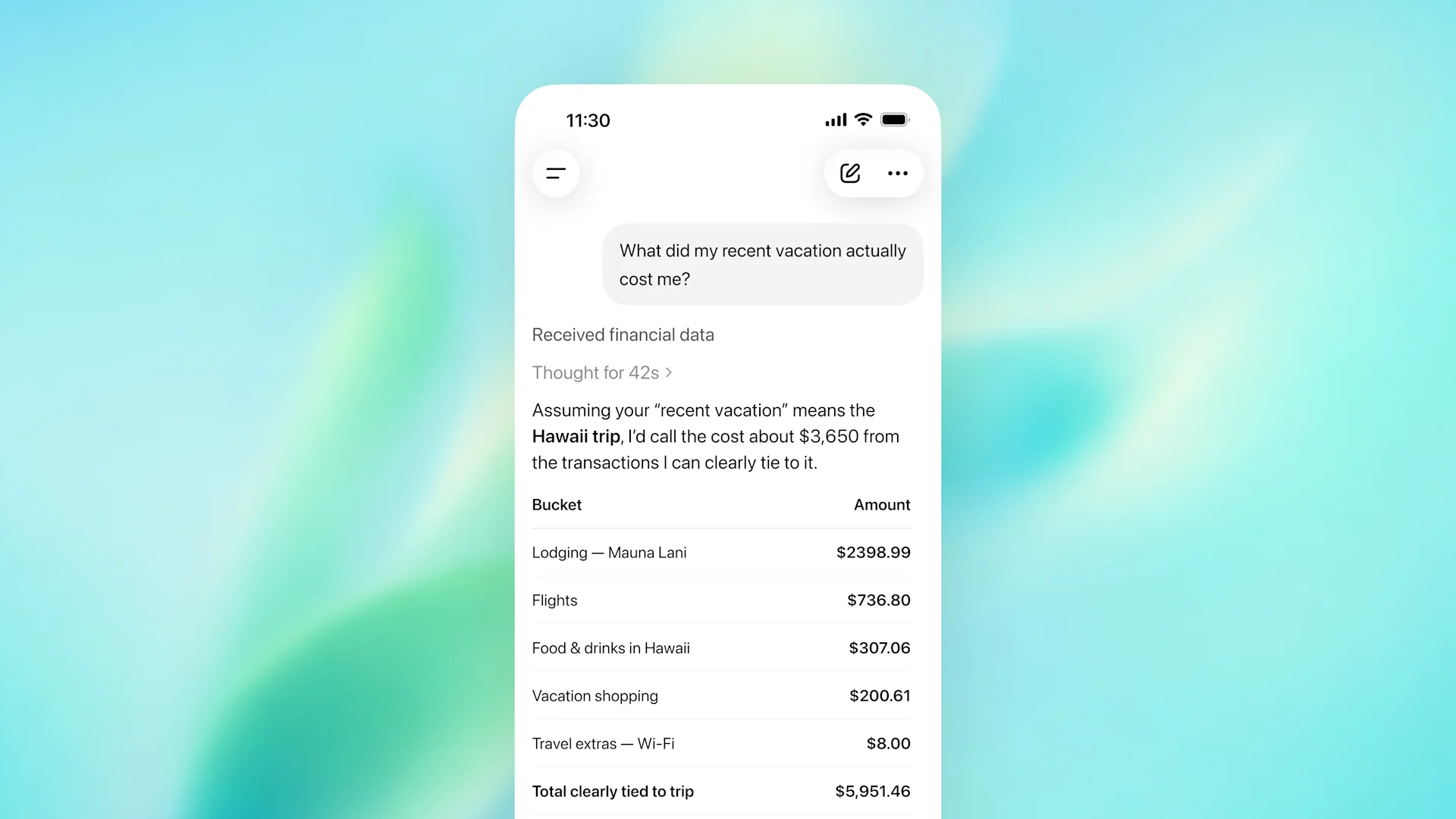
The system will then be able to answer highly personalized financial questions based on the user's real data, instead of using only hypothetical examples.
Users might ask questions such as:
- "How have my spending habits changed this month?"
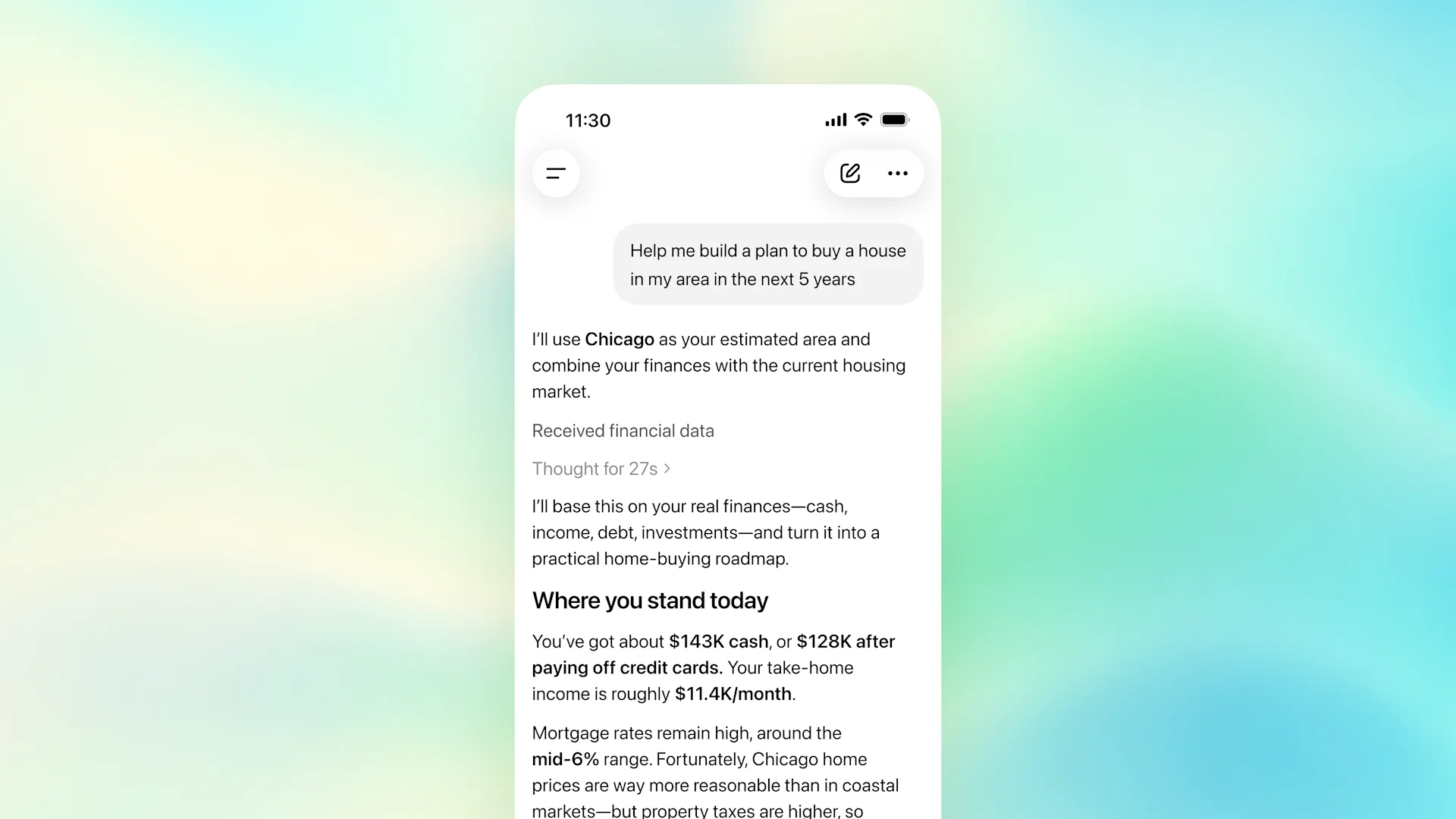
- "Can I buy a house within 5 years?"
- "Which subscriptions should I cancel?"
- “What is the biggest risk in my portfolio?”
This creates a new approach to personal finance management that is more interactive and dynamic.
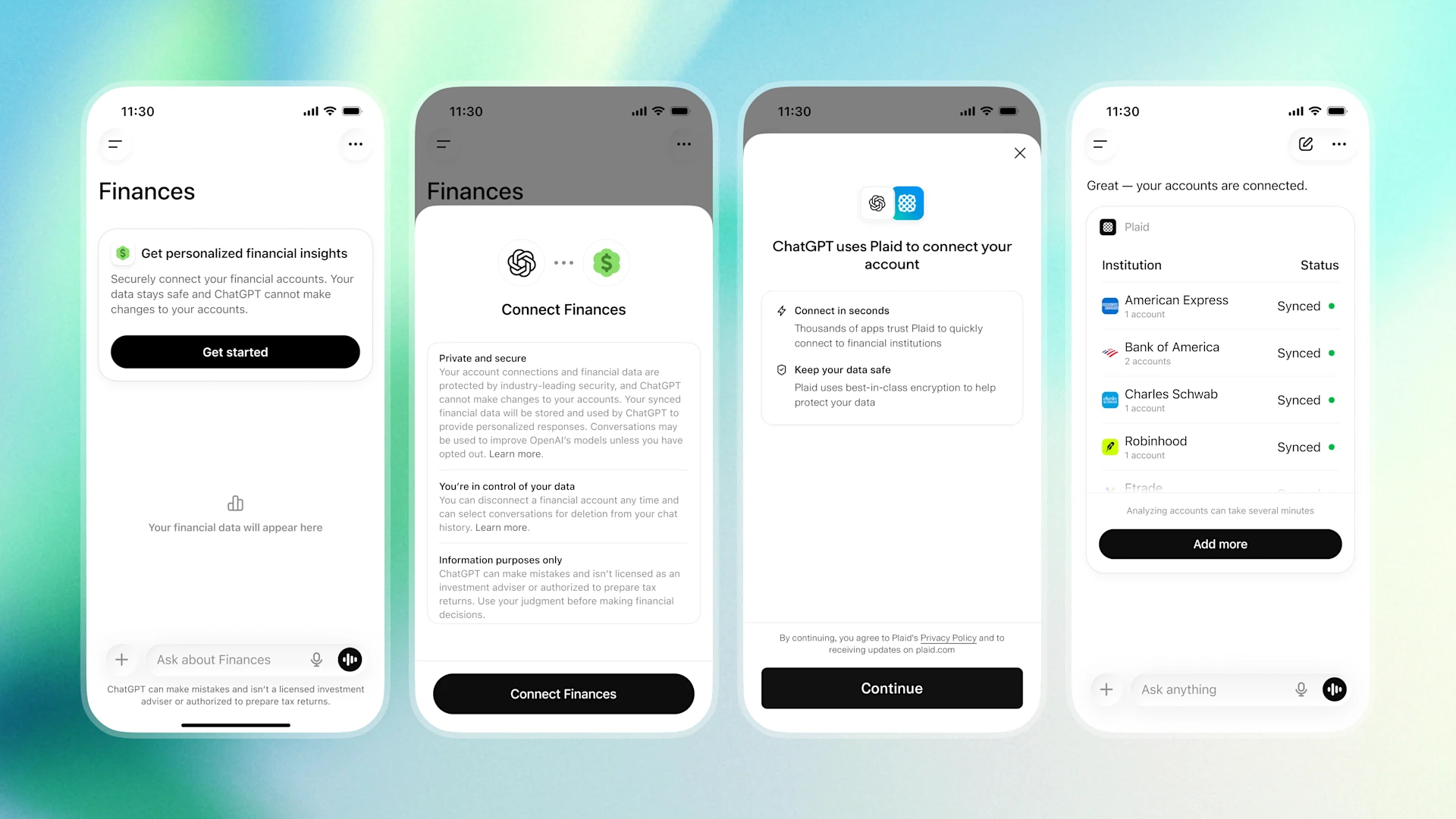
Connect your financial accounts via Plaid
Currently, Personal Finance Experience supports financial account connectivity through Plaid, one of the largest financial connectivity platforms in the industry. OpenAI states that the system supports more than 12,000 financial institutions, covering banking, investment, brokerage, and various credit services.
Users can connect to:
- bank account
- credit card
- Investment account
- Credit and debt
Once connected, ChatGPT will create a dashboard summarizing financial activity, spending habits, investments, subscriptions, and payment schedules.
OpenAI also stated that connectivity with Intuit is planned for future updates.
More Contextual Financial Conversations
One of the key differences in personal finance experience is "contextual memory."
In addition to financial account information, users can also share their financial goals and personal lifestyle information, such as:
- Planning to buy a car
- Saving money to buy a house
- Pay off family debts
- Reduce monthly expenses
- Prepare yourself for a career change
ChatGPT can use these “financial memories” to provide more relevant and contextually aware financial advice to users in the long run.
This reflects the evolution of AI systems from one-off prompt-response interactions to continuous, personalized digital assistants.
Privacy and user controls
Because financial data is highly sensitive, privacy and user control are key aspects of this launch.
OpenAI states that users retain control over all connected financial data. Users can:
- You can disconnect your account at any time
- Delete financial information
- Use Temporary Chats which do not access your account or store conversation history
Temporary Chats prevents ChatGPT from accessing connected financial accounts during those conversations.
The company further recommends enabling Multi-Factor Authentication (MFA) to enhance account security.
Importantly, ChatGPT cannot:
- Move money
- Execute transactions
- Access full account numbers
The AI is designed only to analyze and interpret financial information rather than directly interact with banking systems operationally.
GPT-5.5 Powers the Financial Reasoning
OpenAI says conversations involving connected financial accounts default to GPT-5.5 Thinking, its latest reasoning-focused model.
Financial planning is highly context-dependent. Good financial guidance often requires balancing:
- Income
- expenses
- Investments
- Time of day
- Risk tolerance
- Personal priorities
To evaluate performance, OpenAI worked with more than 50 finance professionals across leading institutions to benchmark response quality and reasoning accuracy.
According to OpenAI:
- GPT-5.5 Thinking scored 79/100 on its internal finance benchmark
- GPT-5.5 Pro scored 82.5/100
These evaluations focused on complex financial reasoning tasks rather than simple budgeting questions alone.
Initial reactions: Excitement and privacy concerns
This launch has garnered significant attention online, but it has also raised questions about privacy and trust.
On Reddit, some users expressed excitement about integrating subscriptions, investments, and all spending data into an AI-powered dashboard, while others were concerned about giving AI access to sensitive banking data.
This reflects a broader challenge facing the AI industry: balancing convenience and personalization with data security and user trust.
Even OpenAI emphasizes that ChatGPT is not a replacement for professional financial advisors. Instead, the system is positioned as a supportive financial intelligence tool that helps users better understand their finances and explore possible decisions.
The Bigger Shift Toward AI-Powered Financial Guidance
The Personal Finance Experience represents more than a feature update. It reflects a broader industry trend where AI systems are becoming increasingly integrated into high-trust domains such as:
- Banking
- Wealth management
- Financial planning
- Investment analysis
- Consumer budgeting
As AI models improve reasoning and memory capabilities, financial assistance is becoming more conversational, contextual, and proactive.
Rather than manually searching through statements and spreadsheets, users may increasingly rely on AI systems to:
- Identify financial patterns
- Surface risks
- Suggest optimizations
- Simulate Trade-offs
- Monitor spending behavior continuously
This could fundamentally change how consumers interact with personal finance tools over the next decade.
Current Availability
The Personal Finance Experience is currently rolling out in preview to ChatGPT Pro users in the United States on web and iOS platforms.
OpenAI says the rollout is intentionally gradual so the company can improve the experience based on real-world usage before expanding to ChatGPT Plus users and eventually broader audiences.
Final thoughts
The launch of the Personal Finance Experience marks one of OpenAI’s most ambitious moves into practical consumer AI services.
By combining connected financial accounts, contextual memory, and GPT-5.5 reasoning capabilities, ChatGPT is evolving into something closer to a financial intelligence assistant rather than simply a chatbot.
At the same time, the feature also highlights critical questions around trust, privacy, and the future role of AI in highly sensitive areas of daily life.
As conversational AI becomes more deeply integrated into personal decision-making, the relationship between AI systems and financial management may become one of the most important technology shifts of the coming years.